dream symbolism
Train Dream Meaning: Direction, Transition, or Missed Chance?
Train dream meaning often points to direction, transition, timing, or fear of missing a chance. Learn the common readings and what to write down.
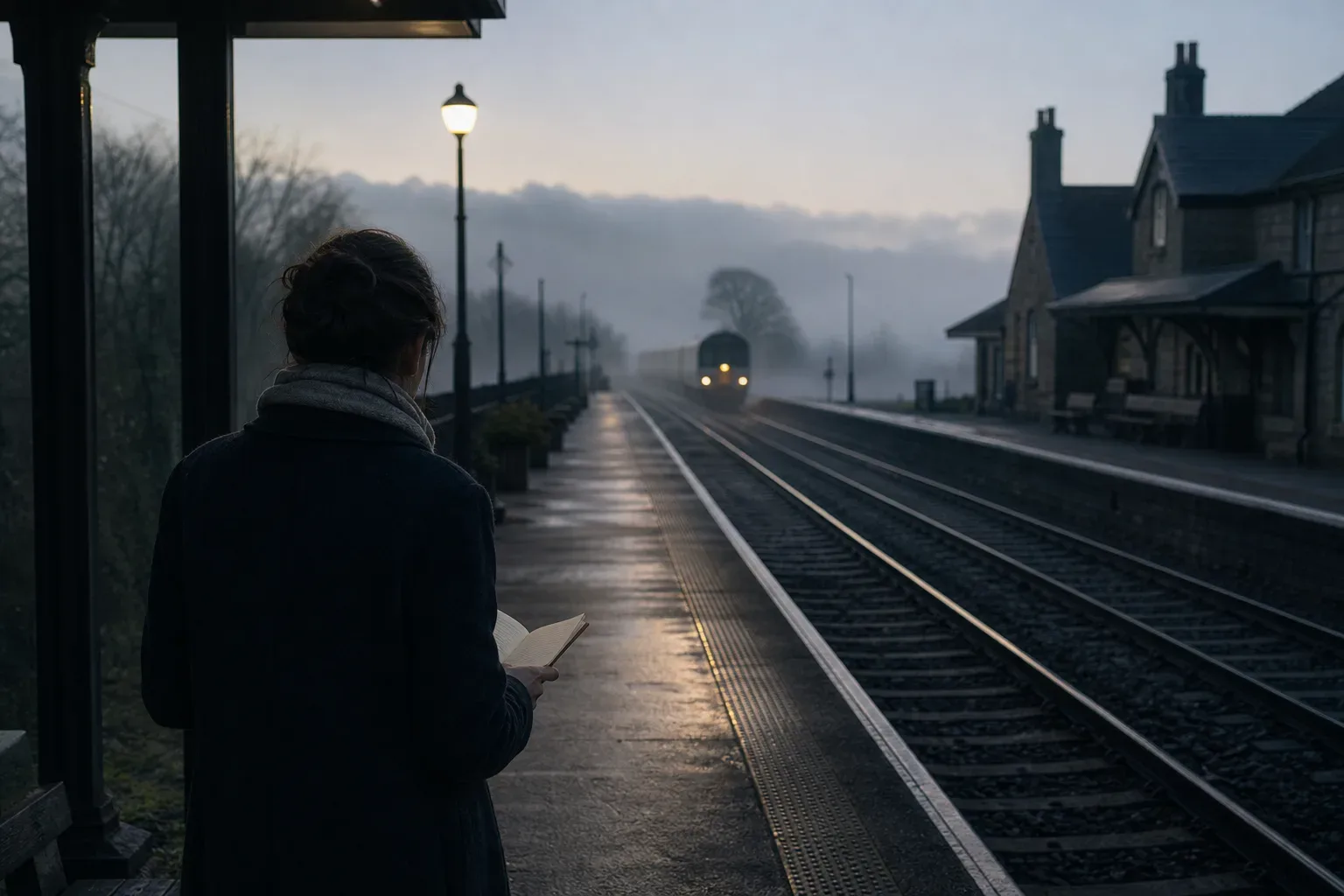
Train dream meaning usually centers on direction, transition, timing, or a missed chance. A train runs on tracks and schedules, so the dream often asks whether you feel carried by a path, trapped by it, late for something, or ready to move with other people toward a new stage.
What does a train dream usually mean?
A train dream usually means your mind is picturing life as movement along a set route.
Unlike a car dream, where you may be steering, a train dream often reduces your control. You board, sit, wait, miss the stop, or watch the train leave. That difference matters. In Calvin Hall and Robert Van de Castle’s classic dream content work, published in 1966, dreams were coded by settings, characters, emotions, and actions rather than treated as fixed symbols. A train dream is best read the same way: not as one sign, but as a moving scene with roles.
The common psychological reading is about direction. You may be asking whether the path you’re on still feels chosen. If the train is steady and you feel calm, the dream may reflect ordinary progress. If it’s too fast, too crowded, or going somewhere unknown, it may reflect anxiety about momentum. A train is obedience made visible: rails, timetables, stations, conductors, tickets.
Sleep research gives a sober frame for this. Adults typically cycle through 4 to 6 sleep cycles per night, and REM sleep, where vivid dreaming is common, tends to increase in the later cycles. The National Institute of Neurological Disorders and Stroke notes that REM makes up about 20 to 25 percent of adult sleep. A 7 a.m. train dream may come from that late-night REM-rich period, when the brain often binds memory and emotion into story.
A simple first reading looks like this:
| Dream detail | Common reading | Morning question |
|---|---|---|
| Riding smoothly | Accepting a direction | What am I allowing to carry me? |
| Missing the train | Fear of lost timing | What do I think I’m late for? |
| Wrong train | Doubt about a choice | Whose route am I following? |
| Train crash | Fear that momentum is unsafe | What feels out of control? |
| Empty train | Solitude during change | Where do I feel alone in progress? |
A dream doesn’t become truer because it’s dramatic. Often the quietest detail is the key.
Does missing a train in a dream mean I missed my chance?
Missing a train in a dream usually means you’re afraid of being late, not that the chance is gone.
This dream is common because it borrows from one of waking life’s simplest pressures: a schedule you can’t negotiate with. The doors close. The train pulls away. You wake with the old feeling in your chest. That feeling may be about a deadline, but it may also be about age, grief, friendship, fertility, money, school, recovery, or a sentence you didn’t say when you had the chance.
Threat simulation theory, proposed by Antti Revonsuo in 2000, suggests that some dreams rehearse danger and social pressure. The theory is serious, though not settled fact. Missing a train fits the rehearsal pattern: the mind stages a time-sensitive failure and lets you feel it. The content may be symbolic, but the emotion is usually honest.
Ask what kind of lateness the dream carried. There are at least 3 different versions:
- You arrived late because of your own delay. This may point to avoidance, hesitation, or exhaustion.
- The schedule changed without warning. This may point to unfairness, instability, or feeling set up to fail.
- You were stopped by someone else. This may point to obligation, dependence, or resentment.
The dream is not a court verdict. It’s a weather report from the nervous system.
If the missed train repeats, write down the exact obstacle each time. Was it a lost ticket, a broken clock, heavy luggage, a child you had to carry, or a platform you couldn’t find? In dream studies, repeated themes often track repeated concerns better than they predict events. G. William Domhoff’s continuity hypothesis, developed across decades of dream reports, argues that dreams often continue waking interests and worries rather than arriving from nowhere.
For broader symbol comparison, you can place the train beside other travel images in the Dream dictionary (A–Z hub). A missed train is close to a missed flight, but not identical. Planes suggest height and distance. Trains suggest route, society, and schedule.
What does being on the wrong train suggest?
Being on the wrong train usually suggests doubt about whether your current path is truly yours.
This dream has a specific unease. You’re moving, but the movement doesn’t reassure you. You may look out the window and recognize nothing. You may ask a passenger and get no answer. You may notice the destination sign too late. The train doesn’t have to be frightening for the dream to carry fear; sometimes the fear is simply that you cooperated with the wrong plan.
Psychologically, wrong-train dreams often appear during transitions with social pressure. A job looks good on paper. A relationship has momentum. A family expectation has tracks laid before you were born. Jungian readers might call the train a collective structure, a vehicle of society more than the personal will. That’s useful as metaphor, not as proof. The dream may be asking where you’ve mistaken motion for consent.
Consider these clues:
- The destination: named, unknown, foreign, impossible, or changing.
- Your ticket: valid, missing, stolen, unreadable, or expensive.
- The passengers: friends, family, strangers, authority figures, or no one.
- The conductor: helpful, absent, threatening, or indifferent.
- Your body: calm, trapped, sleepy, ashamed, or relieved.
Specifics matter more than the symbol. In a 2018 paper in Frontiers in Psychology, researchers noted that dreams often incorporate recent concerns, though the timing and exact mechanisms remain debated. If you recently changed work, ended a relationship, moved house, started treatment, or entered a new social group, the wrong train may simply be your mind testing the route.
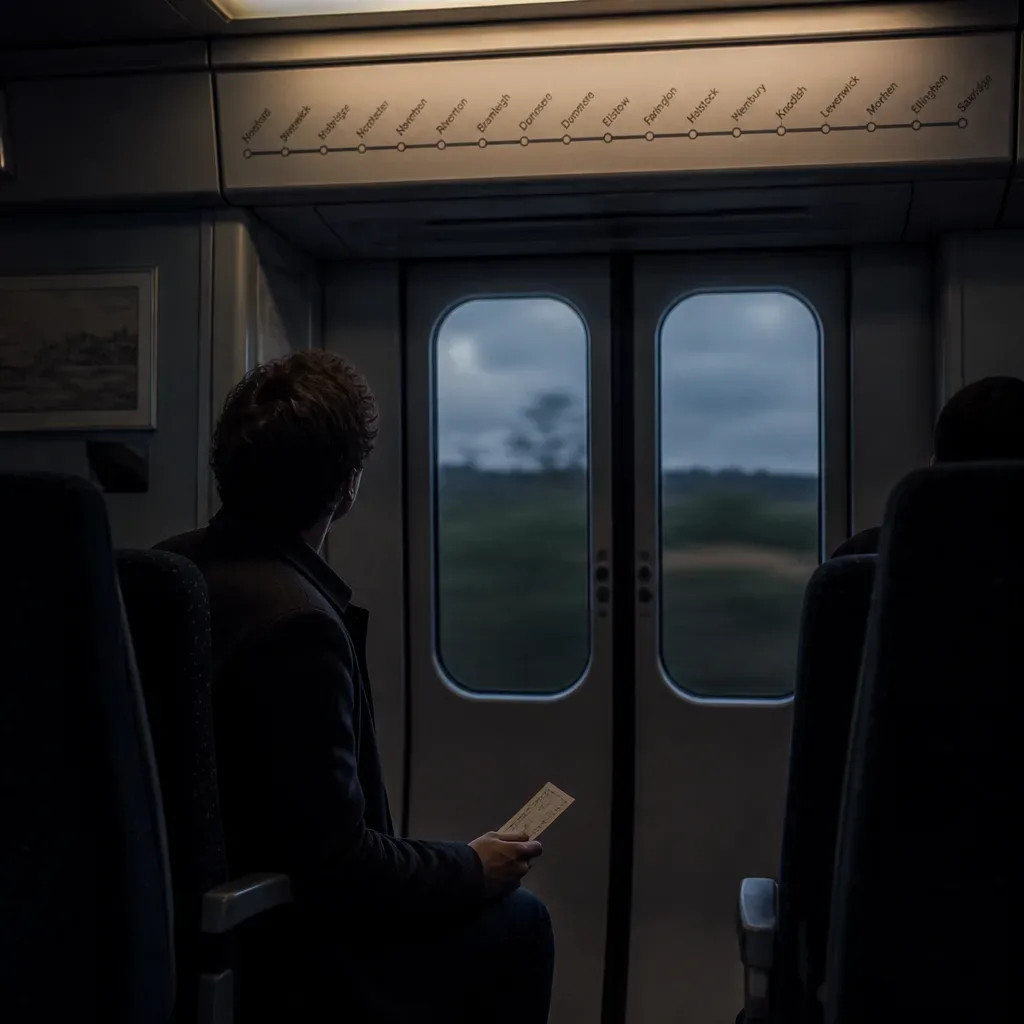
A wrong train can also carry relief. Some dreamers wake unsettled but remember a beautiful view from the window. That mixed feeling deserves respect. Not every mistaken path is wasted. Sometimes the dream asks a sharper question: if this isn’t the route you planned, what is it teaching you anyway?
If you want a waking counterpart to this question, keep it modest. One mention is enough. The AYA Method is a daily audio manifestation practice: each day you listen to a short personalized recording, your Dream-Self Moment, narrated from the version of you who has already manifested the life you intend. Listening is the practice. Repetition is the work. The audio is the method.
What if the train is fast, crowded, empty, or delayed?
The condition of the train shows the emotional texture of the transition.
A fast train often points to momentum. You may feel carried by events faster than you can integrate them. This doesn’t always mean fear. A high-speed train can feel clean, bright, and thrilling. But if you’re gripping the seat, missing stops, or unable to speak, the dream may be showing pace without agency. Modern high-speed rail can exceed 300 kilometers per hour; the number isn’t the point, but the body knows what speed feels like before the mind explains it.
A crowded train often belongs to social pressure. You may be sharing a route with people whose needs, bodies, voices, or expectations crowd yours. In dream reports, strangers are common. Hall and Van de Castle found that social interactions appear frequently in dreams, and negative interactions outnumbered friendly ones in many samples. That doesn’t make dreams grim. It means the sleeping mind is alert to friction.
An empty train has a different loneliness. It can mean independence, exile, peace, or emotional distance. Ask whether the emptiness felt like privacy or abandonment. The same image can comfort one person and frighten another. A symbol without feeling is only half a sentence.
A delayed train often reflects waiting. Not failure. Waiting. That distinction is important. Delays can appear when a decision depends on someone else, when grief has its own timetable, or when the body needs more rest than ambition wants to allow. The Centers for Disease Control and Prevention reports that about 1 in 3 U.S. adults don’t get enough sleep, using 7 hours as a common benchmark for adults. Sometimes the dream about delay comes from an organism that is simply tired of being rushed.
Here is a quick sorting tool:
| Train condition | Possible waking parallel | What to notice |
|---|---|---|
| Too fast | Promotion, move, new intimacy | Do I need more say in the pace? |
| Crowded | Workload, family duty, social role | Who is taking up space? |
| Empty | Independence, isolation, quiet | Does solitude feel kind or cold? |
| Delayed | Waiting, blocked plans, fatigue | What can’t be forced? |
| No brakes | Panic, compulsion, overload | Where do I need interruption? |
If the dream includes awareness that you’re dreaming, compare it with the Lucid dreaming pillar. Lucidity changes the question. A non-lucid train carries you. A lucid train may invite you to choose a stop.
What do train stations, tracks, and tickets mean in dreams?
Stations, tracks, and tickets usually point to thresholds, constraints, and permission.
A train station is a between-place. You’re not where you were, and you’re not where you’re going. That makes stations natural dream settings during transitions. Graduations, breakups, new jobs, immigration, illness, retirement, and even ordinary birthdays can produce station imagery. The station is the psyche’s waiting room.
Tracks are more rigid. They suggest direction already laid down. In folklore and spiritual interpretation, tracks may be read as fate or destiny, especially in traditions where railways became symbols of departure, exile, or industrial time. There’s no good evidence that a train dream predicts destiny. But there is a long tradition of reading tracks as the visible line of a life. Folklore is not evidence, but it is human memory wearing story-clothes.
Tickets are about access. A missing ticket may suggest fraudulence or fear of being unprepared. A first-class ticket may suggest entitlement, reward, or discomfort with privilege. A torn ticket may suggest doubt that permission still holds. If someone else holds your ticket, notice who. The dream may be less about travel than authority.
The 19th century changed the psychology of time. Public railway timetables helped standardize clock time across regions; Britain adopted railway time widely in the 1840s, and standardized time zones followed later in several countries. That history still clings to train dreams. Trains are machines of shared time. They ask us to coordinate private life with public schedules.
You can use this 4-line note in the morning:
- Where was I: platform, carriage, tunnel, bridge, station, track?
- What was I trying to do: board, leave, find, hide, arrive?
- Who controlled access: me, conductor, machine, stranger, family member?
- What feeling stayed after waking: relief, panic, shame, wonder, grief?
For personal symbol work, the AI dream interpreter tool can help organize details without treating them as prophecy. Use it as a notebook with questions, not as a final authority.
Are train dreams spiritual, cultural, or just stress dreams?
Train dreams can be spiritual in personal or folkloric reading, but the strongest evidence points to memory, emotion, and stress-related continuity.
Culturally, trains carry departure. They also carry class, empire, migration, war, work, and reunion. In some family stories, the train is the thing that took someone away. In others, it is the thing that brought wages home. Your grandmother’s kitchen may have a better symbol index than any book, especially if trains had a place in your family history.
Folklore sometimes treats a train as a sign of a coming change. It may say that boarding means progress, missing means delay, and a wreck means warning. We can report that gently without pretending it’s evidence. Dreams reflect; they don’t foretell. The honest spiritual question isn’t “What will happen?” It’s “What part of me already knows I’m between places?”
Research stays more modest. In a 2021 review of dream and emotion studies, authors in sleep science continued to link REM sleep with emotional memory processing, while noting that dreams are hard to study because reports are subjective and collected after waking. That limitation matters. A dream is data, but it’s data filtered through memory.
Nightmares deserve a calm note. If train dreams are terrifying, frequent, tied to trauma, or disrupting sleep for more than a few weeks, it’s reasonable to talk with a doctor or licensed therapist. That sentence is not alarm. It’s ordinary care. Sleep is part of health, not a private test you have to pass alone.
The best reading holds 3 layers at once:
- Body: sleep stage, stress load, late-night emotion, poor rest.
- Mind: direction, timing, control, identity, social pressure.
- Culture: family stories, folklore, migration, work, history.
A train can be stress and symbol at the same time. The brain doesn’t separate them as neatly as our explanations do.
If you want more symbols beside this one, return to the Dream dictionary (A–Z hub), then compare movement dreams with water, roads, houses, and airports. Patterns sharpen when symbols sit near their cousins.
What should I do the morning after a train dream?
The morning after a train dream, write the route, the timing problem, and the feeling before you interpret anything.
Dream memory fades quickly. Sleep researchers often use awakenings in the lab because recall drops after ordinary morning distraction. You don’t need a perfect record. You need 5 honest details before coffee, email, or explanation changes the dream into a story you can tolerate.
Use this short practice:
- Name the train scene in one sentence. “I missed the last train home.” “I rode a silent train through snow.” “I was on the wrong train with my father.”
- Mark the timing. Early, late, delayed, rushed, endless, on time.
- Mark the control. Steering, carried, trapped, helped, blocked, lost.
- Name the waking parallel. One situation where the same feeling exists.
- Write one question. Not an answer. A question.
Good questions are plain:
- What am I afraid I’ve missed?
- Whose timetable am I living by?
- What route did I agree to without noticing?
- Where am I being carried in a good way?
- What stop do I need to prepare for?
If the dream involved a crash, don’t rush to catastrophe. Ask what feels unable to slow down. If it involved a station, ask what transition you’re standing inside. If it involved a ticket, ask where you’re waiting for permission. If it involved a stranger, ask what social role you’re trying to play.
You can also compare the dream with other entries in the Dream dictionary (A–Z hub), especially cars, buses, airports, bridges, and being lost. Adjacent symbols often reveal whether the main issue is control, belonging, escape, or timing.
Write this line if nothing else comes: “The train was going to ___, and I felt ___.”
Then let the morning be quiet enough to answer.