dream symbolism
Tornado Dream Meaning: Chaos, Stress, or Big Change?
Tornado dream meaning usually points to stress, loss of control, sudden change, or emotions gathering force. Learn the main readings and what to do.
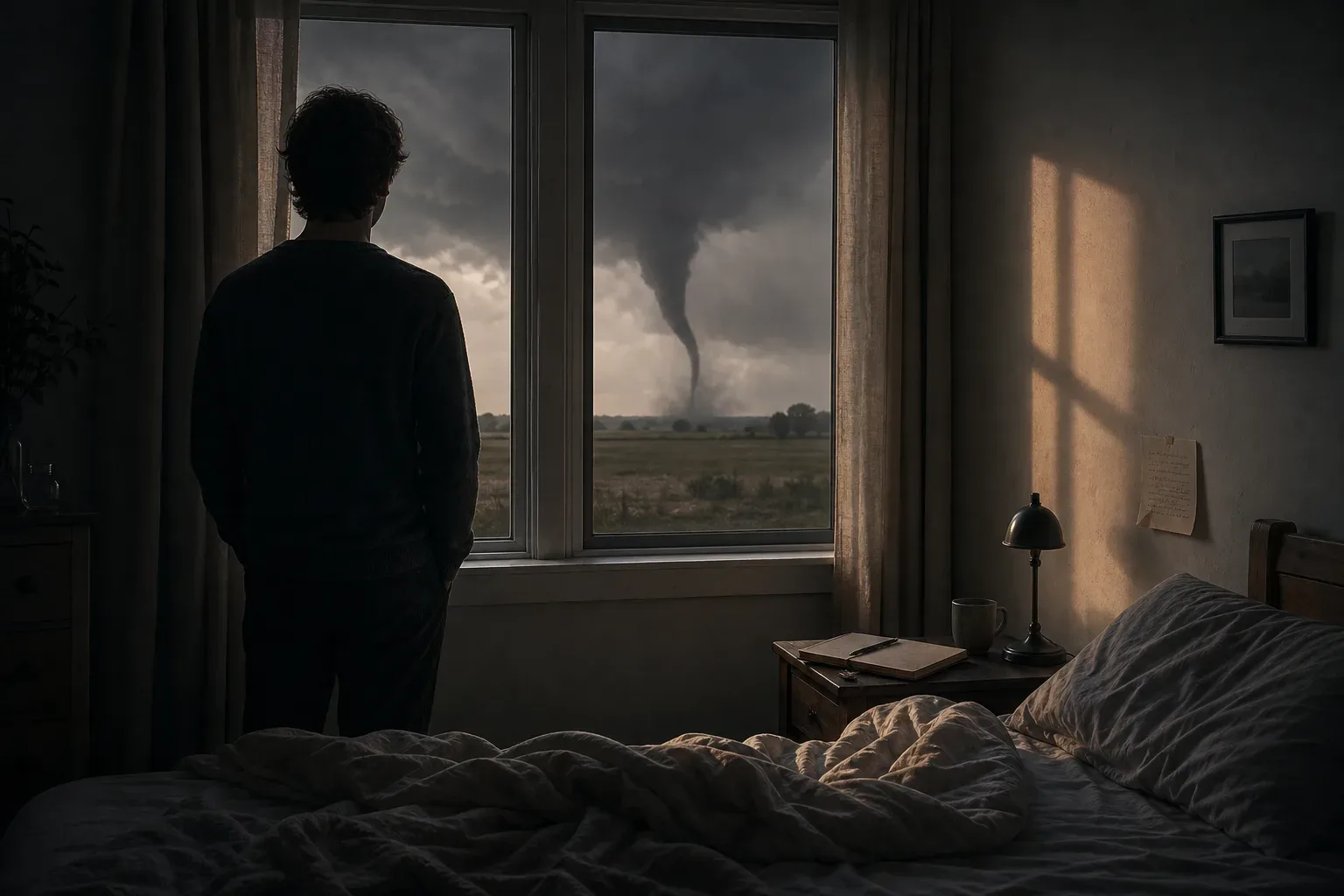
The most common tornado dream meaning is emotional chaos that has become visible: stress, conflict, sudden change, or fear of losing control. It doesn’t mean a literal tornado is coming. Usually, the dream is asking where pressure is building in waking life, and whether you’ve found shelter for it.
What does a tornado dream usually mean?
A tornado dream usually means something in your life feels forceful, unstable, and difficult to manage.
The image is blunt for a reason. A tornado gathers ordinary air into a column that can tear through ordinary rooms. In dreams, that often becomes a picture of anger, panic, family trouble, work pressure, or a decision that has gained speed. Ernest Hartmann’s nightmare research, especially his 1998 work on central imagery after trauma, found that dreams often choose a single vivid image to hold the emotional tone of a waking event. A tornado is exactly that kind of image: concentrated, loud, and hard to argue with.
If you woke at 7 a.m. with your heart moving too quickly, notice where you were in the dream. Were you watching from a window, driving toward it, hiding in a basement, or standing in an open field? Each position changes the reading. Watching can suggest dread at a distance. Driving can suggest you’re moving toward a problem you know is ahead. Hiding can suggest your mind already knows you need cover.
A tornado is not a prophecy. It is a weather report from the nervous system. The American Psychological Association has repeatedly linked stress with sleep disruption; in its 2023 Stress in America reporting, adults described money, health, and the future as major sources of strain. Dreams don’t file those concerns in neat folders. They make weather.
Common waking parallels include:
- a conflict that keeps changing shape
- a workplace situation with high pressure and little control
- a family argument that everyone can feel but nobody names
- a move, breakup, pregnancy, illness, or other major threshold
- anger that has been politely stored for too long
The tornado in a dream is often the feeling you managed not to have during the day.
For a broader comparison with other symbols, the Dream dictionary (A–Z hub) can help you notice whether the storm appears beside houses, animals, death imagery, or lost roads. Symbols rarely travel alone.
Is a tornado dream about stress or anxiety?
Yes, tornado dreams often appear when stress has become bodily, not just mental.
Anxiety dreams tend to use motion: falling, being chased, missing a train, losing teeth, or trying to stop a disaster already in progress. Tornado dreams belong to that same family, but with a particular emphasis on scale. The danger is not one person chasing you. It is the whole atmosphere turning. In a 2014 review in the journal Sleep Medicine Reviews, researchers noted that nightmares are associated with stress, anxiety symptoms, and post-traumatic stress, though not every nightmare is clinical. Most are ordinary. Some simply say, “This is too much.”
The dream may be less about the event itself than your perceived control. Psychologist Richard Lazarus described stress as a transaction between demand and coping resources in his 1966 and later work. A tornado dream often appears when demand feels larger than shelter. That shelter might be time, money, help, sleep, information, or permission to say no.
| Dream detail | Likely stress reading | Morning question |
|---|---|---|
| Watching a tornado far away | Anticipated trouble | What am I bracing for? |
| Tornado approaching the house | Stress near the private self | What feels unsafe at home or inside me? |
| Multiple tornadoes | Several pressures at once | Which problem needs attention first? |
| No one believes you | Unheard fear | Where do I need clearer support? |
| You find a basement | Coping instinct | What is my real shelter this week? |
One useful distinction: fear in the dream doesn’t mean weakness. Fear is information with a pulse. If you spend the day performing calm, the night may show you the cost of the performance.
Nightmares are common. The American Academy of Sleep Medicine notes that occasional nightmares happen to many adults, while nightmare disorder is less common and involves repeated distress or daytime impairment. If tornado dreams are frequent, violent, or tied to trauma, talk with a doctor or mental health professional in one plain step. You don’t need to wait until sleep becomes unbearable.
What does it mean if the tornado destroys a house, town, or car?
When a tornado destroys a place or vehicle, the dream is usually about a threatened structure in your life.
Houses in dreams often point to the self, the family system, or the private life. A roof torn away can suggest exposure. A childhood home destroyed may point to old fears returning in a new form. A town flattened can widen the symbol: your social world, workplace, or shared life feels unstable. A car pulled into the wind often suggests loss of direction, since cars in dreams commonly carry the meaning of agency and movement.
Research on dream continuity supports this kind of reading. The continuity hypothesis, associated with Calvin Hall and later dream researchers such as G. William Domhoff, proposes that dreams often reflect waking concerns rather than random nonsense. In large dream-content studies, personal concerns, social relationships, and emotions recur in patterned ways. A tornado striking the office is not the same dream as a tornado striking your grandmother’s kitchen.
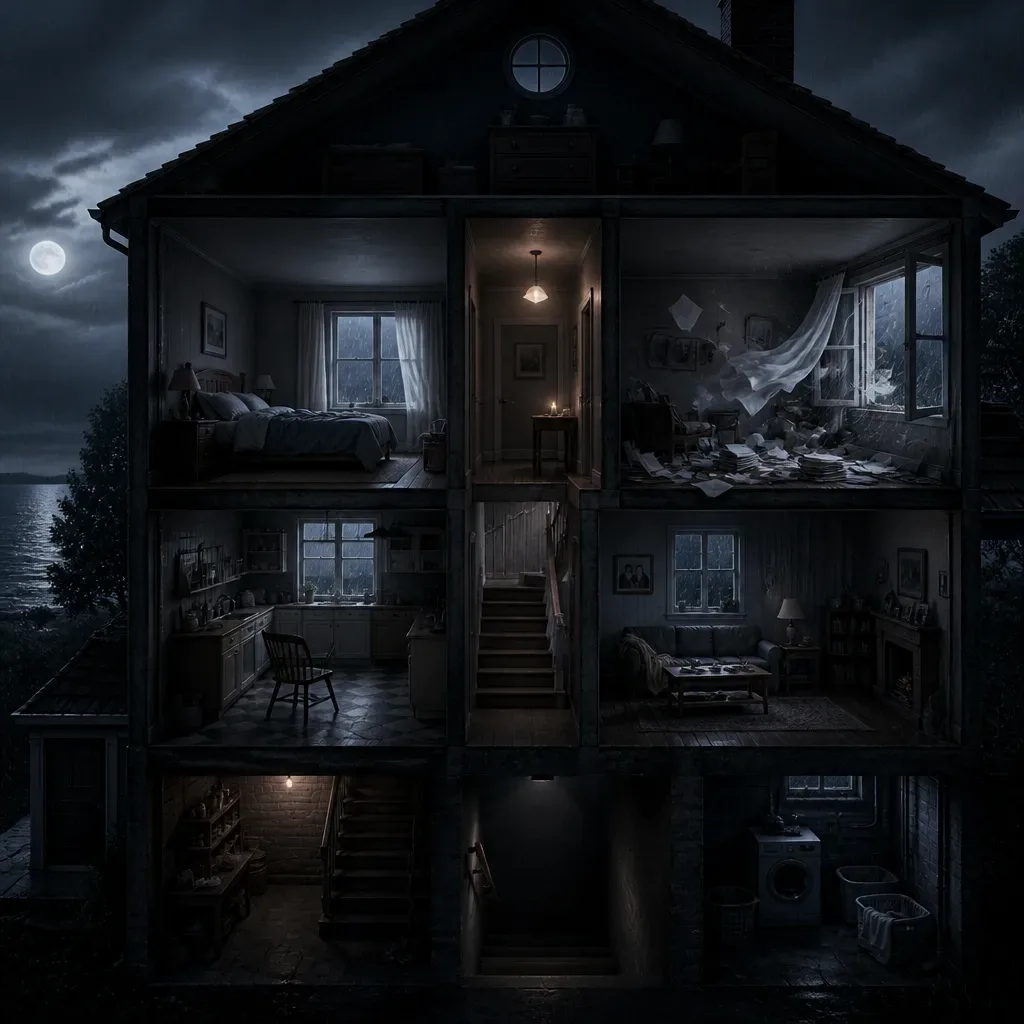
Read the damage honestly, but don’t make it theatrical. A destroyed room can mean “this part of life has changed,” not “everything is ruined.” The dream may be grieving an old arrangement. People often dream of storms during divorce, career change, relocation, infertility treatment, caregiving, or the first months after a loss. The body knows that practical change also has weather.
Try a simple 4-part note the morning after:
- Name the place. House, school, road, church, farm, office, apartment.
- Name the damage. Roof gone, windows broken, car lifted, trees down.
- Name the feeling. Panic, numbness, awe, relief, urgency.
- Name the waking parallel. “This may be about…”
A dream about destruction is not always a wish to destroy. Sometimes it is the mind admitting that an old shelter no longer shelters you. If the dream felt unusually clear or you knew you were dreaming inside it, our Lucid dreaming pillar explains why awareness can enter frightening dreams and sometimes change how you meet them.
Are there cultural or spiritual meanings of tornado dreams?
Cultural and spiritual readings often treat tornado dreams as signs of disorder, cleansing, divine force, or approaching change, but these are folklore, not proof.
Tornadoes are especially shaped by geography. In the central United States, where NOAA records an average of about 1,200 tornadoes per year, the image carries lived memory: sirens, basements, sky color, local news maps. In places with fewer tornadoes, the dream may borrow the image from films, weather footage, or family stories. A symbol is never only ancient. It also watches television.
In European folk dream books from the nineteenth and early twentieth centuries, violent wind often meant quarrels, public unrest, or news arriving suddenly. These books were not scientific manuals; many were commercial compilations, revised by printers who needed pages to sell. Still, they preserve something true about older anxieties. Wind was invisible force. It could carry illness, gossip, spirits, ships, and weather. To dream of wind was to dream of what moves people without asking them.
In some Christian interpretations, storms are read as trials, judgment, or purification, drawing loosely on biblical storm imagery such as Job’s whirlwind or the calming of the storm in the Gospels. In Indigenous traditions, meanings vary widely and should never be flattened into one answer. Some nations hold rich teachings about thunder beings or storm powers, but those teachings belong to specific communities, languages, and ceremonial contexts.
A careful comparison looks like this:
| Reading tradition | Tornado or violent wind may suggest | Evidence status |
|---|---|---|
| Modern psychology | stress, threat, emotional overload | supported by dream-stress research |
| Folk dream books | quarrels, sudden news, social disorder | long tradition, thin evidence |
| Christian symbolic reading | trial, warning, purification | theological tradition, not prediction |
| Personal family lore | whatever storms meant in your house | meaningful if inherited |
The honest rule is simple: begin with your life, then listen to your tradition. Folklore is not worthless because it isn’t laboratory evidence. It is a record of what a community learned to fear, respect, and remember.
What do different tornado dream variations mean?
Different tornado dreams change meaning through distance, number, shelter, color, and whether anyone survives.
The same symbol can turn when one detail changes. A black funnel on the horizon is not the same as a white funnel crossing a field. A tornado seen from a school may speak to old evaluation fears. A tornado at a wedding may carry the tension of union, family expectation, or public promises. In the AI dream interpreter tool, details like setting and action often matter more than the dictionary meaning of the storm itself.
Here are common variations:
What if I’m hiding from the tornado?
Hiding usually means your mind is looking for safety, not avoiding truth. Basements, bathrooms, closets, and interior rooms all suggest containment. In real tornado safety guidance, NOAA recommends getting to a small interior room on the lowest level of a sturdy building. Dreams borrow that practical logic. Your sleeping mind may be rehearsing protection.
What if I’m chasing the tornado?
Chasing can point to fascination with risk, a need to confront conflict, or a habit of moving toward intensity. It can also appear in people who feel bored by calm or drawn into other people’s crises. Threat simulation theory, associated with Antti Revonsuo in 2000, argues that some dreams simulate danger so we can rehearse response. Chasing the danger changes the rehearsal.
What if there are many tornadoes?
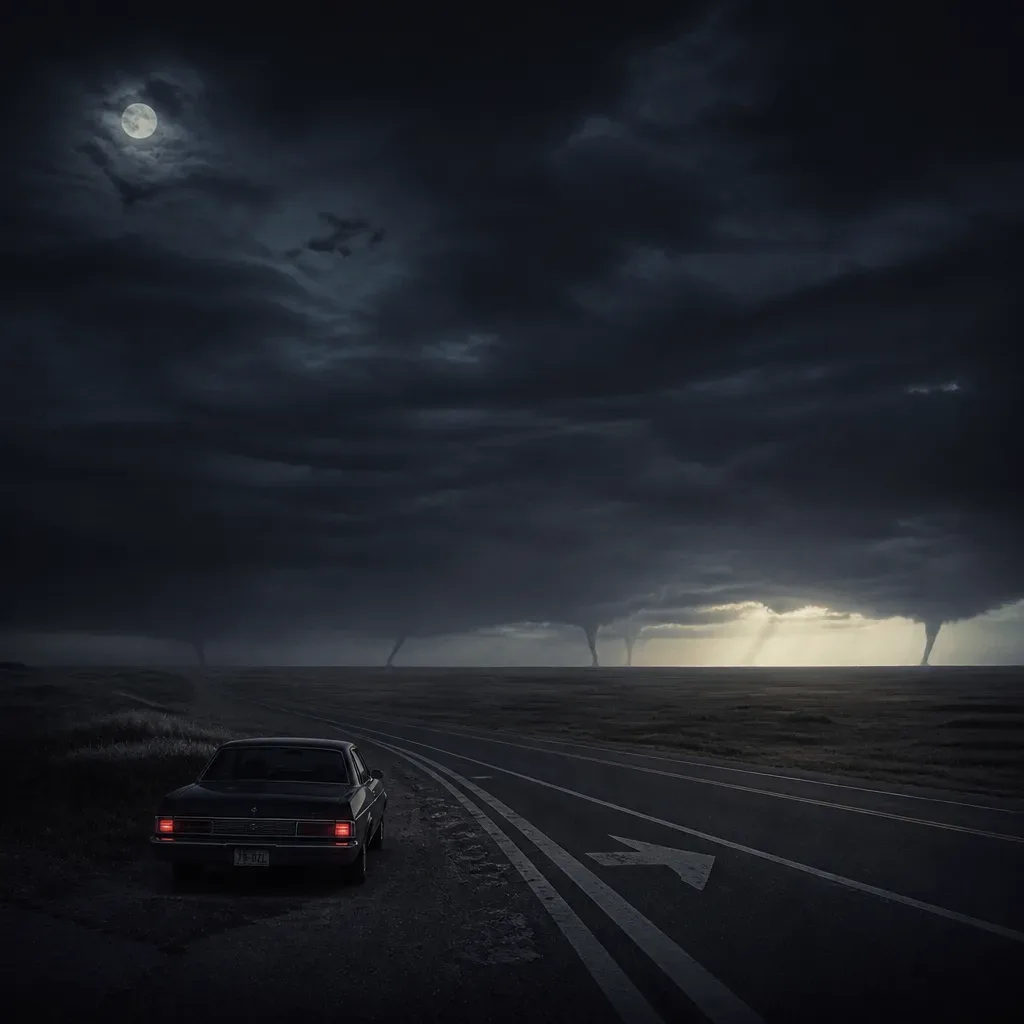
Multiple tornadoes often suggest divided pressure. Not one crisis, but several: money, family, health, work, and the private fear under all of them. One tornado can be named. Five tornadoes feel like a system.
What if the tornado passes without harming me?
This often points to survival, perspective, or relief. The storm was real in the dream, but it did not take you. That ending matters. Dreams are not only about what threatens us. They also show what we endure.
What if I see a loved one in the tornado?
This may reflect fear for that person, conflict with them, or the feeling that their life is unstable. It doesn’t mean they’re doomed. If the dream repeats, consider whether you’ve been carrying worry for them without speaking it. One sentence may help: “I dreamed you were in a storm, and I woke up worried about you.”
When should I take a tornado dream seriously?
Take a tornado dream seriously when it repeats, disturbs your sleep, mirrors trauma, or points to a waking problem you’ve been minimizing.
Serious doesn’t mean supernatural. It means worthy of attention. The National Center for PTSD notes that nightmares can be part of post-traumatic stress, especially when they recur with fear, avoidance, hyperarousal, or intrusive memories. If a tornado dream began after a real disaster, accident, assault, combat exposure, or frightening medical event, treat it gently and get support if it keeps troubling you.
For most people, the useful response is small and ordinary. Don’t spend the morning hunting for a perfect interpretation. Write the dream down before your phone replaces it. Note the first feeling. Then ask what part of your life currently feels weather-torn. The question is not “What will happen?” The question is “What am I already living through?”
A short practice can help:
- Write the dream in present tense. “I see the tornado near the house.”
- Circle the strongest image. Funnel, siren, basement, broken window, child, road.
- Name one waking pressure. Keep it specific: “the meeting Friday,” not “my life.”
- Choose one sheltering action. Call someone, cancel one thing, pay one bill, rest for 20 minutes.
- Return at night with less noise. The dream doesn’t need a dramatic answer.
This is also where the AYA Method may earn its place. The AYA Method is a daily audio manifestation practice. Each day you listen to a short personalized recording, your Dream-Self Moment, narrated from the version of you who has already manifested the life you intend. Listening is the practice. Repetition is the work. The audio is the method. A recurring dream shows what attention keeps returning to at night; a repeated recording gives waking attention a steadier sentence to return to.
If you want to compare tornado dreams with other intense symbols, the Dream dictionary (A–Z hub) is the best place to move sideways. If you’re unsure whether a dream was ordinary, lucid, or somewhere between, the Lucid dreaming pillar can help you sort the texture of awareness.
What should I ask myself the morning after?
Ask what storm the dream made visible, where you found shelter, and what one waking action would make life less violent today.
Morning is the right scale for dream work. Not destiny. Not a ten-year plan. Just the first page of the day. A tornado dream often leaves the body activated, so begin with the body: drink water, feel your feet, look at one still object in the room. Sleep researcher Rosalind Cartwright described dreaming as part of emotional processing across the night, especially after upsetting events. You don’t need to solve the whole dream to receive its message.
Use these questions, in order:
- Where was the tornado in relation to me?
- What was I trying to protect?
- Who helped, ignored me, or needed me?
- What in my life feels too fast right now?
- What would count as shelter today?
If you keep a dream notebook, write one clean line under the dream: “The storm may be ______.” The blank matters. It keeps the symbol close to your life. If nothing comes, write “I don’t know yet.” That is an honest interpretation.
You can also search the surrounding symbols. A tornado with snakes, teeth, floodwater, a dead relative, or a locked door will not read the same way. The AI dream interpreter tool can help you gather those details into a first reading, but your own associations should have the last word. Your grandmother’s kitchen can change the meaning of any storm.
Dreams don’t hand us verdicts. They hand us images sturdy enough to carry what we haven’t said.
Write this down: “The tornado is the pressure I can finally name.”
Then let the morning be quiet.