dream science
REM Sleep Dreams: Why Morning Dreams Feel So Vivid
REM sleep dreams often feel vivid near morning because REM periods lengthen overnight, memory is closer to waking, and emotion is active.
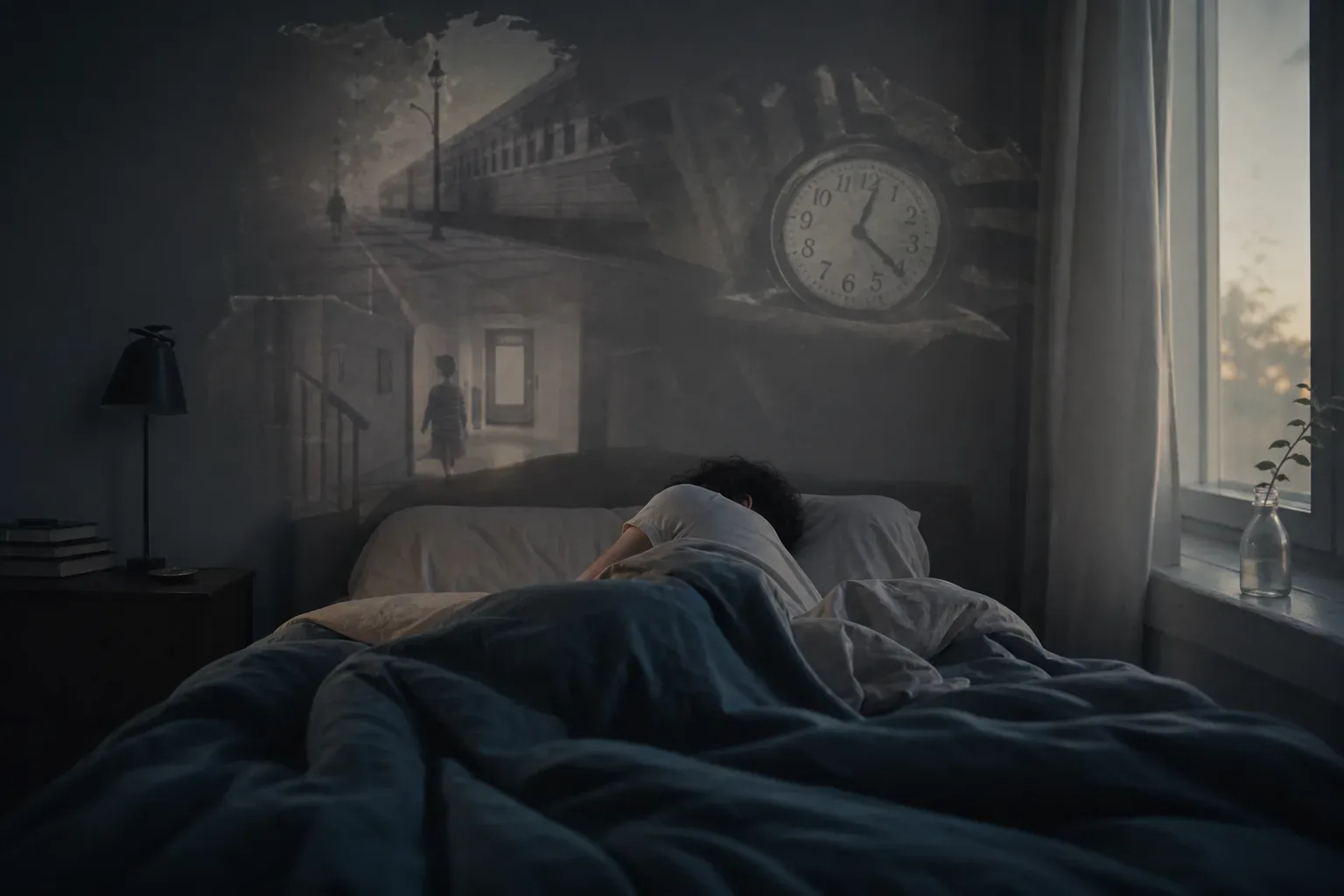
REM sleep dreams feel vivid in the morning because REM periods grow longer in the last third of sleep, and you often wake close enough to the dream to remember it. The brain is active, emotion is stirred, and the memory has not yet dissolved into breakfast.
What are REM sleep dreams, exactly?
REM sleep dreams are dreams that happen during rapid eye movement sleep, a stage known for active brain patterns, quick eye movements, and very low muscle tone.
Sleep researchers Eugene Aserinsky and Nathaniel Kleitman described rapid eye movement sleep in 1953, and William Dement’s later laboratory work helped connect REM awakenings with dream reports. In classic sleep-lab studies, people awakened from REM reported dreams far more often than people awakened from non-REM sleep, though the exact percentages vary by method. A common finding is that REM awakenings produce dream reports around 70 to 80 percent of the time.
That doesn’t mean all dreams are REM dreams. Non-REM dreams exist. They tend to be shorter, quieter, and more thought-like, though there are exceptions. REM sleep dreams are usually the ones with movement, strange scene changes, old friends appearing in new houses, and the kind of emotional color that follows you into the kitchen.
The body is in a curious state during REM. Your eyes move, breathing becomes more variable, and most large muscles are inhibited. The American Academy of Sleep Medicine describes REM as one of the major recurring sleep stages across a normal night, cycling roughly every 90 minutes in adults. A healthy night is not one block of sleep. It is a sequence.
If you want the plain map, it looks like this:
| Sleep stage | Common dream quality | When it appears most |
|---|---|---|
| N1 light sleep | fragments, sounds, falling sensations | sleep onset and transitions |
| N2 sleep | brief thoughts, simple scenes | much of the night |
| N3 deep sleep | sparse reports, bodily themes | first third of the night |
| REM sleep | vivid, visual, emotional narratives | later cycles, especially morning |
A dream is not less real because it came from a measurable sleep stage. The measurement only tells us which door the dream most likely used.
Why do morning REM sleep dreams feel so vivid?
Morning REM sleep dreams feel vivid because REM periods lengthen overnight and often place the most elaborate dreaming close to waking.
The first REM period of the night may last only about 10 minutes. By the final sleep cycles, REM can stretch to 30, 40, or even 60 minutes in some sleepers. This is one reason a dream at 6:40 a.m. can feel like a film, while a dream from midnight may leave only a color or a name.
The timing matters. If you wake directly from REM, the dream is still warm. If you wake 20 minutes later, after another stage has passed, recall is usually thinner. Dream memory is fragile. A phone alarm, a bright screen, or a question from someone in the room can replace five dream scenes in less than a minute. I’ve watched this happen in my own notebooks since 2006.
REM sleep also has a distinctive emotional signature. Neuroimaging studies, including work discussed by Matthew Walker and colleagues in the 2000s, suggest that limbic and visual association areas are active during REM, while some prefrontal control regions are less dominant than in waking thought. That helps explain why the dream can feel intense and unquestioned at the same time.
This is why a morning dream may have three qualities at once:
- It looks vivid because visual systems are busy.
- It feels urgent because emotion is present.
- It seems strange because waking judgment is not fully steering the story.
- It stays with you because waking happens before the memory fades.
Vividness is not a verdict. It is a condition of timing, attention, and sleep biology.
Why do you remember some REM dreams and lose others?
You remember REM dreams when waking, attention, and memory formation line up for a few seconds before the dream fades.
Dream recall is strongly tied to awakenings. In a 2014 study in Neuropsychopharmacology, researchers led by Perrine Ruby found that high dream recallers had more intra-sleep wakefulness than low recallers, giving the brain more chances to encode the dream. This does not mean high recallers sleep badly. It means they have more small openings where a dream can cross into memory.
The morning is full of such openings. Natural waking, light through the window, a partner moving, a pet at the door, or a soft alarm can all interrupt REM or the edge after it. If you remain still for 20 to 30 seconds, the dream often returns in pieces: place first, then person, then the strange rule that governed the scene.
Memory also depends on what you do next. The hippocampus, which helps form episodic memory, does not treat dreams like waking events unless you give it a handle. Writing helps. Speaking into a recorder helps. Even a one-line title helps. “Red train under my school” is better than waiting for the whole dream and losing it.
A simple morning recall sequence works better than heroic effort:
- Wake and keep your eyes closed for 10 seconds.
- Ask, “Where was I just now?”
- Notice the strongest image, person, or feeling.
- Write a one-line summary before checking the time.
- Add dream signs only after the main trace is safe.
For symbols that repeat, use your own notes first, then compare gently with a reference like the Dream dictionary (A–Z hub). A dictionary can offer language. Your pattern supplies the evidence.

What do vivid REM dreams usually mean psychologically?
Vivid REM dreams usually reflect recent emotion, memory fragments, bodily sensation, and older concerns arranged into a story the sleeping mind can use.
The honest answer is mixed. Research supports links between dreaming, memory, and emotion, but no responsible dream worker can tell you that every vivid REM dream has one fixed meaning. A 2019 review by Scarpelli and colleagues in Frontiers in Psychology describes dreaming as related to memory consolidation and emotional processing, while still noting that many mechanisms remain debated. That’s the right level of certainty.
The dream borrows from the day, but it rarely copies the day. This is called the day-residue effect, a term associated with Freud and later studied empirically. The dream may use yesterday’s email, last month’s argument, and a childhood hallway in one scene. The material is not random in the way static is random. It is associative.
A useful psychological reading asks about function, not prophecy. Did the dream rehearse a fear? Did it restore contact with someone absent? Did it show a conflict in exaggerated form? Did it make a bodily state into an image, such as thirst becoming a flooded room? A common dream is not a command. It is a note from attention.
For example:
| Dream feature | Possible waking question |
|---|---|
| Being chased | What am I avoiding that keeps finding me? |
| Missing a train | Where do I feel late or unprepared? |
| Dead relative appearing | What part of grief or memory is near today? |
| Flying | Where do I feel free, or wish to feel free? |
| Teeth falling out | What feels exposed, unstable, or hard to say? |
If the dream is especially strange, the AI dream interpreter tool can help you sort images without pretending to know your life better than you do. Use it like a careful conversation partner. Keep the final authority with your morning notes.
Are REM sleep dreams spiritual, symbolic, or just brain activity?
REM sleep dreams can be brain activity, symbolic material, and cultural story at the same time, but they should not be treated as reliable predictions.
The scientific reading starts with sleep physiology. REM has measurable features. Brain activity changes. Muscles are inhibited. Dreams are reported frequently after REM awakenings. None of this makes the dream empty. A love letter is also ink and paper. Its physical basis doesn’t cancel its meaning.
The symbolic reading asks what the image does in your life. Jungian tradition, clinical dreamwork, and many ordinary journals treat dream figures as parts of the psyche, not as newspaper headlines from tomorrow. Evidence for exact symbol dictionaries is thin, but evidence that people find meaning in dreams is strong. A Pew Research Center survey from 2009 found that many Americans, across religious groups, had felt in touch with someone who had died. Grief dreams sit in that human territory: tender, common, and not easily reduced.
Folklore adds another layer. In many households, morning dreams are said to be “truer” than night dreams. Some traditions treat dawn dreams as messages. There is no good evidence that dreams predict events because they occur near sunrise. Still, the tradition is understandable. Morning dreams are easier to remember, so they feel more substantial. Memory becomes authority.
When you compare readings, keep them separate:
- Scientific: What sleep stage, timing, and memory conditions shaped the dream?
- Psychological: What emotion or conflict does the dream stage in images?
- Cultural: What would my family, religion, or folklore say about this image?
- Practical: What should I notice or write down this morning?
The snake means one thing in the research and another thing in your grandmother’s kitchen. Both are worth knowing.
Can REM sleep dreams help with lucid dreaming?
REM sleep dreams are the main working ground for lucid dreaming because they are longer, more vivid, and easier to enter consciously near morning.
Most lucid dreaming methods aim at late-night or early-morning REM. Stephen LaBerge’s research at Stanford in the 1980s showed that trained lucid dreamers could signal from dreams using prearranged eye movements, giving the field one of its best-known laboratory anchors. Later reviews suggest lucid dreaming is real but unevenly achieved. The failure rate matters. Many beginners need weeks of plain recall before anything lucid happens.
Wake-back-to-bed works because of REM timing. You sleep 5 or 6 hours, wake briefly, then return to sleep with intention. The next REM period is often close. But if your sleep schedule is chaotic, the method becomes guesswork. I’d rather see a beginner write ordinary dreams for 14 mornings than attempt six clever techniques in one tired week.
If you’re learning, start with the basics on the Lucid dreaming pillar, then keep the practice dull enough to repeat. Good lucid dreaming is usually built from unglamorous habits: sleep, recall, reality checks, and patience.
A reliable REM-focused plan looks like this:
- Keep a steady wake time for 2 weeks.
- Record at least one dream fragment each morning.
- Underline recurring dream signs: schools, elevators, phones, old houses.
- Do 5 to 10 reality checks daily when those signs appear in waking life.
- Try wake-back-to-bed once or twice weekly, not every night.
Recurring dreams show you what your attention keeps returning to. In waking life, the AYA Method offers a counterpart: a daily audio manifestation practice where listening to your short personalized Dream-Self Moment is the method, and repetition is the work.
What should you do the morning after a vivid REM dream?
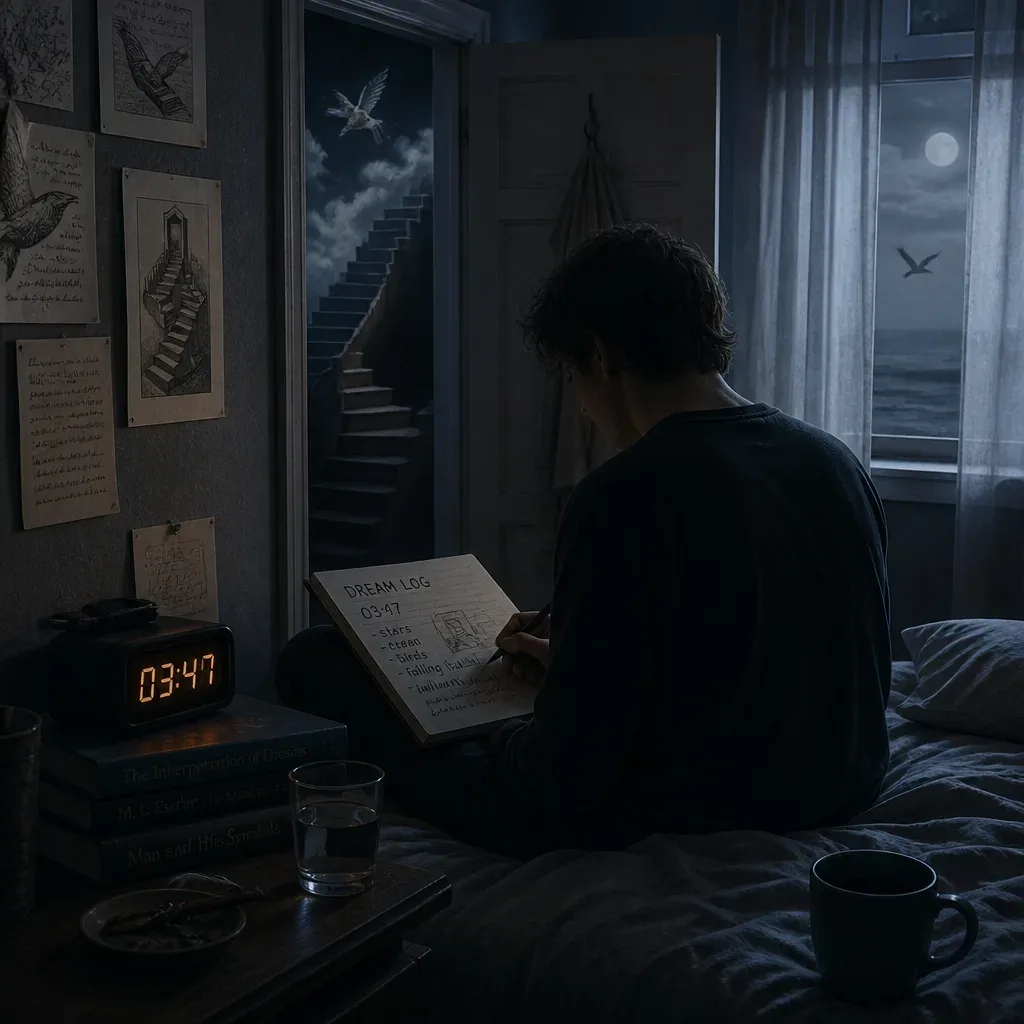
The morning after a vivid REM dream, write the dream down before interpreting it, then ask one honest question about what the dream is asking you to notice.
Do not begin with meaning. Begin with preservation. Dream memory decays quickly, and even two minutes of ordinary morning behavior can change it. In laboratory and home studies, dream recall is typically highest when reports are collected immediately after waking. Your journal is not decoration. It is the instrument.
My format has not changed since 2006: date, one-line summary, dream signs underlined, lucidity noted in the margin. It is boring because boring survives. Forty-one notebooks later, I trust the record more than I trust a dramatic interpretation made before coffee.
Use this simple page:
| Journal field | Example |
|---|---|
| Date and wake time | August 21, 6:35 a.m. |
| One-line summary | “I missed a train with my brother in a blue station.” |
| Main feeling | embarrassment, urgency |
| Dream signs | train, brother, impossible station |
| Waking link | deadline at work, text I haven’t sent |
| One question | “Where do I feel late?” |
If you want to compare symbols later, visit the Dream dictionary (A–Z hub), but wait until the raw dream is written. Interpretation is cleaner when it has evidence under it.
A dream written down becomes less mystical and more useful. It stops floating and starts answering to the page.
When should vivid REM sleep dreams worry you?
Vivid REM sleep dreams usually are not a problem, but talk to a doctor if they come with injury, severe distress, chronic insomnia, or major daytime sleepiness.
Nightmares are common. The American Academy of Sleep Medicine notes that nightmare disorder is considered when repeated nightmares cause distress or impairment, not merely because dreams are intense. Many people have vivid dreams during stress, grief, fever, pregnancy, medication changes, alcohol reduction, or irregular sleep. Context matters.
One particular concern is acting out dreams. During normal REM, muscle tone is reduced, which helps keep the body from performing the dream. If someone repeatedly punches, kicks, leaps from bed, or injures themselves or a partner while dreaming, clinicians may evaluate for REM sleep behavior disorder. This is not something to self-diagnose from one restless night. It is a plain reason to seek medical advice.
Also pay attention to frequency. One frightening dream after a hard week is ordinary. Four nights a week for months, with dread of sleep and poor daytime functioning, deserves care. People with trauma histories may have recurrent nightmares that respond to evidence-based treatments such as imagery rehearsal therapy; clinical reviews have supported its use, though outcomes vary.
For most readers, the best next step is modest:
- Write the dream in 3 to 6 lines.
- Name the strongest feeling.
- Note any obvious trigger from the last 48 hours.
- Return to sleep hygiene before hunting for rare explanations.
- Ask for help if fear of sleep starts shaping your days.
You dreamed vividly. You’re probably fine. But if the night keeps taking too much from the morning, let another person help you carry it.
Write the line before the day edits it.