dream science
Pregnancy Dreams: Why They Feel Vivid or Anxious
Pregnancy dreams often feel vivid, strange, or anxious. Learn why sleep changes, hormones, stress, and ordinary fear shape these dreams.
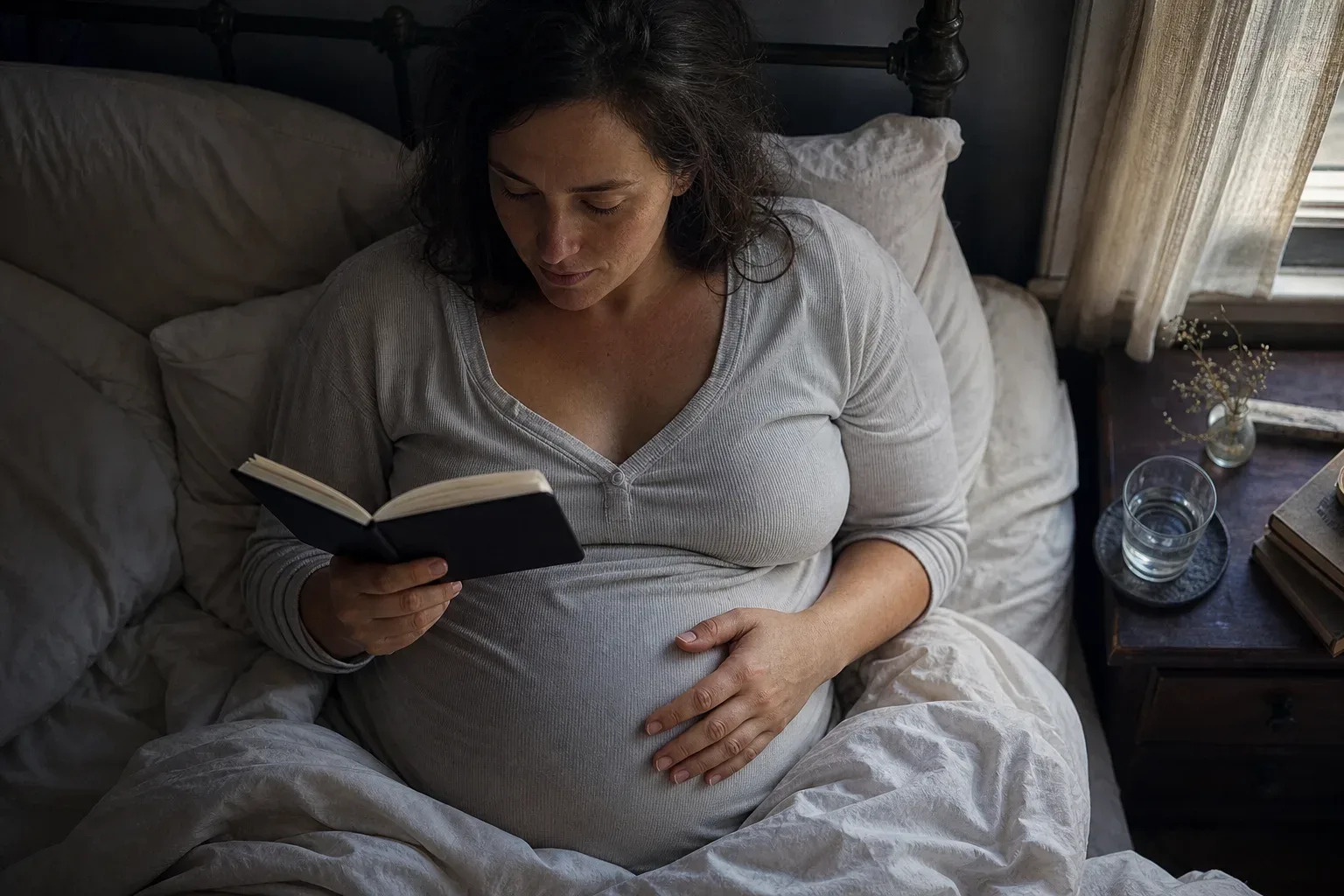
Pregnancy dreams are usually vivid or anxious because pregnancy changes sleep, body awareness, and emotional attention at the same time. More night waking means more dream recall, especially from REM sleep. The dreams don’t predict the future. They tend to show what your waking mind is already carrying.
Why do pregnancy dreams feel so vivid?
Pregnancy dreams feel vivid because you’re more likely to wake during or near REM sleep and remember what was already happening.
Dreams are most often reported after REM awakenings, though dreaming can happen in non-REM sleep too. A classic sleep-lab pattern, repeated across decades of research, is simple: if people are woken from REM sleep, they report dreams more often than when they’re woken from other stages. Pregnancy often adds more awakenings through nausea, urination, reflux, leg cramps, position changes, and later fetal movement. The dream may not be stranger than usual. You may just be catching it before it fades.
The National Sleep Foundation’s 1998 Women and Sleep poll is still widely cited in reviews because it reported that 78% of women said sleep was more disturbed during pregnancy than at other times. Later clinical reviews, including Pien and Schwab’s 2004 review in Sleep Medicine Reviews, describe sleep disruption as common across pregnancy, with different causes in each trimester. More waking creates more remembering. A dream remembered at 4:12 a.m. has sharper edges than one lost by 7.
Hormonal shifts may also change sleep architecture, though the evidence is more careful than popular writing makes it sound. Progesterone can increase sleepiness and affect breathing; estrogen shifts may influence temperature and mood. But it’s too neat to say, “hormones cause vivid dreams.” The better answer is that hormones, body changes, and interrupted sleep make the night more memorable.
A vivid dream is not always a louder dream. Sometimes it’s only a dream you woke up in time to hear.
If you want a symbol-by-symbol starting point, the Dream dictionary (A–Z hub) can help, but keep the body in the room. A pregnancy dream is often about the ordinary fact that the body has become impossible to ignore.
Why are pregnancy dreams so often anxious?
Pregnancy dreams are often anxious because the mind rehearses risk, care, and responsibility while the body is changing quickly.
Anxiety in pregnancy isn’t rare. A 2017 meta-analysis in Journal of Clinical Psychiatry estimated that about 15% of pregnant people meet criteria for an anxiety disorder, and many more report subclinical worry. Dream anxiety doesn’t mean pathology. It means the sleeping mind is using the material it has: appointments, symptoms, family comments, old stories about birth, finances, partnership, work, and the sudden arithmetic of another life.
Dream researchers often refer to the continuity hypothesis, associated with Calvin Hall, William Domhoff, and later dream-content work: dreams tend to continue waking concerns, not in tidy translation, but in emotional shape. If waking life asks, “Can I keep this safe?” the dream may answer with a locked door, a missing bag, a baby you can’t find, or a hospital corridor that keeps changing.
Anxiety in a dream is often rehearsal without the luxury of control. That’s why even wanted pregnancies can produce frightening dreams. Desire doesn’t cancel fear. Love doesn’t cancel calculation. A person may be thrilled and still dream of losing the baby in a supermarket, forgetting a medical appointment, or giving birth to something small and strange that needs care.
Nightmares can also rise when sleep is fragmented. Nielsen and Levin’s 2007 affect distress model of nightmares argues that nightmare intensity involves emotion regulation under stress, not just scary imagery. In plain language: the dream gets frightening when the emotional system can’t soften the image fast enough. That’s a human problem, not a moral failure.
If anxiety dreams become frequent and you dread sleep for more than a few nights in a row, it’s worth speaking with your midwife, OB, therapist, or primary-care clinician. The dream may be ordinary. Losing rest because of it deserves care.
Do pregnancy dreams mean I’m pregnant, ready, or not ready?
Pregnancy dreams don’t prove pregnancy, readiness, or unreadiness; they usually point to something developing, feared, protected, or unfinished.
People who are not pregnant also dream about pregnancy. They dream of positive tests, swollen bellies, secret births, impossible babies, or being responsible for a child they didn’t know they had. In these dreams, pregnancy often works as a symbol of development. Something is being carried before it can be shown. That “something” might be a plan, a grief, a relationship, a creative project, a diagnosis, a new role, or a decision that has already changed you privately.
This is where dream interpretation needs honesty. There’s no good evidence that pregnancy dreams predict pregnancy. Folklore in many cultures says otherwise, and those stories have a long life because they’re intimate and memorable. A grandmother’s kitchen may hold a dream tradition with real emotional value. It still isn’t a test result.
Clinical and content-analysis research points in a quieter direction: dreams often reflect salient concerns. A small body of pregnancy dream studies has found more infant, birth, and maternal themes among pregnant dreamers, especially later in pregnancy. That doesn’t make the dream prophetic. It makes it attentive.
Here’s a simple way to separate common readings:
| Dream image | Psychological reading | Folklore reading, labeled honestly |
|---|---|---|
| Positive pregnancy test | Anticipation, uncertainty, private knowledge | Sometimes treated as news coming soon |
| Giving birth | Pressure, completion, exposure, timing | In some traditions, a sign of change |
| Misplacing the baby | Fear of responsibility or not being ready | Sometimes read as a warning, without evidence |
| Pregnant when not pregnant | Something developing in secret | Often read as luck or family news |
Dreams are not verdicts. They’re weather reports from the part of you that noticed before you had language.
What do common pregnancy dream variations usually mean?
Common pregnancy dream variations usually mean the dream is circling a specific feeling: protection, exposure, timing, bodily fear, or change.
A dream about giving birth quickly may show impatience, fear of being unprepared, or the sense that life is moving faster than your plans. A dream about labor that never ends may point toward exhaustion or a feeling of being evaluated. According to ACOG patient guidance, sleep problems, physical discomfort, and frequent urination are common pregnancy complaints; by the third trimester, the body often supplies enough interruption to make any dream feel urgent.
A dream about the baby being unusual, speaking, tiny, animal-like, or not human is more common than people admit. The mind uses odd images when the real situation is too large to picture. You’re not being cruel. You’re trying to imagine a person you haven’t met. Strange is not the same as wrong.
A dream about miscarriage, stillbirth, blood, or losing the baby is the one that sends people to search at 6:40 a.m. These dreams can be deeply upsetting. They’re also often anxiety dreams, especially after medical appointments, family stories, previous loss, or internet reading. If you have bleeding, pain, reduced fetal movement later in pregnancy, or any symptom your clinician told you to watch for, call for medical advice. If you only had the dream, breathe first.
A dream about being pregnant in public, exposed, or judged may have less to do with the baby and more to do with identity. Pregnancy is private until it isn’t. The body tells before the mouth does. That can feel beautiful, intrusive, or both.
For comparison, lucid dreams can feel vivid for a different reason: the dreamer becomes aware inside the dream. If that’s what happened, our Lucid dreaming pillar explains the distinction without making it mystical.
How should I read a pregnancy dream the morning after?
Read a pregnancy dream by starting with the feeling, then the image, then the waking situation it may be echoing.
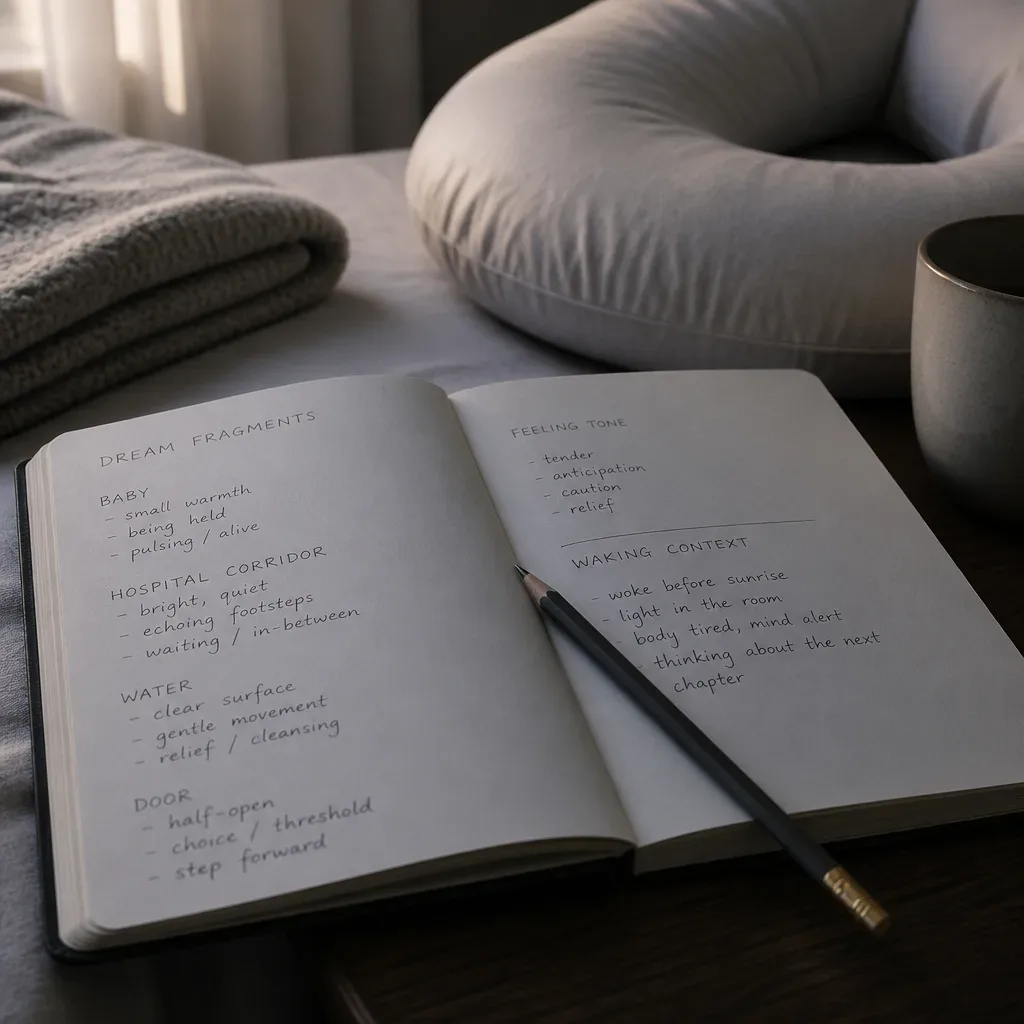
Morning interpretation should be small. The dream is already full. You don’t need to turn it into a private courtroom. Research on dream recall suggests that dreams fade quickly after waking, often within minutes, unless rehearsed or written down. That means the first note matters more than the perfect meaning. Use the language you actually remember.
Try this five-minute order:
- Name the strongest feeling. Fear, tenderness, disgust, awe, shame, relief, anger.
- Write the central image. The baby, the belly, the room, the blood, the door, the test.
- Add one waking fact. Appointment tomorrow, argument yesterday, nausea at 3 a.m., family pressure.
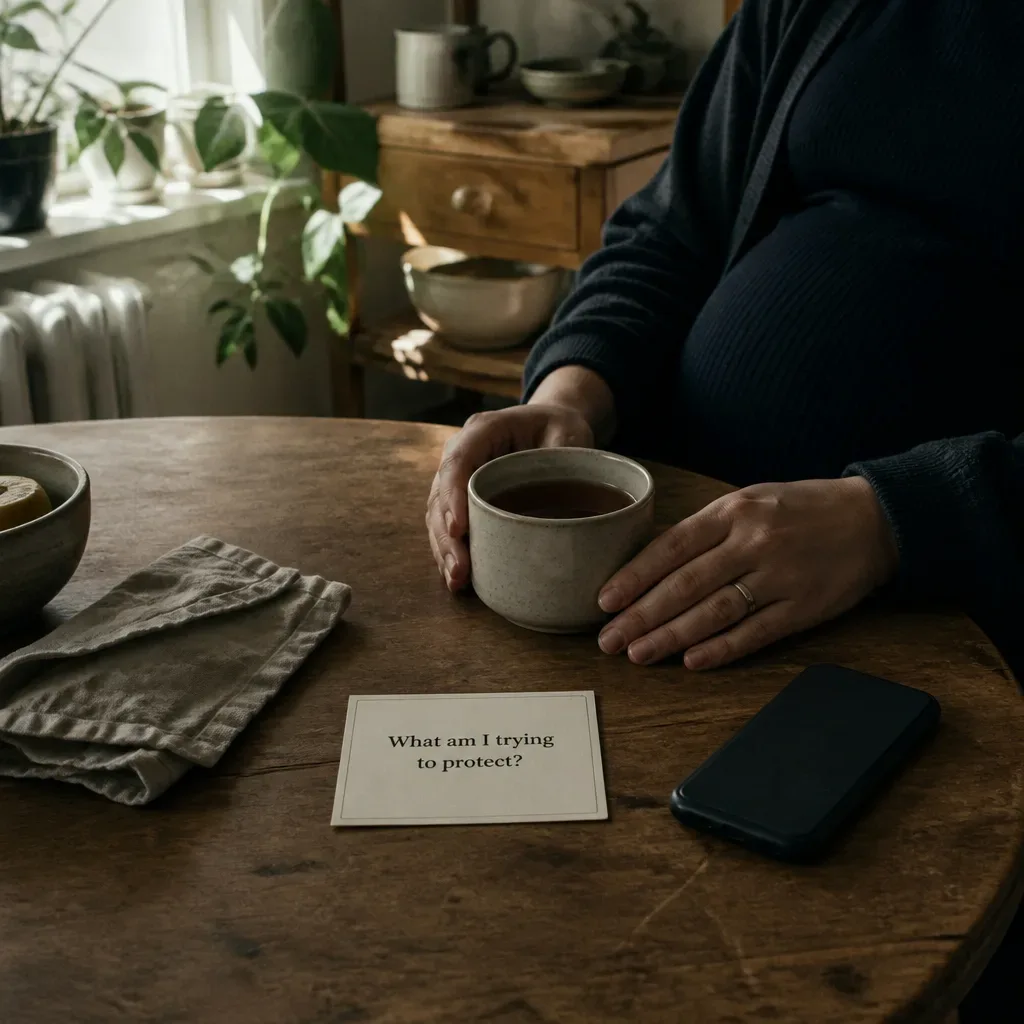
- Ask one honest question. “What am I trying to protect?” works better than “What does this predict?”
- Leave it alone for a few hours. Meaning often gets clearer after breakfast, not before.
If you want a second pass, you can use the AI dream interpreter tool as a prompt for reflection, not as an authority over your body. A tool can notice patterns. You still know the room you woke in.
The Dream dictionary (A–Z hub) is also useful when a symbol repeats. Look up “baby,” “blood,” “hospital,” or “water,” but don’t force one symbol to carry the whole dream. A dream is a sentence, not a single word.
Useful morning questions include:
- What part of this dream felt most real?
- What was I responsible for in the dream?
- Who helped me, and who was absent?
- Did the dream make me want protection, privacy, reassurance, or action?
- What would I tell a friend who had this same dream?
That last question is often the kindest one. We interpret ourselves harshly. We interpret our friends like human beings.
What do cultural and spiritual traditions say about pregnancy dreams?
Cultural and spiritual traditions often treat pregnancy dreams as signs of change, but those meanings are folklore, not evidence.
Many traditions give pregnancy dreams a bright weight. In some families, dreaming of pregnancy means news is coming. In others, it means money, marriage, responsibility, illness, or a secret becoming public. The meanings differ so widely that contradiction is part of the record. One household calls the dream lucky. Another calls it a warning. Both may be speaking from memory rather than measurement.
Jung-adjacent interpretation often reads pregnancy as an image of becoming: something new forming in the psyche before it can be lived outwardly. That can be useful if it stays humble. The symbol is not a command. It’s a way to ask what is forming, what needs time, and what should not be rushed. Jung wrote often about dream symbols as expressions of unconscious material, but modern clinical use varies, and not every therapist reads dreams in a Jungian way.
Religious readings are more delicate. A pregnancy dream may feel sacred to the dreamer, especially after infertility, loss, prayer, or family longing. Respect that. Also keep your feet on the floor. A meaningful dream doesn’t have to be predictive to matter. Meaning and prediction are different things.
If recurring pregnancy dreams keep returning, you may be meeting the same concern from several angles. That’s a good moment to read more about recurring dreams, because repetition usually points to attention, not fate.
The waking counterpart can be useful here, but only if it’s plain. The AYA Method is a daily audio manifestation practice. Each day you listen to a short personalized recording, your Dream-Self Moment, narrated from the version of you who has already manifested the life you intend. Listening is the practice. Repetition is the work. The audio is the method. For some people, that kind of morning audio gives a recurring dream less room to be the only voice in the day.
When are pregnancy dreams worth bringing up with a doctor or therapist?
Bring them up when the dream causes ongoing distress, steals sleep, repeats after trauma, or arrives with symptoms you were told to monitor.
A frightening dream by itself is common. A pattern that changes your behavior deserves help. If you avoid sleep, wake in panic several nights a week, or spend hours checking symptoms after dreams, tell a clinician. If you have a history of pregnancy loss, birth trauma, assault, panic disorder, PTSD, or depression, nightmares can be part of a larger stress response. The dream doesn’t mean danger is present. It may mean support is needed.
Postpartum and pregnancy mental health groups often note that intrusive images and nightmares can appear alongside anxiety or obsessive checking. The American College of Obstetricians and Gynecologists recommends screening for depression and anxiety during pregnancy and postpartum; many practices use brief tools such as the Edinburgh Postnatal Depression Scale or GAD-7. These tools are not dream tests. They’re ways to see whether distress is becoming too heavy to carry alone.
Call your pregnancy care team for physical symptoms: bleeding, severe pain, severe headache, vision changes, fever, reduced fetal movement when that applies, or anything your clinician marked as urgent. Call because of the symptom, not because of the dream.
For the morning after, write one line:
“This dream showed me I’m worried about _____, and today I can care for that by _____.”
Keep it ordinary. If the dream was about losing the baby, the line might be, “This dream showed me I need reassurance, and today I can ask my midwife which symptoms actually matter.” If the dream was about giving birth in public, it might be, “This dream showed me I need privacy, and today I can decide who gets information.”
The night can be strange and still be safe.
Write the line down before the day starts answering for you.