dream symbolism
Naked Dream Meaning: Exposure, Shame, or Truth?
Naked dream meaning explained with psychology, folklore, and morning questions for dreams of exposure, shame, judgment, honesty, and being seen.
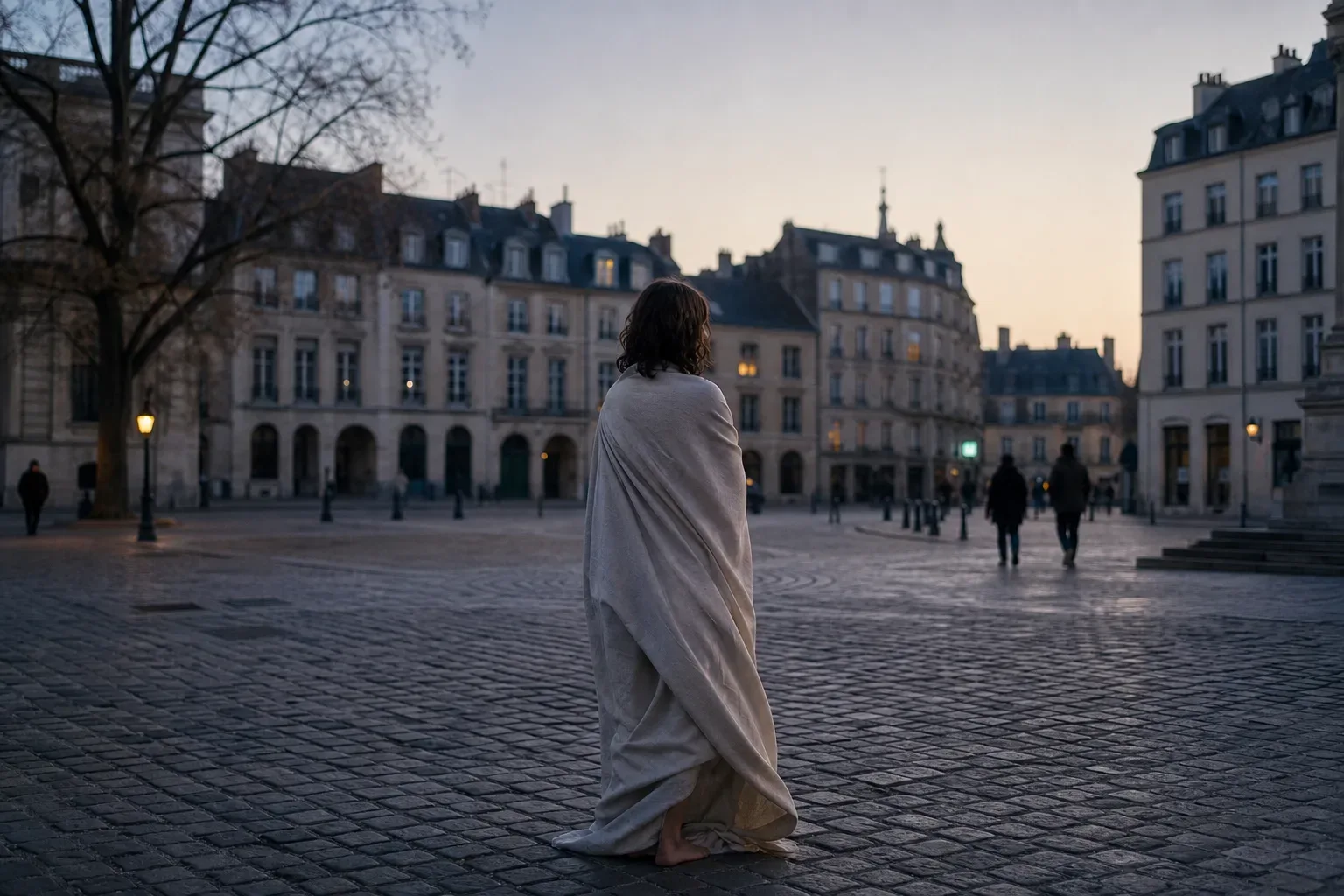
A naked dream meaning usually centers on exposure: you feel seen before you feel ready. It can point to shame, social evaluation, honesty, or a fear that some private fact is becoming visible. The details matter most: who saw you, where you were, and whether you felt panic, indifference, or relief.
What does a naked in public dream usually mean?
A naked in public dream usually means some part of you feels unprotected, inspected, or too visible.
In dream reports, nakedness is rarely only about the body. It tends to be about the social body: the self you bring into meetings, classrooms, family kitchens, text threads, and first dates. Calvin Hall and Robert Van de Castle coded thousands of dream reports in the 1960s and found that dreams often preserve waking social concerns, especially conflict, embarrassment, and interpersonal tension. Their system wasn’t built around one symbol at a time, but it gives us a useful frame: dreams use ordinary social scenes to stage emotional pressure.
The question is not, What does nakedness mean everywhere? The question is, What was stripped away in this dream? A uniform, a suit, a school outfit, a wedding dress, a hospital gown. Each missing layer has a different grammar. If you were naked at work, the dream may circle competence. If you were naked at school, it may circle evaluation. If you were naked in front of family, it may circle old roles you thought you’d outgrown.
Dreams are private theaters that borrow public furniture. A street, office, classroom, or bus can become a stage where one hidden feeling is given a body.
This is why a dream dictionary (A–Z hub) can help, but only if you bring your own morning notes to it. A symbol gives the grammar. Your life gives the accent. Two people can dream the same bare body and mean opposite things: one is ashamed; one is finally done pretending.
Is the dream about shame, judgment, or social anxiety?
It is often about shame or judgment when the dream includes panic, hiding, laughter, punishment, or a crowd staring.
Shame dreams tend to have a particular weather. You notice your body before anyone else does. You search for a towel, coat, curtain, bathroom, or door. The dream slows down around the problem of being seen. In waking life, social anxiety research often describes fear of negative evaluation as a central feature; the DSM-5 notes that social anxiety disorder involves marked fear of situations where a person may be scrutinized. A dream is not a diagnosis, but it can borrow that same pattern.
The old psychological reading is simple and still useful: nakedness means defenselessness. Sigmund Freud read many clothing dreams through wish and censorship, while later Jung-adjacent traditions gave nakedness a wider meaning: persona removed, social mask gone. Jung used the word persona for the face we make for public life. A naked dream can show the moment when that face slips.
Notice the witnesses. A crowd means one thing; one ex means another. A boss, parent, teacher, doctor, or stranger can each point to a different kind of judgment. If the dream appears before a review, exam, medical visit, legal conversation, or difficult confession, the connection may be quite plain.
Common shame markers include:
- trying to cover the genitals, chest, scars, or stomach
- being unable to find clothes that fit
- walking normally while feeling inwardly frantic
- hearing laughter, whispers, or camera clicks
- realizing too late that everyone else is dressed
The dream may not be saying you’re exposed. It may be saying you’re afraid that exposure would cost you love.
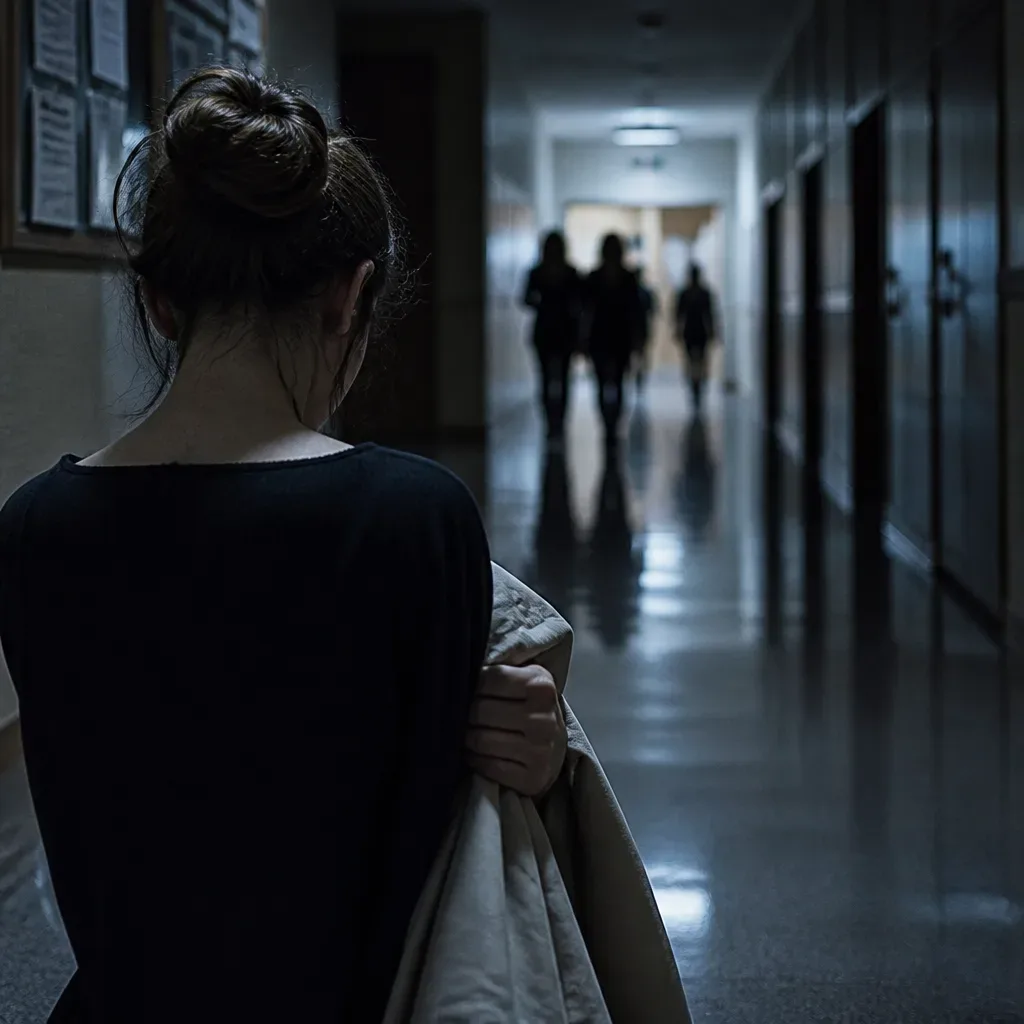
What if no one notices you’re naked?
When no one notices you’re naked, the dream often points to the gap between private self-consciousness and public attention.
This version can be strangely quiet. You walk through a station or classroom without clothes, and people keep reading, eating, checking phones, or talking. The fear belongs almost entirely to you. In psychology, the spotlight effect names a related waking bias: people tend to overestimate how much others notice their appearance and mistakes. In a well-known 2000 study by Thomas Gilovich and colleagues, college students wearing an embarrassing T-shirt believed far more people noticed it than actually did.
A dream like this can be merciful. It may show that the judgment you fear is not arriving. Your nervous system is loud, but the room is ordinary. That doesn’t mean the feeling is false. It means the dream is separating feeling from evidence.
There is another reading. If no one notices, you may feel unseen in a different way. You are exposed, but not recognized. This is common in dreams after a confession falls flat, a grief goes unacknowledged, or a personal change is ignored by people who still treat you as your old self. Nakedness then isn’t humiliation. It is lonely truth.
Ask one clean morning question: Did I want to hide, or did I want someone to finally look closely? The answer changes the whole dream. A lack of attention can soothe one dreamer and wound another.
For recurring versions, the AI dream interpreter tool can help you compare reports over time, especially if you enter the exact details rather than a polished explanation.
Do cultural and spiritual traditions read naked dreams differently?
Cultural and spiritual traditions often read naked dreams as signs of truth, poverty, innocence, humiliation, or moral exposure, but these are traditions, not proof.
In many older sources, clothing stands for status. To be without it is to lose rank, protection, or public role. Biblical stories make nakedness carry both innocence and shame, especially in Genesis, where awareness of nakedness arrives with self-consciousness. In some Islamic dream interpretation traditions attributed to medieval compilers such as Ibn Sirin, nakedness may be read differently depending on setting, modesty, and whether the dreamer feels ashamed. These sources are historically important, but they are not clinical evidence.
Folklore also keeps a softer reading: the naked person is truthful. Nothing is hidden. In some European folk interpretations, appearing naked could suggest vulnerability before a community; in others, it could mean freedom from deceit. The contradiction is useful. Symbols don’t behave like traffic signs. They behave like old words with several meanings.
Modern readers often mix these traditions with psychology. That is fine if we label the layers honestly. Research can tell us that dreams frequently continue waking concerns. Folklore can tell us how a culture has imagined exposure across centuries. Your dream can then tell us which layer actually moved you at 7 a.m.
A careful reading keeps three baskets separate:
| Layer | What it can offer | What it can’t do |
|---|---|---|
| Sleep research | Patterns across many dream reports | A fixed meaning for your symbol |
| Clinical tradition | Language for shame, persona, and vulnerability | Certainty about your private life |
| Folklore | Cultural memory and old symbolic associations | Reliable prediction |
Dreams reflect; they don’t foretell. A folklore reading may be beautiful and still not be a forecast.
Why does the location of the naked dream matter?
The location matters because it tells you which part of life feels exposed.
A naked dream in a school often points to evaluation, even for people who haven’t been students in 30 years. School is one of the mind’s favorite stages for being tested. A naked dream at work may concern competence, salary, authority, impostor feelings, or visibility. A naked dream in a church, mosque, temple, or family ceremony may touch belonging, modesty, or moral judgment. A naked dream in a hospital may be less symbolic if you’ve had recent medical stress; dreams often use the day’s residue, as sleep researchers have noted since Freud’s day and in later continuity theories such as those discussed by dream researcher Michael Schredl.
Location also changes the body. In a locker room, nakedness may be ordinary. In a courtroom, it isn’t. In your childhood home, it may point backward. In an airport, it may point to transition and the fear of being unprepared in front of strangers.
Use the setting as a sorting tool:
- Name the place exactly, not generally. Write office kitchen, not work.
- Name the rule of that place. Who is allowed there? What must be covered?
- Name what you were supposed to be doing. Presenting, waiting, running, praying, buying milk.
- Name the witness with the most emotional charge.
- Name the waking situation that carries the same feeling.
If the dream becomes lucid and you realize you’re dreaming while naked, the reading changes again. Lucidity can make exposure less automatic and more curious. Our lucid dreaming pillar explains the basics, including reality checks and the difference between controlling a dream and simply noticing it.
The setting is the sentence around the symbol. Without it, nakedness is only a word.

What should you do the morning after a naked dream?
The morning after, write the dream plainly and connect it to one recent moment of feeling seen, judged, or honest.
Dream recall fades quickly for many people. Sleep researcher Ernest Hartmann argued that dreams often picture emotion through central images, and a naked body in public is a very efficient central image. You don’t need a perfect record. You need the first nouns and the strongest feeling. Do this before checking messages if you can; even 2 minutes helps preserve the texture.
Try this short record:
- Scene: Where was I naked?
- Witness: Who noticed, or who failed to notice?
- Feeling: Shame, fear, relief, anger, calm, loneliness?
- Missing layer: What clothing or role was absent?
- Waking echo: Where did I feel similarly exposed yesterday?
Then write one sentence without interpretation: I was naked in the conference room and my sister laughed. That sentence is worth more than a grand theory. It gives you material you can return to after coffee, after work, after the first sting fades.
If the dream is part of repeated nightmares, trauma reminders, or sleep disruption that affects daytime functioning, talk with a doctor or licensed mental health professional. The dream itself isn’t dangerous. Repetition plus distress deserves care.
For ordinary recurring dreams, you can also track them beside other symbols, such as teeth, snakes, houses, or water. The teeth falling out dream meaning often overlaps with nakedness because both can involve appearance, speech, and loss of control. The pattern matters more than any single night.
Can a naked dream point to truth rather than embarrassment?
Yes, a naked dream can point to truth when the feeling is calm, relieved, defiant, or clean.
Not every exposed body is ashamed. Sometimes the dreamer stands naked in sunlight, water, a doorway, or an empty street and feels no need to cover up. That can mark a wish for honesty: less performance, fewer costumes, less careful editing of the self. Jungian language might call this a loosening of persona. Contemporary psychology might simply call it congruence, the relief of acting closer to what one actually feels.
The emotional tone is the judge. Panic says, I may be found out. Relief says, I don’t have to keep hiding. Defiance says, you can look and I will remain myself. A dream can use the same image for all three because the image is not the meaning. The meaning is the image plus your feeling plus your life.
This is where waking practice can meet night material. A recurring dream shows what your attention keeps returning to, the fears and wants underneath it. The AYA Method is a daily audio manifestation practice. Each day you listen to a short personalized recording, your Dream-Self Moment, narrated from the version of you who has already manifested the life you intend. Listening is the practice. Repetition is the work. The audio is the method.
That matters here because a naked dream may be asking for a smaller, braver rehearsal by day. Not a public confession. Not a dramatic reinvention. Perhaps one true sentence. Perhaps one less apology. Perhaps one outfit, email, boundary, or conversation that feels like skin rather than costume.
If you want a second symbolic angle, compare the dream with other body or visibility entries in the Dream dictionary (A–Z hub). Patterns across 3 or 4 dreams often speak more honestly than one striking image.
Write this line down: Where am I tired of dressing myself for approval?