lucid dreaming
MILD Lucid Dreaming With a Bedtime Audio Cue
MILD lucid dreaming with a bedtime audio cue helps you rehearse dream signs, wake calmly, and remember when a dream turns strange. Use this gentle guide tonight.
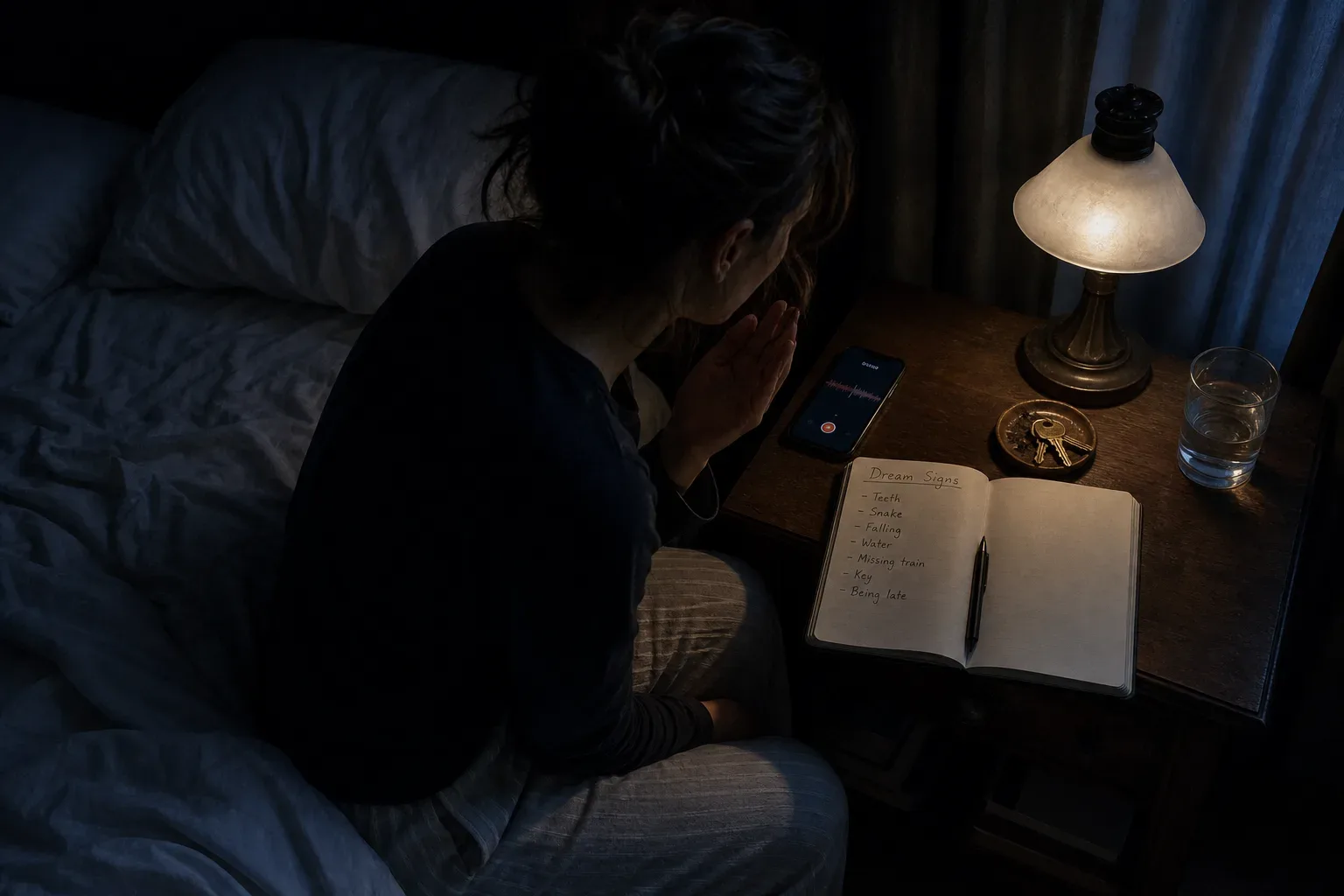
MILD lucid dreaming uses memory rehearsal to help you recognize a dream while it’s happening. A bedtime audio cue can support it by repeating your dream sign in a calm phrase before sleep. It works best with dream recall, brief night waking, and patience, not with force.
What is MILD lucid dreaming, exactly?
MILD lucid dreaming is a memory technique: you rehearse remembering that you’re dreaming the next time a dream sign appears.
The name stands for mnemonic induction of lucid dreams. Stephen LaBerge described it in the 1980s after using eye-signal research to show that some dreamers could become lucid during REM sleep and communicate that fact from inside the dream. In plain terms, MILD trains a future memory: when the impossible thing happens, I’ll notice it.
The method usually has 4 parts. You wake after a dream. You recall it as clearly as you can. You identify the clue you missed. Then you fall asleep while intending to notice that clue next time. It’s less dramatic than many lucid dreaming instructions, and that’s why it survives. A steady intention often does better than a tense demand.
Research is modest but real. A 2017 study by Denholm Aspy and colleagues in the journal Dreaming followed 169 participants testing reality checks, MILD, and wake-back-to-bed combinations. MILD worked best when people returned to sleep quickly after setting the intention. A separate review of lucid dreaming research often reports that about 55% of adults have had at least one lucid dream, while roughly 23% report them monthly, though estimates vary by sample.
If you’re new, start with the basics in our lucid dreaming guide. MILD is not about controlling every scene. It’s about one honest recognition: this is a dream.
Lucidity begins as a small act of remembering inside a strange room.
Why add a bedtime audio cue to MILD?
A bedtime audio cue helps because it makes the intention repeatable, familiar, and easier to recall when the night is foggy.
Most people lose their best lucid dreaming plan somewhere between turning off the lamp and the first REM cycle. Sleep has its own weather. A short recording gives the mind a clean phrase to carry inward. The cue might say: When the hallway changes shape, I’ll pause and ask whether I’m dreaming. That’s enough.
This is related to, but not identical with, targeted memory reactivation. In sleep research, cues paired with learning can sometimes bias memory during sleep. Oudiette and Paller summarized this field in 2013, noting that sounds and smells associated with prior learning may influence later recall. That doesn’t mean a recording can command a lucid dream. It means the sleeping brain is not sealed off from memory.
A cue also helps with consistency. The American Academy of Sleep Medicine recommends at least 7 hours of sleep for most adults; if you’re sleeping 5 or 6 hours, lucid dreaming practice becomes thinner because late-night REM is being cut short. Audio can’t replace sleep. It can only give shape to the minutes you already have.
The best cues are quiet and specific. Avoid long scripts, mystical promises, and anything that makes bedtime feel like a test. Your cue should know your dream signs. If you often dream of your childhood house with the wrong staircase, name that staircase. If your phone never works in dreams, name the phone.
Good audio for MILD is not a spell. It is a note left for your future sleeping mind.
How do you choose the right dream signs for the cue?
Choose dream signs that recur, feel emotionally charged, or break ordinary rules in ways you often overlook.
A dream sign is any repeating clue that you’re dreaming. Some are obvious: flying, dead relatives appearing alive, water indoors, rooms that change size. Others are ordinary but personally marked: your old hospital unit, a school you haven’t attended in 20 years, a kitchen from your grandmother’s house. The symbol matters because it belongs to you.
Start with 3 to 7 recent dreams if you have them. If not, use whatever you remember from the last month. The Dream dictionary (A–Z hub) can help you notice common symbols, but don’t let a general meaning erase the private one. A snake means one thing in a clinical paper and another thing in your aunt’s garden. Both can be true enough to write down.
Use this quick sorting table:
| Dream sign type | Example | Best cue wording |
|---|---|---|
| Place distortion | My apartment has extra rooms | When my home changes, I’ll know I’m dreaming |
| Impossible technology | My phone melts or won’t dial | When my phone fails strangely, I’ll pause |
| Repeated person | My late father is in the room | When I see him, I’ll ask if this is a dream |
| Body change | Teeth loosen, hands look wrong | When my body changes, I’ll look calmly |
| Time confusion | I’m late for a class from years ago | When old time returns, I’ll notice |
Dream recall itself is trainable. In sleep lab and diary studies, people who record dreams regularly tend to report more recall than people who don’t, though the size of the effect varies. Keep the work simple: title the dream, list 3 images, circle 1 sign.
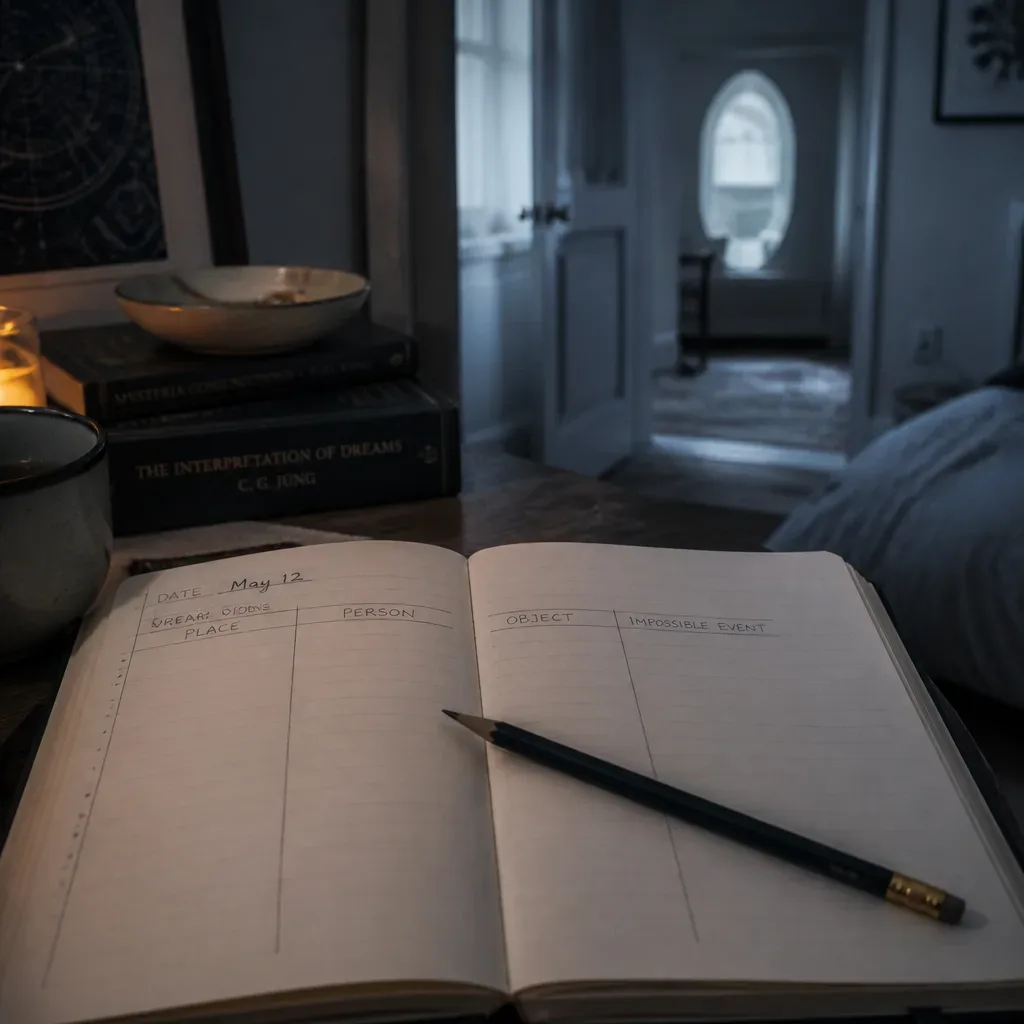
A sign that scares you can still be useful, but treat it gently. If the dream includes trauma content or panic, don’t turn it into a nightly drill. Choose a neutral sign first, like the wrong staircase or the impossible phone. Safety comes before lucidity.
How should you record and use the bedtime audio cue?
Record a 20-to-45-second cue in your own voice, naming one dream sign and the recognition you want to remember.
Your voice is ordinary. That’s an advantage. It doesn’t perform for you, and it doesn’t startle you. Speak slowly, as if leaving a note for yourself on a difficult morning. You don’t need music, binaural beats, or layered sound. In small studies, audio stimulation during sleep can affect awareness, but it can also fragment sleep if mistimed or too loud.
Use this 6-step structure:
- Name the sign. When I see the extra room in my apartment…
- Name the action. …I’ll pause and look at my hands.
- Name the recognition. I’ll remember this is a dream.
- Keep the tone plain. No pressure, no countdown.
- Repeat once. More isn’t always better.
- End with sleep. Now I can rest.
A full cue might sound like this: Tonight, if I find the extra room in my apartment, I’ll pause. I’ll look at my hands. I’ll remember that changing rooms are my dream sign. If I’m dreaming, I can notice it calmly. Now I can sleep.
Play it before sleep, not all night. If you naturally wake after a dream around 4 or 5 a.m., you may replay it once at very low volume or simply repeat it mentally. REM periods tend to lengthen in the second half of the night, in cycles of about 90 minutes, which is why many lucid dreaming methods use later sleep rather than the first hour.
Keep your phone away from your hand if it tempts scrolling. A cue loses its tenderness when it becomes another screen habit. Use airplane mode if you can. Sleep hygiene advice from clinical groups repeatedly points to regular timing, low light, and fewer alerts near bed.
What do you do when you wake from a dream at night?
When you wake from a dream, stay still, recall the dream, revise the missed sign, and return to sleep with the cue in mind.
This is the heart of MILD. The moment after waking is soft and useful. Don’t sit up too fast. Don’t reach for messages. Replay the dream backward if forward recall slips away. Ask: what was the strange thing I accepted as normal? That answer becomes the next rehearsal.
Here is the night-waking version:
- Keep your eyes closed for 10 to 30 seconds.
- Give the dream a title, even a bad one.
- Find the missed sign.
- Say the cue once in your head.
- Picture yourself back in the dream, noticing the sign.
- Let the image fade as you fall asleep.
LaBerge’s original MILD instructions emphasized this return to the dream. Aspy’s 2017 work also found timing mattered: participants who practiced MILD and fell asleep within about 5 minutes had higher lucid dream rates than those who stayed awake longer. That doesn’t mean you should watch the clock. It means the practice likes drowsiness.
If you want help sorting a dream in the morning, our AI dream interpreter tool can give you a first pass, especially when a symbol keeps repeating. Use it as a notebook companion, not an authority. Your own association is still the cleanest clue.
The morning after, write only what you can bear to keep doing. A dream journal that takes 2 minutes is better than a beautiful system you abandon after 3 nights.
How can you measure progress without making sleep worse?
Measure dream recall, cue consistency, and recognition attempts before you measure lucid dreams.
Lucid dreaming is irregular for many people. That doesn’t mean nothing is happening. If you remember more dreams, identify signs faster, or almost notice the strangeness, the method is taking root. In behavioral sleep work, small repeated cues often matter more than rare dramatic outcomes. The Journal of Behavioral Medicine has published for decades on how self-monitoring can change habits; the same principle applies gently here.
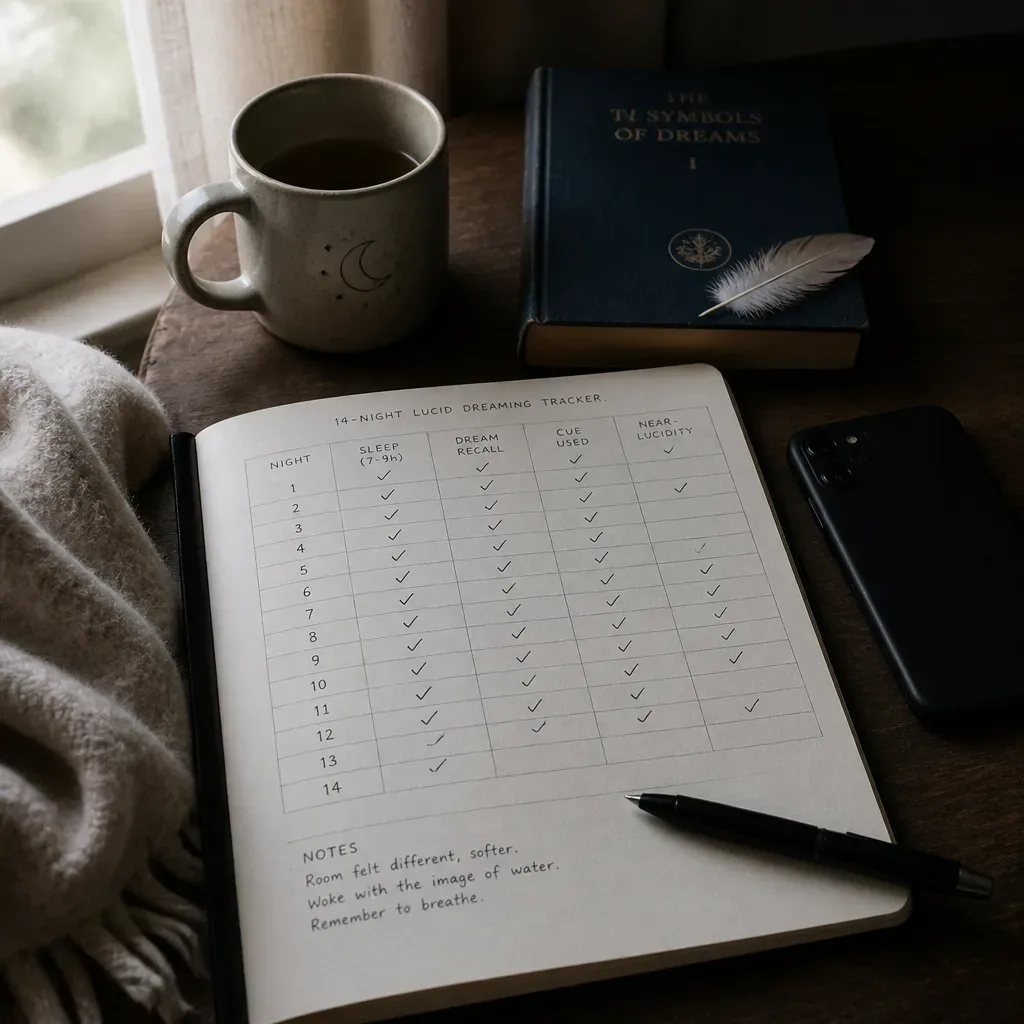
Track 4 numbers for 14 nights:
| Measure | What to record | Why it matters |
|---|---|---|
| Sleep length | Estimated hours slept | Less than 7 hours can reduce late REM |
| Dream recall | 0, 1, or 2+ dreams | Recall is the ground of MILD |
| Cue used | Yes or no | Consistency beats intensity |
| Near-lucidity | Missed, almost noticed, noticed | Near misses show learning |
Don’t score yourself like a student. This is observation, not judgment. If 14 nights feel like too much, try 7. If you work shifts, have a baby, or sleep in split pieces, count any main sleep period as the night. I spent 9 years on night shifts; perfect sleep advice often assumes a life many people don’t have.
This is also where waking audio practices can make sense. The AYA Method is a daily audio manifestation practice: each day you listen to a short personalized recording, your Dream-Self Moment, narrated from the version of you who has already manifested the life you intend. Listening is the practice. Repetition is the work. The audio is the method. For lucid dreaming, your MILD cue is narrower: it trains recognition of a dream sign. Both respect the same fact. Repeated words can become a remembered shape.
Keep the two practices distinct. Your MILD recording belongs to sleep and dream signs. Your waking audio practice belongs to the person you’re choosing to rehearse in daylight.
When should you pause MILD lucid dreaming practice?
Pause MILD if it increases anxiety, worsens insomnia, or makes you afraid of going to sleep.
Lucid dreaming has a soft reputation, but sleep is still the main task. If you’re sleeping poorly, chasing lucidity can become another form of wakefulness. The Centers for Disease Control and Prevention has reported that about 1 in 3 U.S. adults don’t get enough sleep. That statistic matters here. A practice that costs sleep is too expensive.
Be especially careful if you have frequent nightmares, panic at night, or sleep paralysis. Sleep paralysis can feel terrifying: pressure on the chest, a sensed presence, the body refusing to move. It is usually temporary and related to REM atonia persisting into waking. Strange is not the same as dangerous. Still, if episodes are frequent, injurious, or tied to severe daytime sleepiness, talk with a doctor or sleep clinician.
Use a pause plan:
- Stop the audio cue for 1 week.
- Keep only a brief dream note in the morning.
- Return to regular sleep timing where possible.
- Avoid late-night forums if they make you more alert.
- Restart with a neutral dream sign, not a frightening one.
Folklore often treats lucid dreams as messages, tests, or visits. Report that tenderly, but keep your feet on the floor. Dreams reflect memory, fear, longing, and image. They don’t reliably foretell the future. If a dream of your dead mother comforts you, receive the comfort. You don’t have to prove what kind of comfort it was.
For more grounding before you practice again, revisit lucid dreaming basics and compare your symbols with the dream dictionary only after writing your own associations first.
Tonight, leave one small sentence by the bed and let sleep remain sleep.