dream symbolism
House Dream Meaning: Rooms, Doors, and the Self
House dream meaning often points to the self: rooms, doors, repairs, and hidden spaces show what you remember, avoid, or are quietly building.
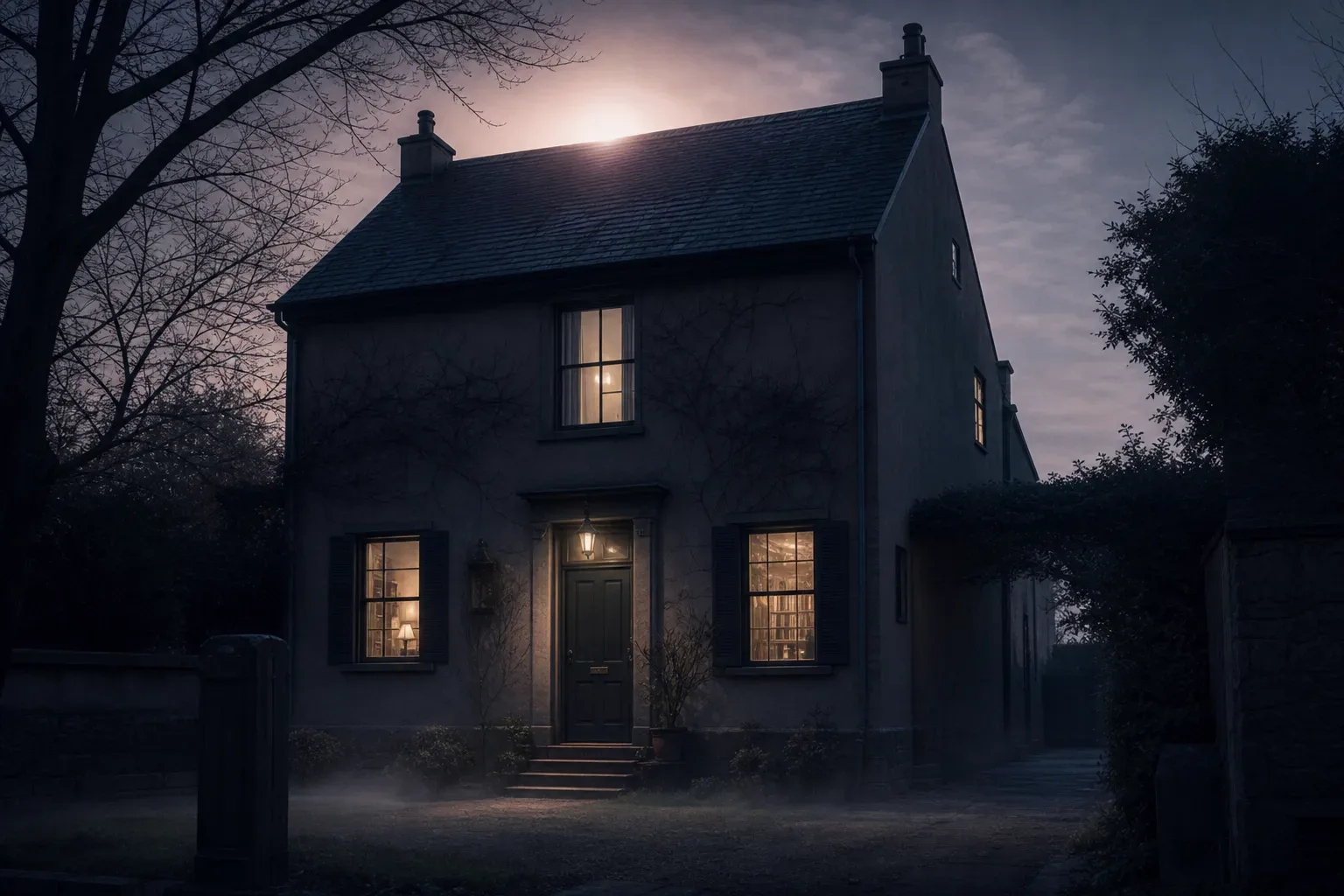
House dream meaning usually points to the self: your body, memory, family story, private fears, and the identity you’re building. Rooms tend to show separate areas of life. Doors show thresholds and boundaries. The house condition matters, but your feeling in the dream matters most.
What does a house in a dream usually mean?
A house in a dream usually represents the dreamer’s sense of self, including memory, identity, privacy, and the ordinary structures that hold daily life.
This reading has a long clinical history. Carl Jung often treated buildings as images of the psyche, with upper rooms, lower rooms, and hidden rooms suggesting different layers of awareness. That isn’t a laboratory rule. It’s a tradition of interpretation. Still, it matches what many dreamers report: the house feels like them, even when it looks nothing like any house they’ve lived in.
Modern dream research is more cautious. G. William Domhoff, who built on the Hall and Van de Castle dream coding system from the 1960s, found that dreams usually continue waking concerns rather than inventing messages from nowhere. If you’re moving, recovering from illness, caring for parents, or changing work, a house dream may borrow architecture to show how life feels organized or disorganized.
A house in a dream is not a diagnosis; it is a floor plan of attention. A clean, sunlit house may come during a period when things feel legible. A collapsing house may appear when support feels thin. A crowded house may point to too many demands. These meanings are tendencies, not verdicts.
Use the Dream dictionary (A–Z hub) for symbol patterns, but don’t hand your dream over to a list. The house means one thing in research and another thing in your grandmother’s kitchen. Both are worth knowing.
Why do different rooms matter so much?
Rooms matter because dreams often divide one life into smaller, emotionally distinct areas that can be noticed one at a time.
A kitchen may point to nourishment, family rhythm, labor, appetite, or resentment over care. A bedroom may involve rest, intimacy, illness, privacy, or retreat. A bathroom often carries themes of exposure, cleansing, embarrassment, or the basic body. In the Hall and Van de Castle system, indoor settings are common enough to be coded as ordinary dream environments, not rare symbols.
The room you avoid may be carrying the sentence you haven’t said. If you refuse to enter a basement, ask what you’re keeping below normal conversation. If you keep returning to an attic, ask what inherited material is stored above the daily mind. Freud’s house readings were often sexual; Jung’s were often structural. Neither should be applied like a stamp.
Here’s a simple way to begin, especially at 7 a.m. when details are still soft:
| Room or space | Common psychological reading | Morning question |
|---|---|---|
| Kitchen | care, hunger, family work | What feeds me, and what drains me? |
| Bedroom | rest, privacy, intimacy | Where do I feel safe enough to stop performing? |
| Bathroom | body, shame, release | What needs privacy before it can be honest? |
| Basement | fear, memory, neglected material | What have I stored out of sight? |
| Attic | ancestry, old ideas, archives | What old story am I still keeping? |
| Hallway | transition, waiting, uncertainty | What am I between? |
Sleep researcher Michael Schredl has noted across multiple studies that dream recall varies strongly by habit and attention, with frequent recallers remembering dreams several mornings per week while low recallers may remember fewer than one per month. The more you write down rooms, the more your personal room-language becomes visible.
What do doors, locks, and thresholds mean?
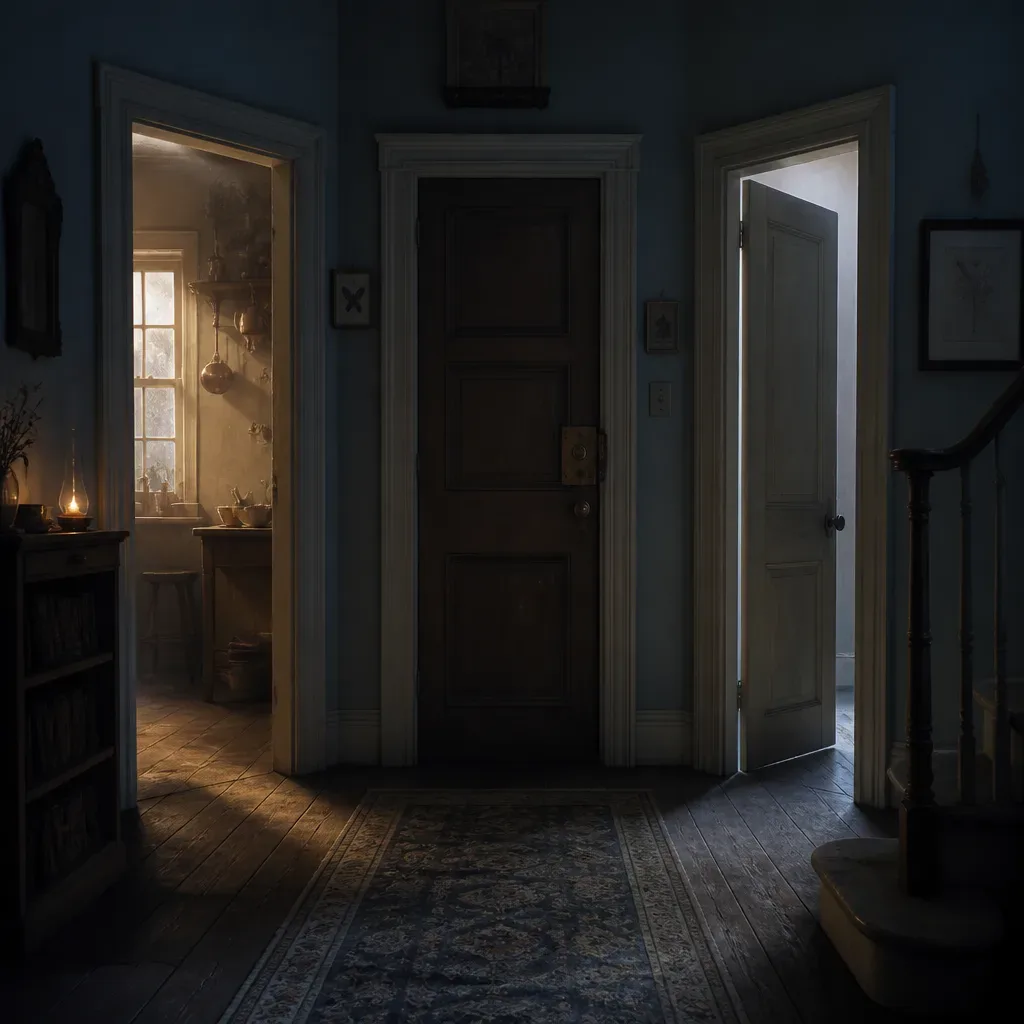
Doors in house dreams usually symbolize access, boundaries, timing, and the choice to enter or refuse something.
An open door tends to feel different from a forced door. A locked door is different from a door you simply don’t want to open. The locked door is rarely the enemy; it is the place where the dream asks for consent. If someone else has the key, the dream may be about dependence, authority, secrecy, or a relationship where access feels uneven.
In nightmare studies, including work by Ernest Hartmann in the 1990s, threatening dream images often intensify during stress, trauma, or emotional overload. A door that won’t close can appear when a boundary is failing. A door that won’t open can appear when a decision feels blocked. If the dream repeats and leaves you distressed during the day, especially after trauma, it’s worth speaking with a mental health professional.
Notice the action more than the object:
- Did you open the door, or did someone else open it?
- Was the door locked, broken, missing, hidden, or too small?
- Did you feel curious, frightened, ashamed, relieved, or angry?
- What room or outside place was beyond it?
- What current-life boundary does it resemble?
Dream symbols get honest when you attach them to yesterday. A locked office door after a tense meeting is not mysterious. A locked nursery door during fertility grief or parenting anxiety deserves a gentler reading. The dream is often literal about feeling, not literal about events.
What does it mean if the house is old, broken, flooded, or on fire?
The condition of the dream house usually shows how supported, threatened, neglected, or changed the self feels right now.
An old house can be memory, family inheritance, or a version of you that still has rooms you visit. A broken house may point to exhaustion, grief, illness, financial worry, or a plan that needs repair. A flooded house often belongs to emotional excess: too much feeling, too little drainage. Fire is more intense. It can suggest anger, urgency, purification in folklore, or the fear that something precious won’t survive.
Large dream databases suggest that negative emotions appear often in dreams. Domhoff’s summaries of American college student dreams found fear, apprehension, and confusion appearing frequently, while happiness was less common than many expect. That doesn’t make a damaged house a bad sign. It means the sleeping mind often rehearses trouble in image form.
A recurring house is memory with architecture. If the same broken staircase appears for months, draw it. Label it. Give it a date. In my own notebooks, which I’ve kept since 2006, recurring structures usually become clearer after 10 to 14 written entries. The pattern often isn’t visible in the first dream.
Separate symbol from stress. A house on fire after watching a film about disaster may be ordinary residue. A house on fire during a divorce may be the dream’s blunt picture of rupture. If nightmares become frequent, disrupt sleep, or come with panic on waking, talk to a doctor or therapist in one plain step.
What if the house is your childhood home or someone else’s house?
A childhood home usually points to early identity and family roles, while someone else’s house often points to relationship, comparison, or the part of you that lives near that person.
The childhood home is one of the most common dream houses because it stores first maps: who had power, where you hid, what rooms were forbidden, what comfort smelled like. The dream may return you to being 9 years old, even if your adult mind knows you’re 42. That age-feeling matters. Write it down before the plot.
Developmental psychology has long shown that early family environments shape expectation and attachment. John Bowlby’s attachment work began in the mid-20th century, and later studies continued to show that early caregiving patterns can influence adult relationships. A childhood house dream doesn’t prove anything about your family. It may simply show that a current event touched an old arrangement.
Someone else’s house is more relational. If you dream of your friend’s house, your mother’s apartment, your ex’s basement, or a stranger’s mansion, ask what quality that place carries. Envy? Safety? Judgment? Distance? The dream may be less about them than about the role you play near them.
A useful distinction:
- Your current home often points to present identity and daily stress.
- A childhood home often points to old roles, memory, and family atmosphere.
- A stranger’s home often points to unfamiliar self-states or social comparison.
- A partner’s home often points to intimacy, access, and negotiated boundaries.
- A public building that feels like a home often points to belonging or the lack of it.
If you want a second pass on symbols, the AI dream interpreter tool can help organize details, but the final meaning still belongs to the person who woke with the feeling.
Are there cultural or spiritual readings of house dreams?
Cultural readings often treat the house as family, fortune, ancestors, or the body, but these are traditions rather than evidence of prediction.
In many forms of folklore, a clean house can be read as harmony, a broken roof as exposure, and a crowded house as news arriving. Some traditions connect the front door with visitors or opportunity. Others treat the threshold as spiritually sensitive because it separates inside from outside. These readings have long lives because houses are never only property. They’re kinship, shelter, status, memory, and weather.
No good evidence shows that house dreams foretell events. Dreams reflect; they don’t foretell. That sentence is worth keeping close when a dream feels charged. The body can wake frightened from a symbolic event as if it were literal, because REM sleep activates emotional and visual systems strongly while reflective judgment is altered. Neuroscientist Matthew Walker has described REM sleep as deeply involved in emotional processing, though researchers still debate the exact mechanisms.
Spiritual readings can still be meaningful when handled honestly. If your grandmother taught that a flooded house means family sorrow, you don’t need to mock that. You can write: family sorrow is the inherited reading. Then ask: where is sorrow moving through my actual life? The best interpretation respects tradition without letting it frighten you.
For related symbols, the Dream dictionary (A–Z hub) is useful when a house dream includes snakes, mirrors, water, stairs, or teeth. Symbols travel together. A door dream with water behind it is not the same as a door dream with a bright garden beyond it.
Can a house dream become lucid, and should you try to change it?
A house dream can become lucid, but the better first goal is usually to notice the house clearly and remember it in the morning.
Lucid dreaming means knowing you’re dreaming while the dream is happening. In a 2016 meta-analysis by Saunders and colleagues, about 55% of people reported at least one lucid dream in their lives, while roughly 23% reported lucid dreams once a month or more. House dreams are good training ground because architecture gives you stable cues: impossible rooms, shifting hallways, staircases that go nowhere.
If you practice lucid dreaming, make the house your reality-check trigger. When you enter a room in waking life, look at your hands, read a word twice, or ask whether the architecture makes sense. Then do the same when a dream house behaves strangely. The Lucid dreaming pillar has a fuller guide, but the boring version is still the most reliable: recall first, checks second, sleep schedule always.
I don’t recommend forcing every difficult house dream into a cheerful scene. Sometimes the honest act is to open one door and ask one question. If you become lucid in a flooded house, you might say: what is the water carrying? If you’re in a childhood bedroom, you might ask: what age am I here?
For waking practice, bring in intention gently. The AYA Method is a daily audio manifestation practice. Each day you listen to a short personalized recording, your Dream-Self Moment, narrated from the version of you who has already manifested the life you intend. Listening is the practice. Repetition is the work. The audio is the method. A recurring house dream shows where attention returns at night; the audio gives attention a quiet shape by day.
What should you write down the morning after a house dream?
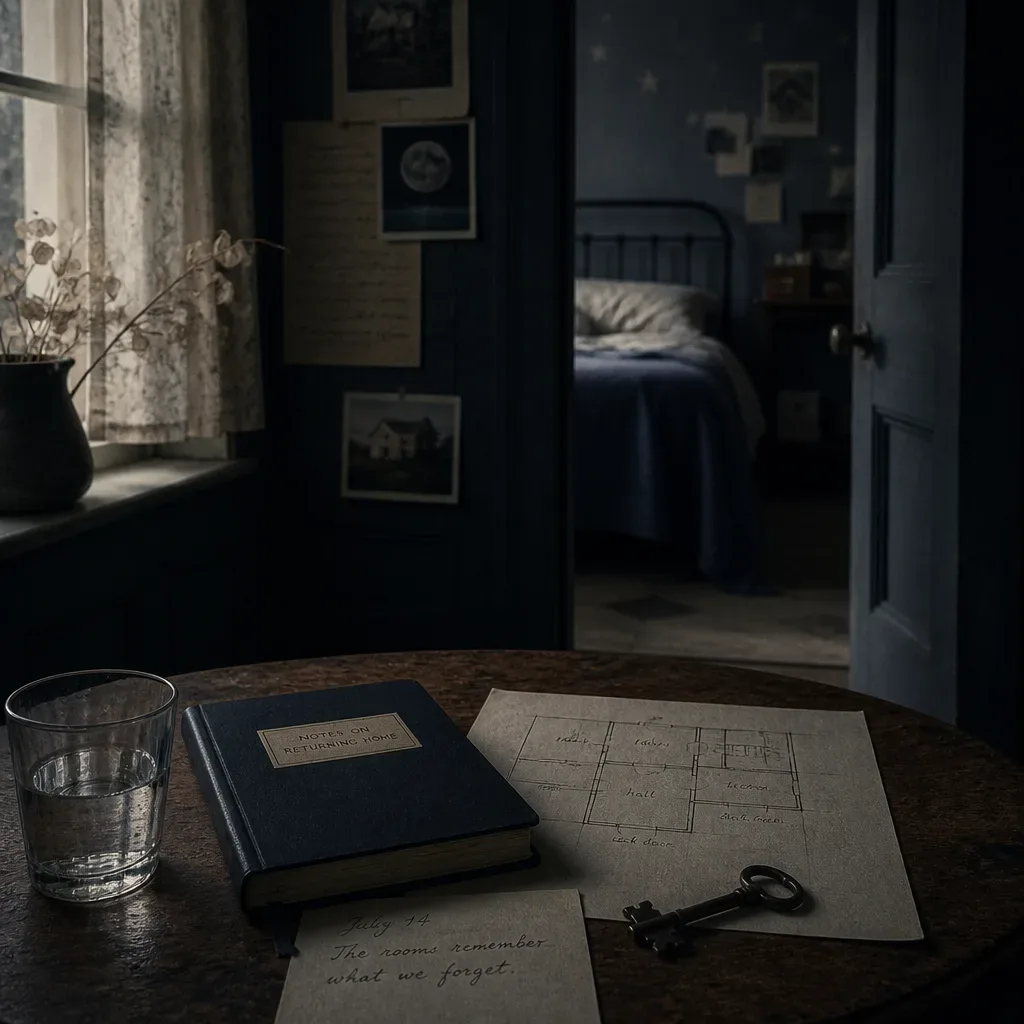
Write the layout, the strongest room, the threshold you crossed or avoided, and one waking-life situation that matches the feeling.
Do this before checking messages. Dream recall is fragile. In sleep labs and home diary studies, recall often fades within minutes of waking, and Schredl’s work has repeatedly shown that simply paying attention to dreams increases remembered detail over time. You don’t need a perfect record. You need a consistent one.
Use this five-line format:
- Date and wake time: include whether sleep was short or broken.
- One-line summary: I was in an old blue house with no back door.
- Rooms entered: kitchen, hallway, basement, bedroom.
- Doors and boundaries: locked, open, missing, blocked, hidden.
- Feeling and match: anxious; resembles the conversation I’m avoiding with my sister.
The line to write down is simple: This house feels like __ because __. Fill both blanks quickly. Don’t polish. Don’t interpret too soon. After a week, underline repeated rooms and doors. After two weeks, compare feelings. In my own practice, two boring weeks of notes often reveal more than one dramatic morning of analysis.
If the dream was frightening, add a stabilizing detail from the room you woke in: the lamp, the sheet, the ordinary wall. Night gives images. Morning gives edges. Between them, you can make a record that doesn’t scare you and doesn’t flatten the dream.
Write the house as you found it, then let the day open one door.