dream science
Dream Hangover: Why Vivid Dreams Follow You
A dream hangover can leave you sad, restless, or tender for hours. Learn why vivid dreams affect mood, what is normal, and what to do next.

A dream hangover is the mood that stays after a vivid dream: sadness, anxiety, longing, guilt, or tenderness that outlives the dream itself. It usually happens when REM sleep, memory, and emotion overlap strongly. You’re not losing touch with reality. Your body is simply slower than your mind to return to morning.
What is a dream hangover, exactly?
A dream hangover is the emotional residue of a dream that feels unusually present after waking.
People describe it in ordinary ways: heavy chest, strange homesickness, dread without a clear cause, or affection for someone they haven’t seen in years. The phrase isn’t a formal diagnosis in the DSM-5, but the state it names is familiar in sleep research. Dreams are most often recalled from REM sleep, and REM periods lengthen across the night, with the longest episodes commonly occurring in the final third of sleep. That’s one reason a vivid 6:30 a.m. dream can walk into breakfast with you.
A dream hangover can follow a nightmare, but it doesn’t have to. It can come after a reunion with a dead parent, a dream of being in love, a dream of being back in school, or a dream where nothing happened except a feeling. The dream may be irrational. The feeling may still be real. Emotion doesn’t require a logical plot to leave a mark.
Sleep scientists often distinguish dream recall from dream affect, meaning the emotional tone of the dream. A 2018 review in Neuroscience & Biobehavioral Reviews described REM sleep as deeply involved in emotional memory processing, especially for salient or threatening material. That doesn’t mean every dream is a message. It means the dreaming brain is not emotionally blank.
You can think of it this way:
| Morning feeling | Common dream source | Usually means |
|---|---|---|
| Anxiety | Chase, lateness, threat | Your system woke activated |
| Sadness | Loss, reunion, death | Grief or attachment was touched |
| Guilt | Betrayal, mistake, secrecy | A value or fear was stirred |
| Longing | Love, childhood, old home | A need for closeness or safety surfaced |
| Irritation | Conflict, humiliation | Sleep carried unresolved tension forward |
A dream hangover is not proof that the dream is important. It’s proof that it was felt. That distinction matters.
Why does a vivid dream change your waking mood?
A vivid dream can change your waking mood because the sleeping brain rehearses emotion with enough bodily detail that waking doesn’t instantly cancel it.
During REM sleep, the body is mostly still, but the brain is active. Functional imaging studies have shown activation in emotion-related regions such as the amygdala and anterior cingulate during REM sleep, while parts of the prefrontal cortex involved in reality testing may be less engaged. A well-known 1996 PET study by Maquet and colleagues helped establish that REM is not a passive state; it is metabolically active and patterned.
This is why you can wake up knowing the dream wasn’t real and still feel accused, abandoned, or relieved. Knowing is cortical. Feeling is bodily. The morning has to negotiate between them.
Several things make a dream more likely to linger:
- Interrupted REM sleep. Waking directly from REM increases recall. Laboratory awakenings from REM produce dream reports far more often than awakenings from non-REM sleep, with classic studies finding reports in roughly 80% of REM awakenings.
- Stress before bed. A 2019 review in Sleep Medicine Reviews linked stress and trauma exposure with nightmare frequency and disturbed dreaming.
- Sleep loss. REM rebound can occur after deprivation, making later REM periods more intense.
- Alcohol or cannabis changes. Both can alter REM patterns, and stopping heavy use may increase vivid dreaming for some people.
- New medication. SSRIs, beta blockers, nicotine patches, and some sleep medicines can affect dream vividness in certain users.
The content isn’t always the cause. Sometimes the dream is a stage, and the nervous system is the weather. If you went to sleep after conflict, grief, fever, travel, or three nights of broken rest, your dream may simply be the loudest place where the body could speak.
This is also why the AI dream interpreter tool is best used as a mirror, not a verdict. It can help you notice patterns, but no tool can know your grandmother’s kitchen, your old hospital hallway, or the exact weight of a name you heard in sleep.
Is a dream hangover the same as a nightmare aftereffect?
A dream hangover can follow a nightmare, but it also follows vivid dreams that are tender, erotic, grieving, ordinary, or strange.
Nightmares are usually defined by dysphoric content that wakes the sleeper. The International Classification of Sleep Disorders describes nightmare disorder as repeated nightmares that cause distress or impairment, not just one bad dream. Estimates vary, but adult nightmare disorder is often placed around 2% to 6% of the population, while occasional nightmares are much more common. That difference matters at 7 a.m. One terrible dream is usually a hard morning, not a crisis.
A nightmare aftereffect tends to carry fear: checking the hallway, feeling unsafe in the room, avoiding sleep the next night. A dream hangover is broader. It may feel like sorrow after dreaming of a living ex-partner, or guilt after dreaming you harmed someone, or embarrassment after dreaming you were exposed in public. The body marks intensity before it classifies content.
Here’s a simple way to separate them:
- Ask what emotion arrived first. Fear points toward nightmare residue; longing, shame, or sadness may be dream hangover without nightmare.
- Ask whether you avoided sleep afterward. Avoidance is more common when nightmares become a pattern.
- Ask how long it lasted. Minutes to hours can be ordinary. Repeated daylong impairment deserves care.
- Ask what changed recently. New stress, grief dates, medication, illness, or disrupted sleep can all raise vivid recall.
Dreams reflect. They don’t foretell. Folklore often treats certain dreams as warnings, especially dreams of teeth, snakes, water, or the dead, and those traditions are worth recording with respect. But clinical sleep science doesn’t support using a single dream as prediction. If you want a symbol map, the Dream dictionary (A–Z hub) can give you historical and psychological readings side by side.
The morning question is not, “Was it real?” The better question is, “What feeling did my body keep?”
Why do some people get dream hangovers more often?
Some people get dream hangovers more often because they recall dreams easily, wake during REM, or have nervous systems that stay activated after sleep.
Dream recall varies widely. Research has linked higher dream recall to lighter sleep, more awakenings, and greater responsiveness to external sounds. A 2014 study by Ruby and colleagues in Neuropsychopharmacology found that high dream recallers had more intra-sleep wakefulness than low recallers, giving the brain more chances to encode the dream into memory. In plain terms, if you wake often, you may catch more dreams before they dissolve.
Personality and attention also matter, though evidence is mixed. People who value dreams, keep journals, or discuss dreams often tend to remember more of them. That doesn’t mean they dream more; it may mean they preserve more. The first 5 minutes after waking are fragile. If you rehearse the dream, it stays. If you roll into email, much of it vanishes.
Certain groups may notice dream hangovers more:
- Shift workers with irregular REM timing
- New parents sleeping in fragments
- People in grief, especially near anniversaries
- Trauma survivors, particularly when nightmares repeat
- People tapering substances that suppressed REM
- People taking medications known to affect dreams
- Lucid dreamers who wake with high recall
As a former night-shift nurse, I’m careful here. Strange sleep is not automatically disordered sleep. But if vivid dreams arrive with panic, persistent insomnia, acting out dreams, or daytime sleepiness while driving, talk with a doctor. REM sleep behavior disorder, sleep apnea, PTSD, and medication effects each need different care.
If you often know you’re dreaming while still inside the dream, the Lucid dreaming pillar has a steadier map for that state. Lucidity can make a dream feel more authored, but it can also make the after-feeling sharper. Agency in the dream doesn’t always mean ease in the morning.
Some people remember dreams because the night keeps opening its door. The task isn’t to slam it shut. It’s to learn when to look and when to get up.
Can dream content tell you what the hangover means?
Dream content can suggest what your mind was working with, but the strongest clue is usually the feeling that remains.
Clinical traditions, especially Jung-adjacent ones, treat dream images as symbolic material rather than literal reports. Modern research is more cautious. The continuity hypothesis of dreaming, associated with researchers such as Calvin Hall and later Domhoff, suggests that dreams often reflect waking concerns, relationships, and emotional themes. In Hall and Van de Castle’s classic dream content work, social interactions were common, and negative emotions appeared more often than positive ones in many samples.
That doesn’t mean a dream of betrayal proves you want betrayal, or that a dream of death means death. Dreams are not affidavits. They are nearer to theater: compressed, exaggerated, rearranged. The cast may be familiar, but the script is written in sleep.
Try reading the hangover through 3 layers:
What happened in the dream?
Write the plot in 2 or 3 sentences. Keep it plain. “I was in my childhood house. My father was alive. I couldn’t find my shoes.” Details matter, but not all details matter equally.
What feeling stayed after waking?
Name one word if you can: dread, relief, shame, ache, hunger, tenderness. Studies of affect labeling, including work by Lieberman and colleagues in 2007, suggest that naming emotion can reduce limbic activation. It’s not magic. It’s orientation.
What in waking life rhymes with it?
Not matches. Rhymes. A dream about missing a train may rhyme with a deadline, a fertility worry, or the sense that a friend is moving on. The dream image is specific; the emotional pattern may be wider.
For symbol research, the Dream dictionary (A–Z hub) can help you compare a snake in mythology, therapy, and ordinary life. The snake means one thing in research and another thing in your grandmother’s kitchen. Both are worth knowing.
What should you do the morning after a dream hangover?
The morning after a dream hangover, orient your body first, then write just enough to separate dream emotion from waking fact.
Start with physiology. Look at the date. Put both feet on the floor. Name 5 visible objects. Drink water. Get daylight if possible. Morning light is one of the strongest cues for circadian timing; sleep researchers commonly recommend consistent wake time and light exposure because the central clock in the suprachiasmatic nucleus responds to light-dark signals. You don’t need a perfect routine. You need a clear morning signal.
Then use a small written practice. Long analysis can deepen the mood when you’re still raw. A short note is usually kinder.
Try this 4-line format:
- The dream: “I dreamed that…”
- The feeling: “I woke feeling…”
- The fact: “Right now, I am in…”
- The next ordinary action: “I’m going to…”

If the dream involved grief, write the name. If it involved shame, write the value underneath it. If it involved fear, write what is actually true in the room. This is not about arguing with the dream. It’s about giving morning a voice too.
A recurring dream shows you what attention keeps returning to: the fears and wants underneath it. Waking practice can answer that pattern gently. The AYA Method is a daily audio manifestation practice. Each day you listen to a short personalized recording, your Dream-Self Moment, narrated from the version of you who has already manifested the life you intend. Listening is the practice. Repetition is the work. The audio is the method. The daily affirmation and Manifestation Board can complement it, but the audio is the center.
If you want to compare last night’s symbols with your own history, you can also save the dream in the AI dream interpreter tool and look for repeated images over 2 weeks. Patterns need time. One dream is a bell; several dreams are a rhythm.
When should a dream hangover worry you?
A dream hangover should worry you when it repeats often, disrupts sleep, or comes with symptoms that affect safety or daily functioning.
Most vivid dreams are not dangerous. Even sleep paralysis, which can include a sensed presence and chest pressure, is usually frightening rather than harmful. Population estimates vary, but a 2011 systematic review by Sharpless and Barber found that about 7.6% of the general population reported at least one episode of sleep paralysis, with higher rates in students and psychiatric samples. Common does not mean pleasant. It means you’re not alone.
Still, some patterns deserve attention. Talk with a clinician if you notice any of the following:
- Nightmares several times a week for more than a month
- Avoiding sleep because of dream fear
- Dream enactment, such as punching, kicking, or falling from bed
- New vivid dreams after starting or changing medication
- Severe daytime sleepiness, especially while driving
- Dreams tied to trauma flashbacks or panic
- Depression, self-harm thoughts, or feeling unsafe with yourself
The line is not whether the dream was strange. The line is whether your life is getting smaller around it.
For recurring themes, it can help to read beyond single symbols. Our lucid dreaming guide explains how awareness inside dreams works, and the Dream dictionary keeps folklore separate from psychology. If you’re unsure what kind of dream you had, the AI dream interpreter can help you organize the report without treating it as prophecy.
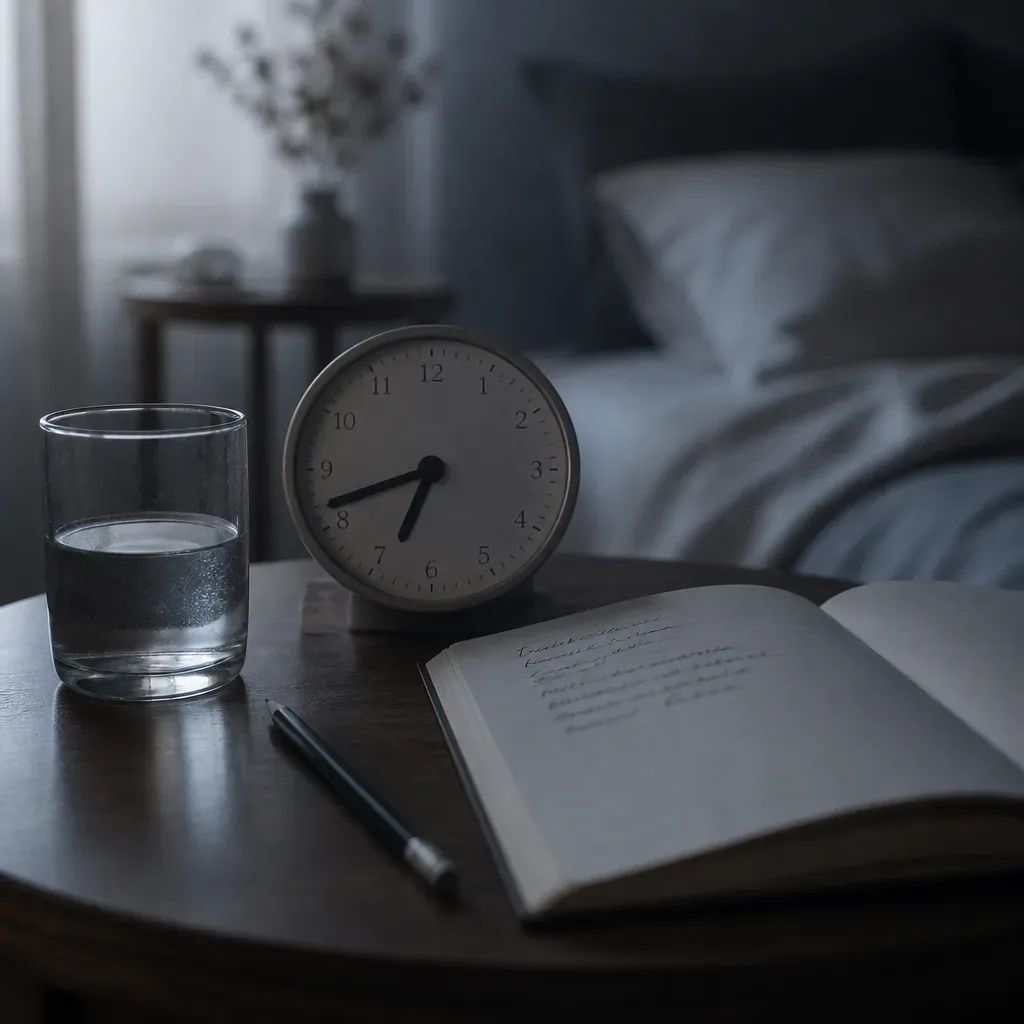
Tonight, set the notebook near the bed and let morning have the last word.