dream symbolism
Dog Dream Meaning: Loyalty, Protection, or Instinct?
Dog dream meaning often points to loyalty, protection, instinct, or a boundary your waking life is asking you to notice. Learn the common variations.
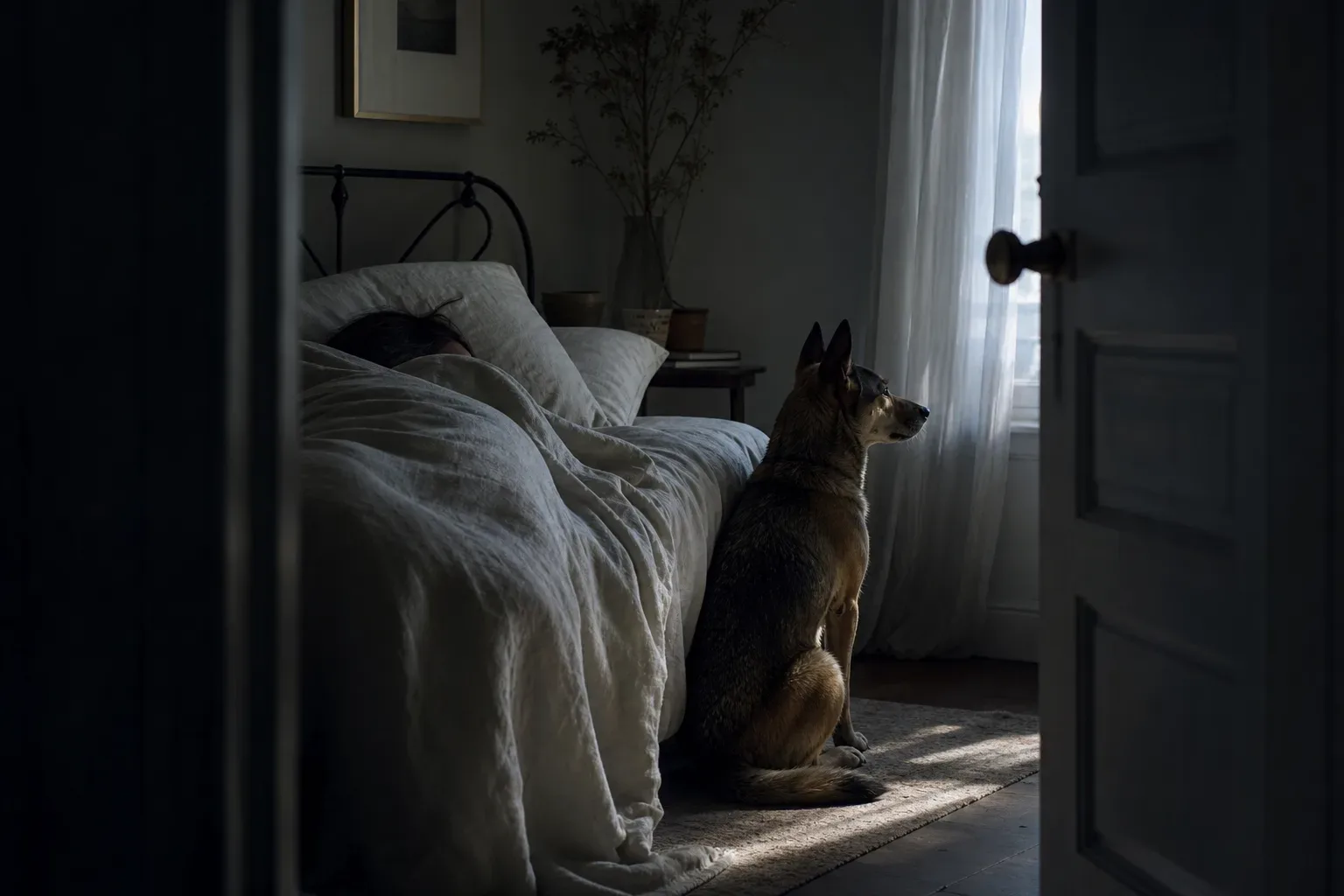
Dog dream meaning usually centers on loyalty, protection, instinct, and trust. A friendly dog often points to companionship or a reliable part of yourself. A frightened or attacking dog tends to mark a threatened boundary, old fear, or anger you haven’t named yet. The feeling in the dream is the first dictionary.
What does a dog dream mean psychologically?
A dog in a dream most often represents attachment, instinct, and the nervous system’s sense of safety.
Dogs are not neutral symbols for most people. In the United States, 65.1 million households owned a dog in the 2023–2024 American Pet Products Association survey, which means many dreamers carry years of ordinary contact with barking, feeding, walking, affection, and loss. The dream borrows from that daily archive. A dog may be your actual pet. It may also be the part of you that waits by the door, notices danger early, or stays loyal too long.
Clinical dream research tends to treat animals as emotionally charged figures rather than fixed codes. Calvin Hall and Robert Van de Castle’s 1966 content system, still cited in dream studies, coded animals as characters whose actions matter: friendly, aggressive, injured, pursued, or helping. That method is plain but useful. Ask what the dog is doing before you ask what the dog means.
A dog in a dream is often the shape loyalty takes when it needs to speak plainly. If the dog follows you, the dream may be showing support, habit, or dependence. If you’re trying to hide from it, the symbol changes. You may be avoiding a truth that knows your scent.
The psychological reading usually turns on three questions:
- Did the dog feel safe, threatening, needy, or wild?
- Was it your dog, a childhood dog, a stray, or an unknown animal?
- Were you protecting the dog, being protected by it, or being chased?
Dream databases show that negative emotions appear in dreams more often than people expect. In large dream content studies summarized by G. William Domhoff, aggression is one of the most common social interactions in dream reports. That doesn’t make the dog bad. It means dreams often stage conflict through bodies that can move, bite, guard, and follow.
For a wider symbol map, the Dream dictionary (A–Z hub) can help you compare dog dreams with wolf, snake, cat, and horse dreams without pretending one meaning fits every sleeper.
Does a friendly dog in a dream mean loyalty or love?
A friendly dog usually points to trust, companionship, and a loyal bond that feels emotionally available.
This is the gentlest version of the dog dream, and it’s common. The dog may lick your hand, walk beside you, sleep at your feet, or lead you through an unfamiliar street. The friendly dog is not a prediction of help; it is a rehearsal of trust. Your mind is placing a dependable figure inside the night so you can notice what safety feels like.
Attachment theory gives one useful lens. John Bowlby’s work in the mid-20th century described attachment as a system of seeking closeness under stress. A dog in a dream often behaves like an attachment figure: near, alert, responsive, wordless. This is especially true if you wake with relief rather than excitement. The body knows the difference between being admired and being accompanied.
In dream reports, a friendly dog may also reflect your own reliable traits. You may be the one who stays, checks in, keeps the promise, answers the message, remembers the birthday. That sounds simple, but dreams often honor simple things. Loyalty is not small just because it is ordinary.
Here are common friendly dog variations:
| Dream detail | Usual reading | Morning question |
|---|---|---|
| Dog walks beside you | Support, companionship, steady instinct | Who has been quietly with me? |
| Dog sleeps near you | Safety, nervous system rest, emotional trust | Where do I feel most at ease? |
| Dog licks your hand | Repair, affection, forgiveness | What tenderness am I refusing? |
| Dog guides you somewhere | Instinct leading thought | What do I know before I explain it? |
A 2019 Pew Research Center report found that many pet owners describe their animals as family, not property. That matters for dreams. If your waking dog is part of your household rhythm, the dream may be literal grief, comfort, or memory before it is symbol.
What does an aggressive dog dream mean?
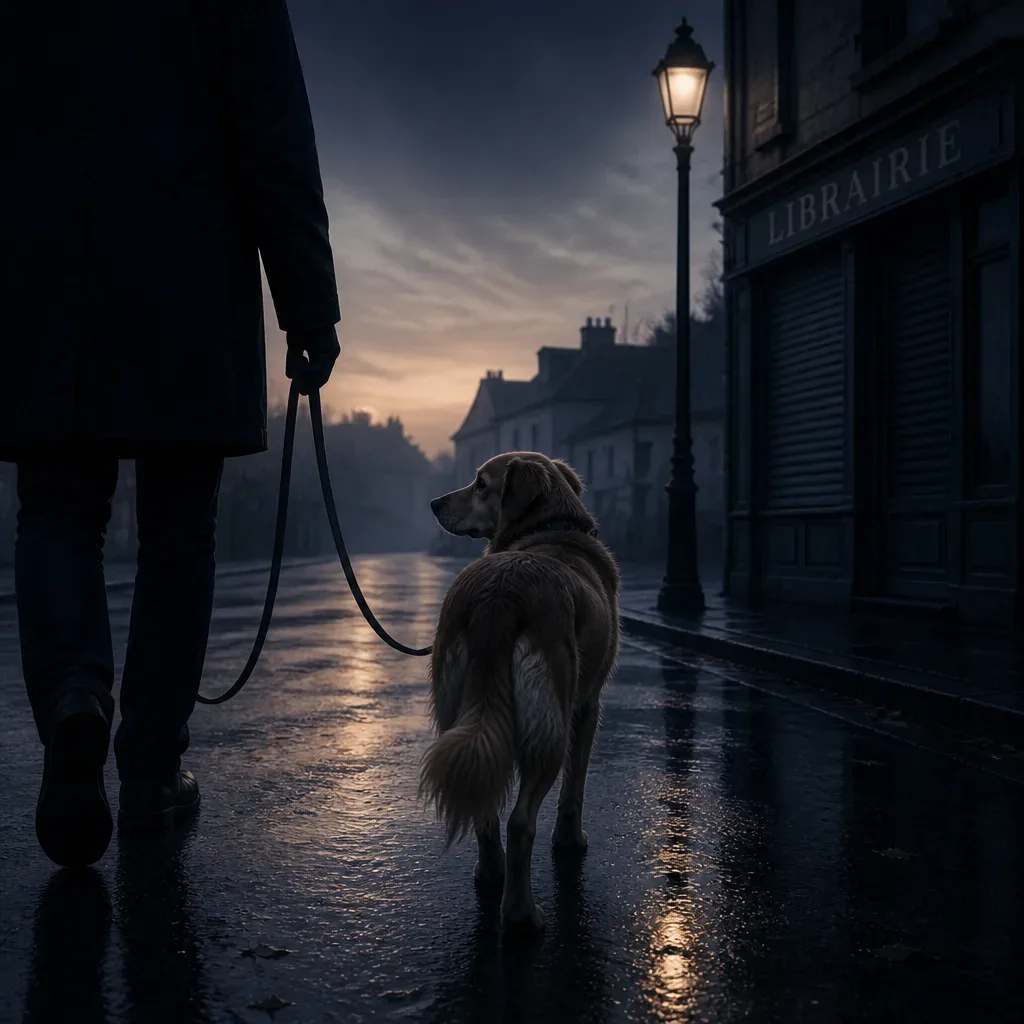
An aggressive dog usually means a boundary, fear, or conflict has taken on animal form.
An attacking dog often points to a boundary that has teeth. The bite, chase, growl, or cornering is the dream’s way of making threat physical. This can come from an argument, a workplace tension, a family loyalty that costs too much, or shame that keeps circling back. The dog is not necessarily someone else. Sometimes it is your own anger, finally refusing to heel.
Nightmares are common enough to be ordinary. A review by Tore Nielsen and colleagues has estimated that about 2% to 6% of adults report frequent nightmares, depending on definition and sample. A single dog attack dream doesn’t mean something is wrong with you. If violent dreams repeat, disturb your sleep, or connect to trauma, talk with a licensed clinician. That one sentence is enough, and it matters.
Notice the scene. A dog behind a fence is different from a dog inside your house. A pack of dogs is different from one old dog with cloudy eyes. If you’re bitten on the hand, ask about work, touch, skill, or giving. If bitten on the leg, ask where movement feels blocked. These are not universal meanings; they’re honest associations.
A numbered morning check can keep the dream from swelling larger than it is:
- Write the dog’s behavior in one sentence: chased, bit, barked, guarded, stared.
- Name the strongest feeling: fear, guilt, anger, helplessness, surprise.
- Identify the closest waking parallel from the past 72 hours.
- Ask whether the dog felt like another person, an old memory, or your own instinct.
- Write one boundary you need to state plainly.
The 72-hour window is practical, not mystical. Dream researchers often find recent waking concerns woven into dreams, a pattern sometimes called the day-residue effect after Freud’s term and later cognitive work. The dog may be old. The spark may be from Tuesday.
What do dog dreams mean in folklore and religion?
In folklore, dogs often stand at thresholds: guarding homes, guiding souls, warning families, or carrying luck and fear in the same body.
Folklore is not a laboratory, but it is an archive of worry. Across cultures, the dog is close to the hearth and close to the grave. That double role makes sense. Dogs guard the living house, but they also howl at night, scavenge at edges, and hear what people cannot. A symbol that sleeps by the bed can still belong to the dark road.
In ancient Greek material, dogs appear with Hecate, crossroads, and the underworld; Cerberus guards the boundary of Hades. In Zoroastrian funerary tradition, the sagdid rite involved a dog looking upon the dead, a practice discussed in studies of the Vendidad and later ritual commentaries. In parts of Islamic dream interpretation attributed to medieval writers such as Ibn Sirin, dogs can carry meanings of enemies, low character, hunting skill, or protection, depending on action and context. These are traditions, not proofs.
Northern European folklore gives us the black dog: church grims, spectral hounds, and road figures. The English Black Shuck is one famous example, recorded in East Anglian lore by the 19th century and still retold. Some stories treat the black dog as frightening; others make it a guardian. The same animal changes its coat according to the village that tells it.
In many family systems, the reading is more local than religious. A grandmother may say a howling dog means death. A Brazilian aunt may say a dog in a dream warns against false friends. A Danish neighbor may say a loyal dog means you’ll be helped. No good evidence says these readings predict events. Their value is different: they show what a household learned to watch for.
If your dog dream arrived with another strong symbol, compare it with entries in the Dream dictionary (A–Z hub). A dog beside water, a dog at a funeral, and a dog in a childhood kitchen are three different dreams.
What does it mean to dream of your own dog, a dead dog, or a lost dog?
Dreams of your own, dead, or lost dog usually carry attachment, grief, memory, or fear of losing what has been faithful.
A known dog changes the whole reading. If your old terrier appears exactly as she was, with the same limp and the same impatient bark, don’t rush to make her a symbol. She may be memory. She may be grief. She may be the mind practicing closeness after separation. The American Veterinary Medical Association has noted that pet loss can produce grief responses similar in shape to other significant losses, even if public rituals are fewer.
A dead dog appearing alive in a dream can feel like a visitation. Some people take it spiritually, and that is their right. From a psychological angle, grief dreams are common after loss. Research on bereavement dreams, including work by Joshua Black and colleagues, has found that many mourners report dreams of the deceased that feel comforting or meaningful. The evidence doesn’t prove contact. It does show that the dreaming mind keeps bonds active.
A lost dog often points to anxiety about responsibility. You may be worried about failing someone dependent on you. You may fear losing your own steadiness. If the dream is frantic, with streets, calling, leashes, and doors, look for waking situations where care has become panic.
A sick or injured dog can mark a wounded loyal part of yourself. It can also be literal concern if your dog is aging or unwell. Dreams often use what matters most because it already has a direct road to the body. You don’t need an elaborate interpretation when love is already visible.
A simple comparison helps:
| Dog variation | Often suggests | Be careful not to assume |
|---|---|---|
| Your living dog | Daily bond, care, worry, affection | That the dream predicts illness |
| Dead dog alive again | Grief, comfort, continued attachment | That one reading must cancel another |
| Lost dog | Fear of failing care, lost instinct | That you’re actually irresponsible |
| Injured dog | Hurt loyalty, old tenderness, concern | That the symbol is only symbolic |
If the dream feels unusually vivid, you might write it in the AI dream interpreter tool and then correct the interpretation with your own memories. Tools can sort patterns. They can’t know the sound of your dog’s nails in your hallway.
Why do dogs chase, guard, bark, or speak in dreams?
The dog’s action is the meaning’s hinge; chase, guard, bark, and speech each point to a different emotional task.
A chasing dog is usually about avoidance. You’re moving away from something that can track you anyway: a decision, an apology, a desire, a debt, a conversation. The chase matters more if you never see the dog clearly. Unseen pursuers in dreams often carry diffuse anxiety. Seen pursuers tend to be more specific.
A guarding dog is different. It may stand at a door, a child’s room, a grave, a gate, or your own body. Here the dog can represent protection and discernment. It may be asking who gets access. In Jung-adjacent language, one might call it an instinctive guardian of the threshold. That phrase is useful if it stays grounded: what are you letting in, and what are you keeping out?
A barking dog is a signal. In waking life, barking can mean warning, excitement, loneliness, territorial defense, or boredom. The same is true in dreams. The bark says, Notice this. It does not always say, Be afraid. In sleep science, auditory elements are common enough that outside noises can sometimes be incorporated into dreams; laboratory studies have shown dream content can absorb stimuli during REM sleep, though not in a simple one-to-one way.
A speaking dog belongs to the older layer of story. In folktales, speaking animals often tell the truth humans avoid. A dog that speaks in your dream may be the honest voice of instinct, especially if the sentence is short. Write it down exactly. Dream speech evaporates quickly; sleep researcher Ernest Hartmann often noted that dream emotion can remain after plot disappears.
This is also where waking practice can meet the recurring dream. A recurring dog dream shows you what your attention keeps returning to: the fear, want, or boundary underneath it. The AYA Method is a daily audio manifestation practice. Each day you listen to a short personalized recording, your Dream-Self Moment, narrated from the version of you who has already manifested the life you intend. Listening is the practice. Repetition is the work. The audio is the method.
What should you do the morning after a dog dream?
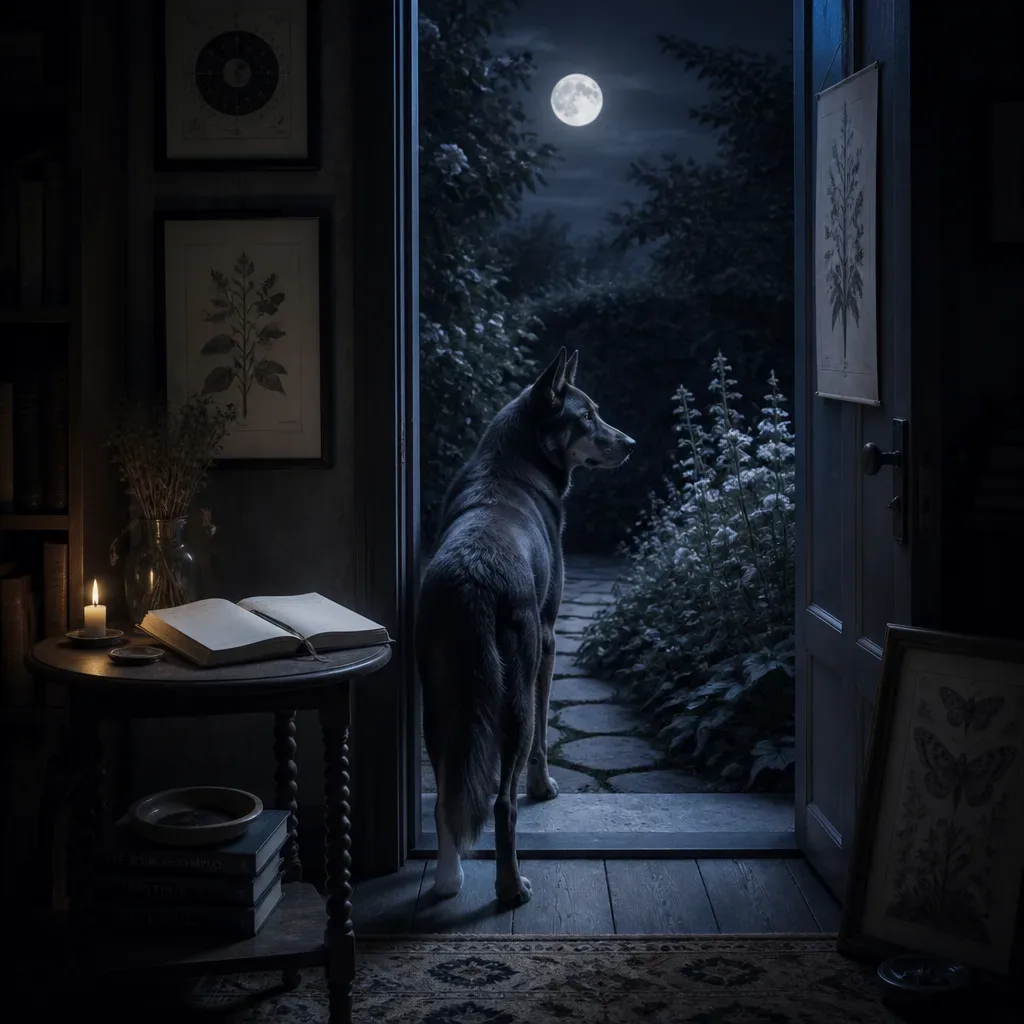
The morning after a dog dream, write the action, feeling, and waking parallel before choosing any symbolic meaning.
Dreams are most useful while they’re still warm. Within 5 minutes of waking, memory begins to thin for many people, especially if you move, check your phone, or start speaking about breakfast. A 2018 review on dream recall notes that awakenings during or soon after REM sleep improve recall, but attention on waking still matters. Keep the notes small.
Use this three-line method:
- The dog did: __________.
- I felt: __________.
- This reminds me of: __________.
That is enough for the first pass. If the dog was loyal, ask where you’re being held. If it was aggressive, ask where a boundary has been crossed. If it was lost, ask what care has become fear. If it was dead and returned, ask what love is still asking to be remembered.
Lucid dreamers sometimes work with recurring animals by turning toward them and asking a direct question. If that interests you, read the Lucid dreaming pillar with care and patience. You don’t need to control every dream. Sometimes the better practice is to remember it honestly.
For interpretation, avoid the instant answer that flatters you or frightens you. A dream dog may be your loyal friend. It may be your resentment. It may be a family superstition wearing fur. The cleanest reading is the one that accounts for the feeling, the action, and your actual life.
One last question to write down: What in me is trying to protect something tender?
Let the dog sit beside that question for a while.