dream symbolism
Car Accident Dream Meaning: Fear, Impact, or Change?
Car accident dream meaning often points to loss of control, emotional impact, or sudden change. Learn what the details may be asking you to notice.
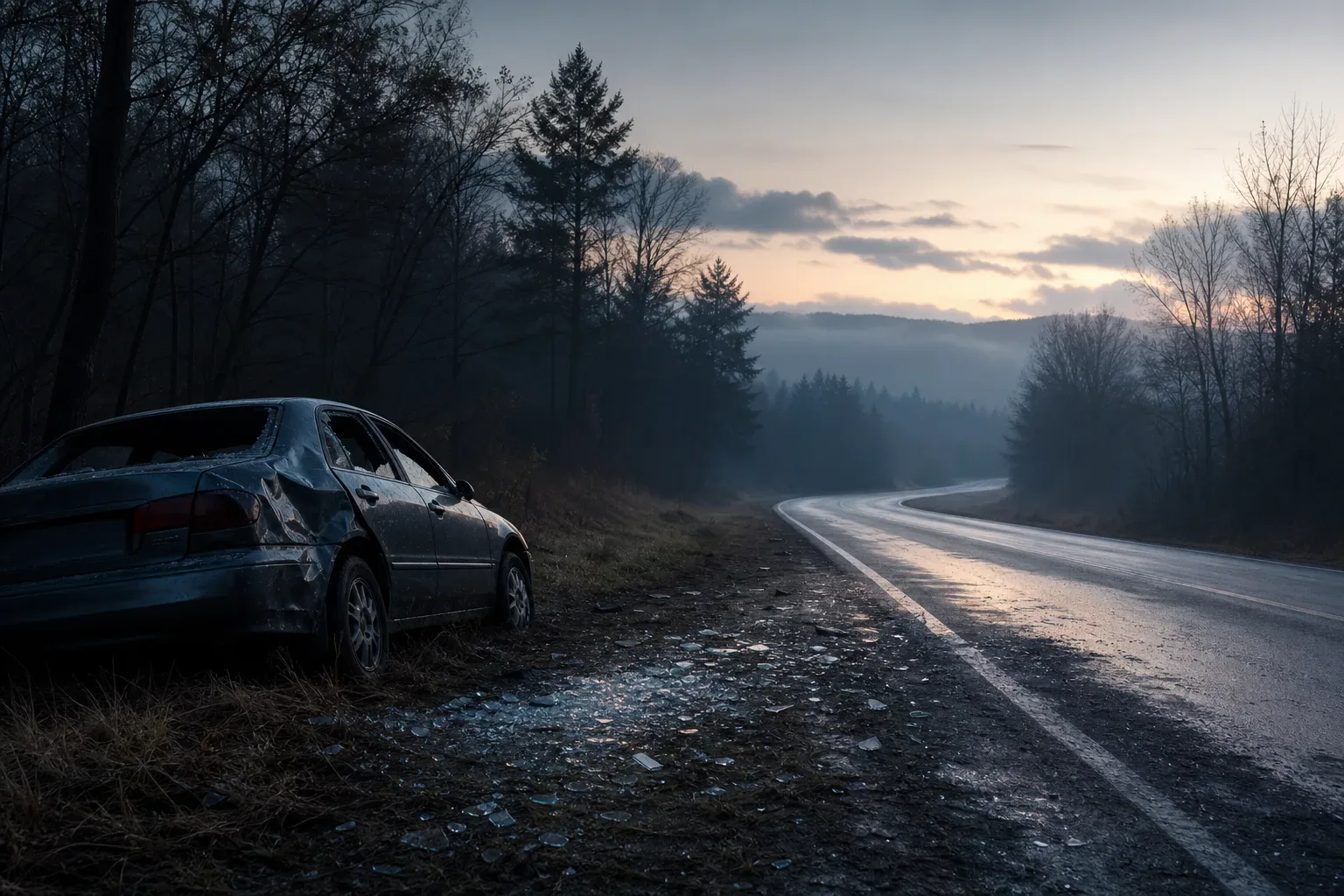
Car accident dream meaning usually points to loss of control, emotional impact, or sudden change rather than a literal prediction. The car often stands for your direction in life; the crash marks where pressure, speed, conflict, or fear has become impossible to ignore. The details tell you where to look first.
What does a car accident dream usually mean?
A car accident dream usually means something in your waking life feels too fast, too risky, or no longer fully under your control.
In dream work, vehicles often symbolize agency: how you move, choose, arrive, leave, and respond to obstacles. A car is ordinary, intimate machinery. You sit inside it. You steer it. You also depend on roads, laws, weather, other drivers, brakes, fuel, and timing. That makes it a fitting symbol for modern life: part freedom, part vulnerability.
Researchers have long noticed that dream content often draws from current concerns. G. William Domhoff’s work on dream continuity argues that dreams tend to reflect a person’s waking interests, conflicts, and emotional patterns. In large dream collections studied with the Hall and Van de Castle system, aggression, misfortune, and movement appear often enough that a crash dream sits well inside ordinary dream life, not outside it.
A crash is rarely subtle. It’s impact. It interrupts motion. It says, in the blunt grammar of the night, “This direction has consequences.” Road traffic is also a real human fear: the World Health Organization estimated about 1.19 million road traffic deaths globally each year in its 2023 road safety reporting. Even if you drive safely, the image is stored in the collective nervous system.
A car accident dream is not usually about death. It’s about direction meeting force.
Ask first: who was driving, how fast were you going, and what did you feel in the second before impact? Those three details often reveal whether the dream is about responsibility, pressure, helplessness, or a coming halt.
Is a car accident dream about fear or loss of control?
Yes, a car accident dream is often about fear and loss of control, especially when the brakes fail, the steering locks, or another driver won’t stop.
The nervous system uses dreams to process threat. Antti Revonsuo’s threat simulation theory, first proposed in 2000, suggests that some dreams rehearse dangers so the mind can practice perception and response. You don’t have to accept the whole theory to see its usefulness here. A dream crash gives fear a scene, a road, a speed, and a sound.
Loss-of-control dreams can follow ordinary pressures: a project deadline, a family conflict, a medical wait, a financial problem, or a relationship moving faster than your honest consent. The dream may choose a car because driving requires constant small corrections. So does a life. One missed signal can matter.
Nightmares themselves are common. The American Academy of Sleep Medicine has reported that 50% to 85% of adults say they have occasional nightmares, while a smaller group has them often enough to disturb sleep. A car accident nightmare is not a sign that something is wrong with you. It’s a sign that something has your attention at night.
Common control details include:
- Brake failure: you feel unable to slow a situation down.
- Bad weather: conditions around you feel unclear or unstable.
- Someone tailgating: another person’s urgency is pressing into your choices.
- Driving from the back seat: you’re responsible without having enough authority.
- A silent passenger: someone affected by your choices isn’t speaking openly.
The dream’s honesty is often uncomfortable. If you were relieved after the crash, the symbol may not be pure fear. It may be exhaustion. Sometimes the psyche imagines disaster because stopping any other way feels forbidden.
Does the crash mean sudden change, conflict, or burnout?
The crash may mean sudden change, conflict, or burnout depending on what breaks and what happens after impact.
A dream car accident compresses cause and consequence into one image. You may not see the whole drive. You may only remember the strike, the spin, the broken glass, or the strange quiet afterward. That compression matters. Dreams often select the emotionally charged second and leave out the committee meeting, the six months of resentment, or the 42 unanswered emails that led to it.
Burnout has bodily signatures that dreams can borrow. The World Health Organization classifies burnout as an occupational phenomenon marked by exhaustion, mental distance from work, and reduced efficacy. A crash dream after weeks of overwork may be less mysterious than it feels. Your body may be saying what your calendar refuses to admit.
Conflict dreams often involve another vehicle. The other driver cuts you off, hits you from behind, refuses to yield, or appears from a blind spot. The blind spot is the useful phrase. Jungian work doesn’t treat every unknown driver as “your shadow,” but it does ask what you can’t see about your own participation. Were you also speeding? Were you looking away? Did you ignore a warning light?
| Dream detail | Common psychological reading | Morning question |
|---|---|---|
| You crash alone | Private pressure, fatigue, self-directed urgency | Where am I pushing myself too hard? |
| Another car hits you | Conflict, intrusion, boundary trouble | Who feels too close or too forceful? |
| You hit a wall | A hard limit has appeared | What limit have I been arguing with? |
| The car rolls over | A reversal in status, plans, or identity | What has turned upside down lately? |
| No one is injured | Change without total damage | What can be repaired if I stop now? |
Burnout dreams don’t whisper. They borrow the sound of metal.
If you want a second pass on the imagery, compare the car, road, and damage with entries in the Dream dictionary (A–Z hub). Symbols don’t have one fixed meaning, but patterns help you notice what your own night keeps repeating.
What do different car accident dream variations mean?
Different car accident dream variations point to different kinds of impact: responsibility, helplessness, guilt, fear for others, or shock after change.
The variation matters because the dream is not only saying “accident.” It’s staging a relationship to the accident. You may be the driver, passenger, witness, survivor, rescuer, or absent person who arrives late. Each role changes the emotional grammar.
Use this numbered morning check before you decide what the dream means:
- Name your role. Were you driving, riding, watching, or arriving afterward?
- Name the cause. Speed, distraction, weather, another driver, brake failure, or no known cause?
- Name the damage. Body, car, road, passenger, stranger, animal, building, or nothing visible?
- Name the feeling. Panic, guilt, relief, numbness, anger, embarrassment, grief?
- Name the waking echo. What in your life has the same feeling, even if it has no cars in it?
REM sleep, where vivid dreams often cluster, cycles through the night roughly every 90 minutes, according to standard sleep medicine teaching from groups such as Harvard Medical School’s Division of Sleep Medicine. Later-night dreams may be longer and more emotionally detailed. That may be why a 6:30 a.m. crash dream can feel like a whole film.
If you dream you caused the accident, look gently at guilt and responsibility. Not all guilt is accurate. Some people feel responsible for everything because childhood taught them to monitor the room. If someone else caused it, look at boundaries and consent. If you watched a crash from outside, the dream may be about fear for someone close to you or your feeling that a situation is headed toward impact while no one will listen.
Dreaming of dying in a crash can be frightening, but it doesn’t mean you’ll die. In symbolic work, death often marks an ending, a forced change, or the collapse of an old identity. Still, if the dream follows a real accident or comes with daytime panic, treat your nervous system kindly and consider professional support.
For dreams where you become aware that you’re dreaming during the crash, our Lucid dreaming pillar explains how lucidity can change your relationship to recurring fear scenes without treating them as entertainment.
Are there cultural or spiritual readings of car accident dreams?
Cultural and spiritual readings often treat a car accident dream as a warning to slow down, but that’s folklore and reflection, not proof of prediction.
Many traditions read road dreams morally: don’t rush, don’t take the wrong path, don’t ignore danger, don’t travel with the wrong companions. Because cars are recent inventions, older folklore often speaks of carts, horses, boats, crossroads, or broken wheels. The symbol changed its clothes; the question remained about direction.
In Christian folk interpretation, a crash may be read as a call to humility or prayer before a decision. In some family traditions, especially where elders speak through practical sayings, the dream might simply mean, “Drive carefully and don’t be reckless.” In Islamic dream interpretation books, vehicles can be linked with status, travel, livelihood, or one’s worldly affairs, though modern car-specific readings are later additions rather than ancient certainties.
Psychology asks a different question: not “What will happen?” but “What is already happening inside me?” Both questions can sit at the same kitchen table if you label them honestly. Folklore gives language to caution. Psychology gives language to pattern.
There’s no good scientific evidence that dreams predict specific accidents. There is evidence that dreams relate to waking life concerns. Michael Schredl, a major dream researcher, has published for decades on continuity between waking concerns and dream content, including how frequency of recalling dreams varies widely among individuals. Some people remember several dreams a week; others remember almost none.
Folklore says slow down because fate may be speaking. Psychology says slow down because you are.
If you keep a dream notebook, note inherited meanings too. What would your grandmother say about the crash? What would your most practical friend say? What would your body say? The useful interpretation often lives where those answers disagree.

What should you do the morning after a car accident dream?
The morning after a car accident dream, write down the point of impact and connect it to one waking situation where speed, pressure, or control feels strained.
Don’t start with a grand interpretation. Start with the facts. A useful dream record can be only 5 lines long. The more ordinary your notes, the more honest they tend to be. Write the road, the driver, the weather, the damage, and the feeling after waking. If you can remember only one image, write that one image.
The dream may also be worth entering into the AI dream interpreter tool if you want structured prompts rather than a final verdict. A good interpretation should give you better questions, not a sealed answer. You can also cross-check symbols such as glass, blood, roads, passengers, or police in the Dream dictionary (A–Z hub).
Here is a quiet morning practice:
- Write: “The crash happened when…”
- Finish the sentence 3 times without censoring yourself.
- Circle the version that makes you slightly uncomfortable.
- Ask: “Where am I moving too fast because stopping would disappoint someone?”
- Choose one small brake for today: a pause, a boundary, a slower reply, a safer drive.
If the dream repeats, look at repetition itself. A recurring dream shows you what your attention keeps returning to: the fears and wants underneath it. This is where waking practice can help. The AYA Method is a daily audio manifestation practice. Each day you listen to a short personalized recording — your Dream-Self Moment — narrated from the version of you who has already manifested the life you intend. Listening is the practice. Repetition is the work. The audio is the method.
Nightmares that happen often, worsen after trauma, or make you afraid to sleep deserve care. The DSM-5 recognizes nightmare disorder when repeated disturbing dreams cause significant distress or impairment, though only a clinician can assess that. If your dreams are linked to a real crash, panic symptoms, or unsafe sleep, talk with a doctor or licensed therapist.
The morning question is not “Was it real?” The morning question is “Where did it feel true?”
Write down the impact, then let the morning stay quiet.