dream science
Black and White Dreams: Memory, Emotion, or Recall?
Black and white dreams may reflect memory style, muted emotion, media exposure, or simple recall limits. Here's what sleep research can say.
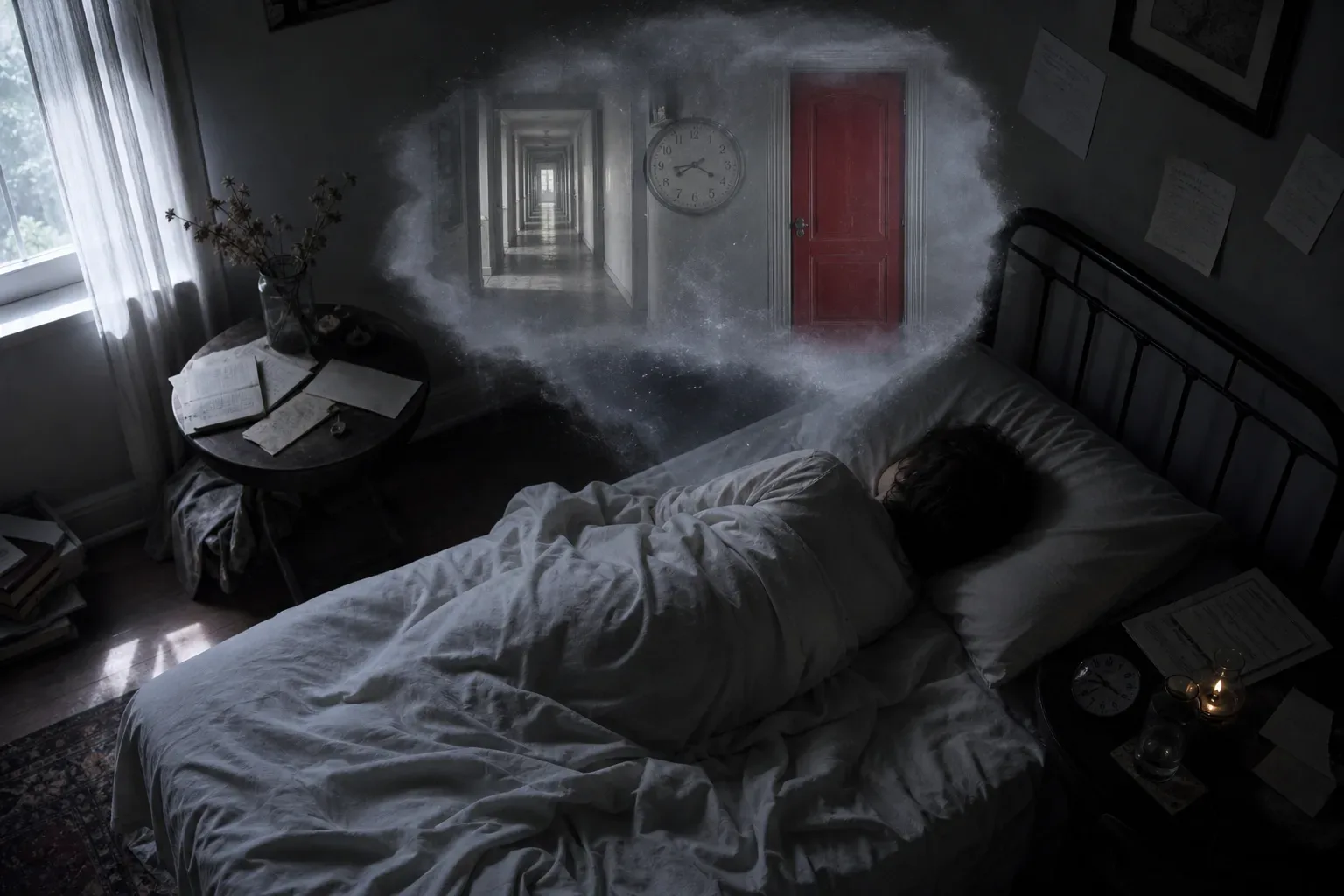
Black and white dreams usually mean one of three ordinary things: your brain encoded the dream with little color, you recalled the scene without its color details, or the grayscale quality carried emotional meaning. Research favors caution. Dream color is real for many people, but memory after waking is a poor witness.
Are black and white dreams actually common?
Black and white dreams are uncommon for many younger adults, but they’re common enough to be a known feature of dream reporting.
The best answer depends on generation, wording, and timing. If you ask people, “Do you dream in color?” most will say yes. If you ask them to describe last night’s dream within minutes of waking, the answer becomes less tidy. Dream reports lose detail quickly; in classic sleep-lab work, awakenings from REM sleep produced dream reports roughly 80% of the time, while later morning recall was much lower. The dream itself and the memory of the dream are not identical records.
A useful historical clue comes from media exposure. In a 2008 paper in Consciousness and Cognition, psychologist Eva Murzyn reported that older adults who grew up with black-and-white television were more likely to report grayscale dreams than younger adults raised with color media. The sample was modest, so it shouldn’t be treated as the final word. Still, the pattern fits a plain idea: the visual habits of childhood may become part of the mind’s private archive.
Earlier 20th-century surveys sometimes found that many people described their dreams as black and white. Later surveys, after color television became normal, found far more color dream reports. That shift is hard to explain if dream color is a fixed biological constant. It’s easier to explain if dream reports are shaped by attention, language, and the images a culture gives people for describing inner life.
A dream can be visually rich and still leave behind a poor photograph. That’s the first thing to remember.
If you’re tracking patterns, compare the grayscale dream with entries in a Dream dictionary (A–Z hub), but don’t let a symbol list outrank your own notes. The color question matters most when it repeats, arrives with strong feeling, or changes the way the dream’s story works.
Is the dream really black and white, or is recall removing the color?
Often, the honest answer is that you may not know, because waking memory strips dreams down fast.
Dream recall is reconstruction, not playback. Sleep researchers have known for decades that people report more detail when awakened directly from REM sleep than when asked later over breakfast. In laboratory studies since the work of Dement and Kleitman in 1957, REM awakenings produced frequent reports, but even those reports depended on immediate questioning. Wait 10 minutes, check your phone, speak to someone, and the dream begins to harden into a smaller story.
Color is especially vulnerable because it’s not always needed for the plot. You may remember the hotel hallway, the missing suitcase, and the person you were trying to find. Whether the hallway was green or beige may vanish because the waking mind keeps what it can use. In cognitive terms, gist survives better than surface detail. That pattern appears across memory research, not only dream studies.
Here’s a practical way to separate possibilities:
| Morning note | What it may suggest | How to write it |
|---|---|---|
| “It was definitely black and white” | Strong visual feature | “The whole dream looked like an old photograph.” |
| “I don’t remember any color” | Recall may be thin | “No color came back when I wrote it down.” |
| “Only one object had color” | Symbolic emphasis or memory salience | “Everything was gray except the red door.” |
| “The dream felt gray” | Emotional tone, not just vision | “The feeling was muted, flat, or distant.” |
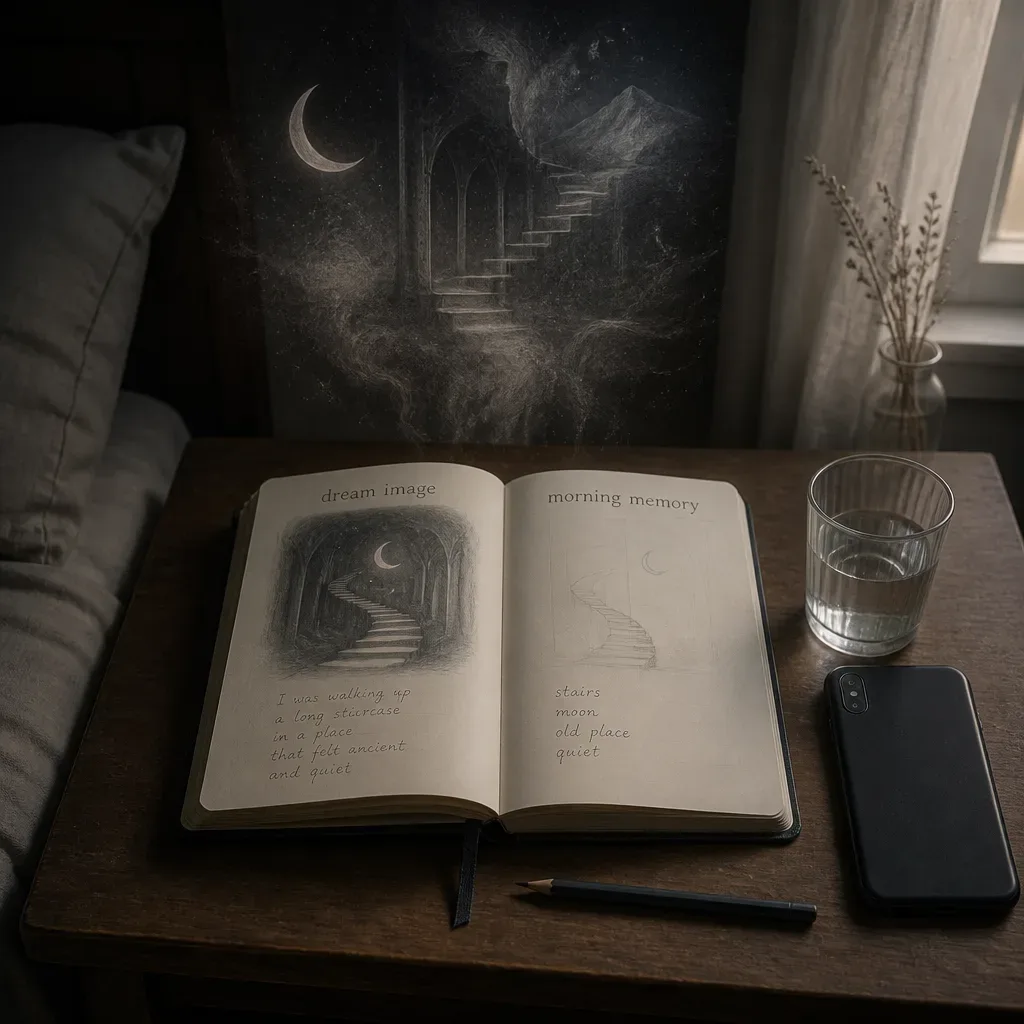
This distinction matters. “I dreamed in black and white” is a claim about the dream image. “I remember no color” is a claim about memory. They sound similar at 7 a.m., but they point to different readings.
What does science say about color, memory, and REM sleep?
Science says color in dreams is plausible, but dream reports are filtered through attention, memory, and the sleep stage you wake from.
REM sleep is the stage most associated with vivid, story-like dreaming, though dreams also occur in non-REM sleep. A typical adult cycles through REM about every 90 minutes, with longer REM periods in the second half of the night. That timing is one reason morning dreams can feel cinematic. The brain is closer to waking, and the report has less distance to travel.
Emotion is part of the picture. Neuroimaging studies have found heightened activity in limbic and paralimbic regions during REM sleep, including areas tied to emotion and memory. Matthew Walker and colleagues have argued that REM may help process emotional memories, though the details remain debated. The responsible sentence is this: REM sleep seems involved in emotional memory work, but no single dream image proves what the brain was doing.
Color processing itself depends on visual systems that can be active during sleep. Yet a dream report isn’t a scan of those systems. It’s a waking verbal account. In one small study area, researchers have found that people can sometimes report specific visual features after sleep-lab awakenings, but sample sizes are often under 100. Dream science has many careful papers and many fragile headlines.
A black and white dream may therefore sit at the intersection of three facts:
- The sleeping brain can generate visual scenes without outside light.
- The waking brain forgets dream detail quickly.
- Culture gives us ready-made visual formats, including film, photographs, and old television.
The black and white image may be less a message than a medium.
For readers interested in the border between dream awareness and memory, our Lucid dreaming pillar explains why noticing dream features during sleep is different from analyzing them after waking.
Do black and white dreams mean sadness, grief, or emotional distance?
They can, especially if the dream felt muted, but grayscale alone is not a diagnostic sign of grief or depression.
The symbolic reading is tempting because black and white carries strong associations. In film, it can mean the past. In photography, it can mean memory. In ordinary speech, it can mean moral certainty: right or wrong, yes or no, nothing in between. Those associations are real as language. They’re not automatic as dream science.
Still, affect matters. If the dream showed a childhood kitchen in black and white, and you woke with a heavy chest, grief may be a fair reading. If the dream was a funny office scene with no color, grief is less likely. The feeling is evidence. The palette is context. In dream work, the emotional residue often tells you more than the visual style.
Clinical research on nightmares shows that distressing dreams are common during stress, trauma, and bereavement, but most studies focus on content and frequency rather than color. The American Academy of Sleep Medicine has noted that nightmare disorder involves repeated disturbing dreams with daytime distress; occasional strange dreams do not meet that bar. If frightening dreams are frequent, disrupt sleep, or connect to trauma, talking with a clinician is a sensible next step.
Folklore is less cautious. Some traditions treat black dreams as warnings, white dreams as purification, and black-and-white dreams as a sign of divided fate. There’s no good evidence for prediction here. But folklore is a record of what communities noticed and feared. It can be read as poetry, not as a weather report.
A useful morning question is simple: did the lack of color make the dream colder, older, clearer, or more distant? One adjective can keep you from overbuilding the interpretation.
Why would only one object be in color?
When one object keeps its color in a black and white dream, it usually marks attention, emotion, or memory salience.
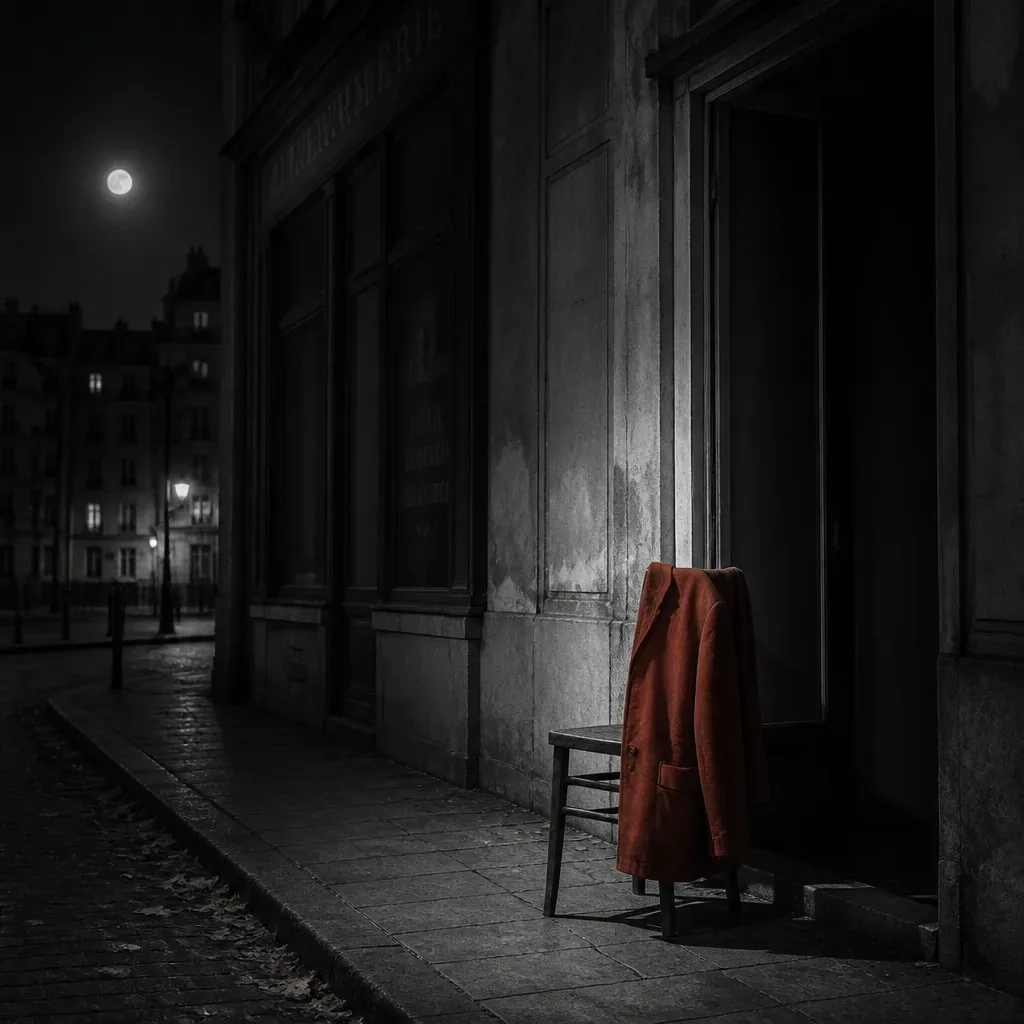
This is one of the more useful variations. A red coat in a gray street. A blue bird in a pale room. A green exit sign over a door. The single color may not be mystical. It may be how the dream tagged what mattered. Attention works this way while awake too: in visual cognition, emotionally meaningful or task-relevant items are more likely to be noticed and remembered.
Dream reports often exaggerate contrast because contrast is easy to remember. The mind may not preserve every shade, but it keeps the red scarf because the scarf belonged to your mother, or because red meant danger in the scene, or because you spent yesterday looking for a red folder. Day residue, the term Freud used in 1900 for recent waking material in dreams, remains a useful observation even when you leave his larger theory aside.
Use a short sequence when you write it down:
- Name the colored object without interpretation.
- Name its color.
- Name what happened near it.
- Name the feeling attached to it.
- Ask where that object appeared in waking life during the last 72 hours.
The 72-hour window is not a magic rule. It’s a practical search field. Many dream elements come from recent memory, and a three-day lookback keeps the mind from wandering into grand theories too quickly.
If you want a second pass without surrendering your judgment, try the AI dream interpreter tool after you’ve made your own notes. Tools are best when they respond to your record, not when they replace it.
Could screens, old films, or childhood media shape black and white dreams?
Yes, media history may shape dream reports, especially when black-and-white imagery was part of childhood visual life.
Murzyn’s 2008 study is often cited because it found a generational split: people over 55 who had early exposure to black-and-white media reported more black-and-white dreams than younger groups. The study had limitations, including self-report and a relatively small participant pool, but it addressed a question older surveys had left hanging. Why did black-and-white dream reports seem to fall as color media became normal?
The likely answer is not that television paints the dream screen. It’s subtler. Media gives the mind visual grammar. Someone raised on monochrome films may have a ready format for memory, nostalgia, distance, and drama. Someone raised on color screens may reach for a different description. Dreaming is biological, but dream telling is cultural.
There’s also the issue of attention. A person who cares about cinematography may notice dream color more than a person who doesn’t. A painter may remember shade. A photographer may remember contrast. In dream diaries, trained observers often report richer details because they’ve practiced noticing. The difference may be attention as much as dream content.
This is why one person’s black-and-white dream feels like an old film, while another person’s feels like a photocopy. The image borrows from what the person knows.
Related entries in the Dream dictionary (A–Z hub) can help with objects and settings, but the grayscale style deserves its own line in your notes. Write the medium, not only the symbol.
How should you interpret a black and white dream the morning after?
Interpret it by separating visual fact, emotional tone, and waking-life context before you reach for symbolism.
A good dream note is small and disciplined. It doesn’t need to solve the dream. It needs to preserve enough material for a later reading. Within five minutes of waking, write three sentences: what happened, what it looked like, and what it felt like. In dream diary studies, recall tends to improve with regular recording, though the size of the effect varies and depends on motivation.
Use this morning frame:
- Image: Was it truly black and white, dim, foggy, or just colorless in memory?
- Feeling: Did it feel sad, calm, tense, clean, old, or distant?
- Contrast: Was anything colored, bright, or unusually sharp?
- Source: Did any scene resemble a film, photograph, family album, or old room?
- Return: Have you had this visual style before?
If the dream keeps returning, it may be showing you where attention keeps circling. That’s the point where a waking practice can help. The AYA Method is a daily audio manifestation practice: each day you listen to a short personalized recording, your Dream-Self Moment, narrated from the version of you who has already manifested the life you intend. Listening is the practice. Repetition is the work. The audio is the method.
That belongs late in the process, after the dream has been recorded honestly. Dreams reflect. They don’t hand down orders. A repeated grayscale dream may be asking for attention, but you still choose what to do in daylight.
One final test: if you removed the black-and-white effect, would the dream mean the same thing? If yes, the content is probably primary. If no, the grayscale is part of the message.
Write down the shade the dream left behind.