lucid dreaming
Best Time to Lucid Dream: REM Windows and Audio Cues
Learn the best time to lucid dream by timing REM windows, wake-back-to-bed practice, and gentle audio cues without wrecking your sleep.
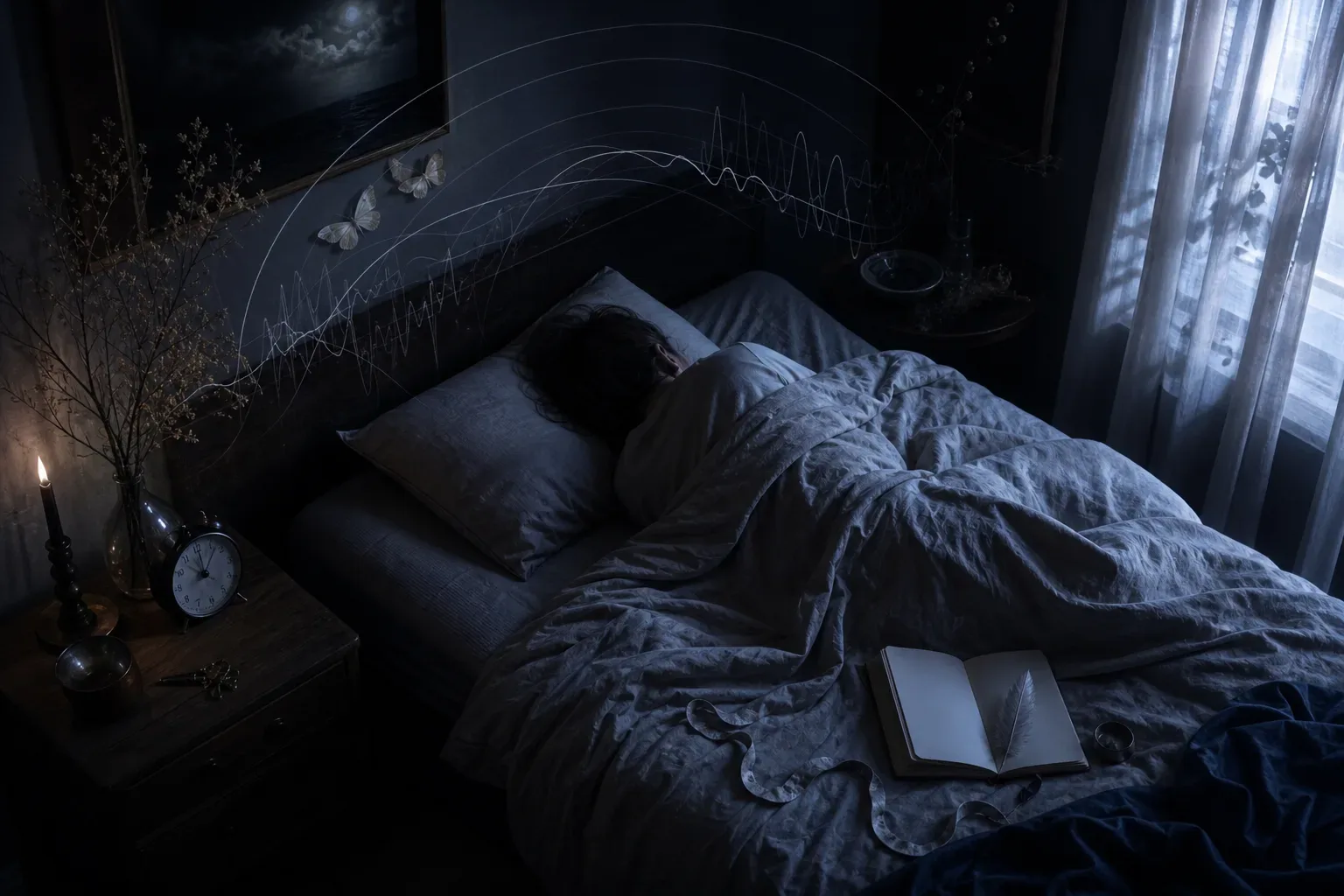
The best time to lucid dream is usually in the last third of the night, after 4.5 to 7 hours of sleep, when REM periods grow longer and dream recall improves. Use that window for wake-back-to-bed, gentle intention setting, and audio cues that are quiet enough to enter the dream without waking you.
When is the best time to lucid dream during the night?
The best time is usually between your fifth and eighth hour of sleep, especially near your final REM periods before morning.
Sleep doesn’t run like a flat line. A typical adult night moves through cycles of non-REM and REM sleep about every 90 minutes, though the exact length varies. The National Institute of Neurological Disorders and Stroke describes REM as recurring several times per night, with longer periods toward morning. That’s the ordinary reason so many remembered dreams come from the hour before the alarm.
Early in the night, your brain gives more time to deep non-REM sleep. Later, REM sleep takes up more of the cycle. The first REM period may be roughly 10 minutes; later periods can stretch toward 30 minutes or more. Those numbers aren’t a promise. They’re a map. Lucid dreaming likes a longer runway.
If you sleep from 11:00 p.m. to 7:00 a.m., useful targets might look like this:
| Sleep time | What’s likely happening | Lucid dreaming use |
|---|---|---|
| 12:30 a.m. | Early cycle, more deep sleep | Usually not worth interrupting |
| 2:00 a.m. | REM appears, still shorter | Possible, but often hazy |
| 4:30 a.m. | Longer REM periods begin | Good wake-back-to-bed target |
| 5:30–6:45 a.m. | Morning REM is more available | Best cue and recall window |
The exact clock time matters less than the number of hours since sleep began. If you work late and sleep from 2:00 a.m. to 10:00 a.m., your best time shifts with you. The dream doesn’t care what the wall clock says. It cares where you are in the night’s architecture.
A useful rule is plain: don’t aim for midnight because it sounds mystical. Aim for the part of sleep that is already making dreams.
If you’re new, read the Lucid dreaming pillar before stacking techniques. Most failures I see aren’t caused by a bad method. They’re caused by trying five methods on a tired brain.
How do REM windows actually work for lucid dreaming?
REM windows help because they give you more dream content, lighter sleep, and better odds of remembering what just happened.
REM stands for rapid eye movement, a phase associated with vivid dreaming, irregular breathing, and high brain activity. The American Academy of Sleep Medicine’s staging system separates sleep into N1, N2, N3, and REM. Across a healthy night, adults commonly cycle through these stages 4 to 6 times. Lucid dreaming can occur outside REM, but the classic vivid lucid dream usually arrives there.
Stephen LaBerge’s Stanford work in the 1980s helped make this measurable. Lucid dreamers used pre-arranged eye movements from inside REM dreams to signal researchers. That mattered because it showed lucidity wasn’t just a memory told later over breakfast. It could be marked during sleep.
Here’s the practical version. A REM window is not a door you can force open. It’s a time when your odds improve. If you wake briefly before or during one of these later cycles, your thinking mind comes closer to the dream without fully leaving sleep behind. That’s why wake-back-to-bed often works better than sheer will at bedtime.
Use this simple sequence for one week:
- Write your real bedtime and wake time for three mornings.
- Estimate when you usually fall asleep, not when you get into bed.
- Add 4.5 hours, 6 hours, and 7.5 hours to that sleep-onset time.
- Choose one target, preferably the 5-to-6-hour mark.
- Test it for seven nights before changing it.
Don’t adjust every morning. Lucid dreaming practice needs boring data. One night is weather; seven nights begin to show climate.
For symbolism after you wake, use the Dream dictionary (A–Z hub) as a second step, not the first. First record the dream. Then ask what repeated.

Should you use wake-back-to-bed, and how long should you stay awake?
Yes, wake-back-to-bed is often the most reliable timing method, but the waking period should be short enough that you can return to sleep.
In practice, wake-back-to-bed means sleeping for about 5 or 6 hours, waking intentionally, staying up briefly, and going back to bed with a lucid dream intention. LaBerge’s MILD method is often paired with it: as you return to sleep, you rehearse recognizing a dream sign and remembering, “I’m dreaming.” A 2017 study by Denholm Aspy and colleagues in Dreaming reported that MILD practice was associated with increased lucid dream frequency, especially when participants could fall asleep quickly after the technique.
The length of the waking period is personal. Some people need 3 minutes. Some need 20. More isn’t always better. If you become too alert, you’ve traded a lucid dream attempt for a small morning of insomnia. I usually tell beginners to start with 10 minutes, low light, no phone, and one written line.
Try this quiet script:
- Wake after 5 or 6 hours of sleep.
- Sit up, keep lights dim, and write one sentence from any dream you remember.
- Read your most common dream sign from your journal.
- Return to bed and repeat: “Next time I’m dreaming, I’ll notice.”
- Let the phrase become softer as sleep returns.
The point isn’t to strain. Strain wakes the body. Lucidity begins as a small act of remembering.
If you have chronic insomnia, bipolar disorder, parasomnias, or severe daytime sleepiness, talk to a doctor before using alarms to interrupt sleep. That’s not fear. It’s ordinary caution. Sleep is the ground. Techniques stand on it or they fall.
A dream journal is still the engine. Mine hasn’t changed since 2006: date, one-line summary, dream signs underlined, lucidity in the margin. Forty-one notebooks later, I trust the notebook more than I trust any clever trick.
Can audio cues make you lucid without waking you up?
Audio cues can help when they are familiar, soft, and timed to likely REM sleep, but they’re not a shortcut around practice.
The idea is simple. You train a sound while awake, then play it during a REM-rich window. If the sound enters the dream, it may become a church bell, a phone tone, a voice from the next room, or a strange musical phrase. The hope is that you notice it and ask, “Am I dreaming?” The risk is just as simple: the cue wakes you.
Research on sensory cues is mixed, but not empty. Studies on targeted memory reactivation have shown that sounds paired with learning can influence sleeping memory processes. Northwestern University researchers such as Ken Paller have published work on sound cues during sleep and memory. Lucid dreaming cue studies are smaller, and devices that promise detection often overstate their precision, but the principle is plausible enough to test carefully.
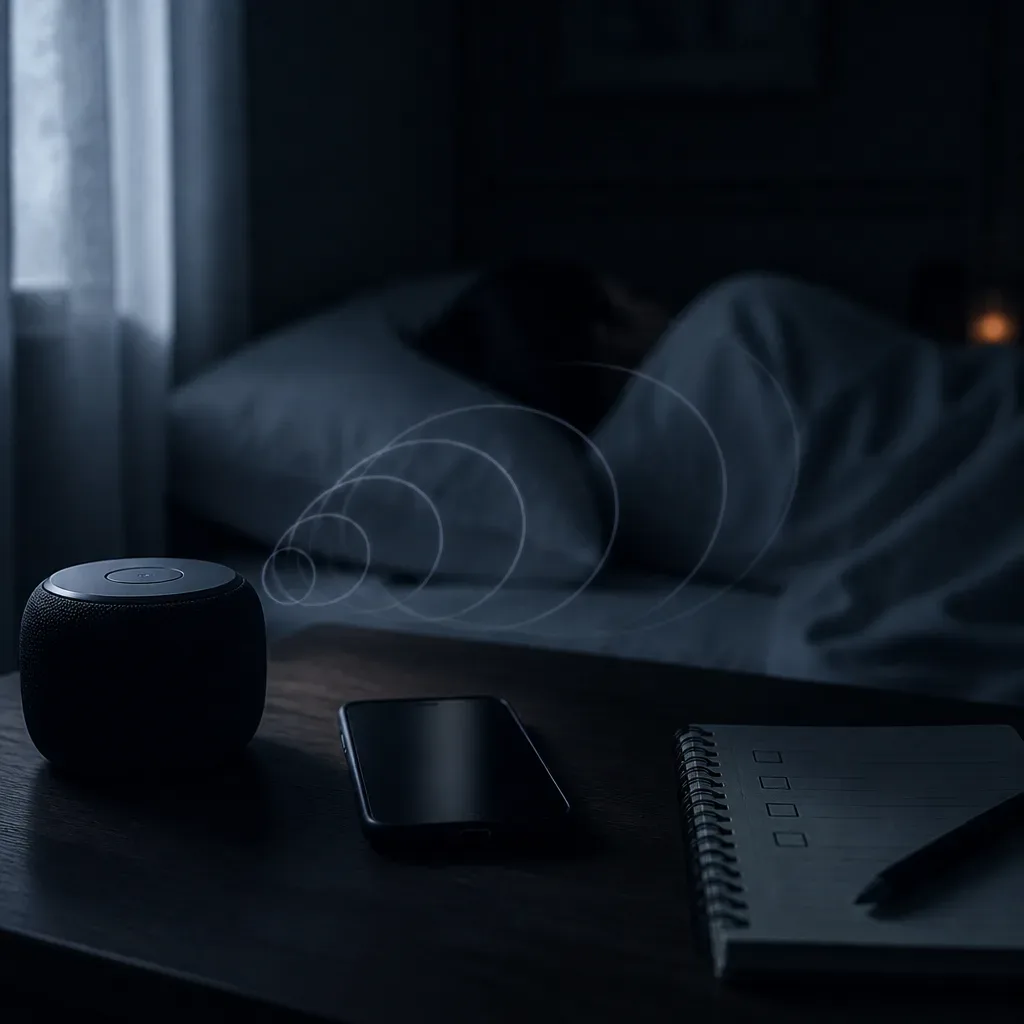
Use one cue, not a playlist. Keep it under 10 seconds. Set it lower than you think. Spoken cues can work, but many people find them too direct. A short chime or soft phrase may survive better inside a dream.
A basic audio cue plan:
- Pick one sound.
- Hear it 3 times before bed while doing a reality check.
- Say, “When I hear this, I notice I’m dreaming.”
- Schedule it for 5.5 or 6.5 hours after sleep begins.
- Track whether it woke you, entered the dream, or disappeared.
If you want a waking audio practice that doesn’t depend on catching REM, the AYA Method is a daily audio manifestation practice. Each day you listen to a short personalized recording — your Dream-Self Moment — narrated from the version of you who has already manifested the life you intend. Listening is the practice. Repetition is the work. The audio is the method. It belongs to waking life, but recurring dreams and recurring self-talk often circle the same fears and wants.
Dreams don’t obey devices. Devices only give you another way to notice.
What audio settings work best for REM cues?
The best audio settings are brief, quiet, repeated consistently, and scheduled late enough that REM sleep is likely.
Start with volume. If your cue wakes you more than 1 night in 3, it’s too loud, too long, too sharp, or too early. A 2020 consumer sleep report from the Sleep Foundation noted that noise sensitivity differs widely across sleepers; this matches what lucid dreamers have known informally for decades. One person sleeps through a spoken sentence. Another wakes from a distant radiator click.
Use headphones only if they are safe and comfortable for you. Many people do better with a phone speaker across the room or a small bedside speaker. Avoid anything that tangles, heats, or presses into the ear. The dream is not worth a sore neck at 6 a.m.
Here’s a practical comparison:
| Cue type | Best use | Common problem |
|---|---|---|
| Soft chime | Gentle recognition cue | May be ignored |
| Your own voice | Strong meaning | Often wakes beginners |
| Nature sound | Less startling | May blend in too well |
| Short phrase | Direct lucidity prompt | Can feel too intrusive |
| Music fragment | Memorable cue | Emotional charge may distract |
Keep the cue under 10 seconds. Try 1 to 3 repeats spaced several minutes apart inside a target window, rather than one long sound. If you use an app, turn off unrelated notifications. Nothing ruins a carefully set cue like a delivery alert becoming part of the dream.
The best cue is not the prettiest sound. It’s the one your sleeping mind can almost recognize.
After waking, write three facts: cue time, result, and dream fragment. If you want help reflecting on the imagery, the AI dream interpreter tool can be useful after your own notes are down. Don’t outsource the first remembering. That part belongs to you.
How do you build a one-week timing plan?
Build the plan around one stable wake time, one REM target, one cue, and one notebook page per morning.
A week is long enough to reveal patterns and short enough that you won’t turn the practice into a second job. In small lucid dreaming studies, success rates vary sharply because participants differ in recall, motivation, sleep timing, and prior skill. That’s why your own seven-night record matters. It makes the invisible visible.
Use this schedule if you sleep roughly 7 to 8 hours:
| Night | Practice | Target |
|---|---|---|
| 1 | No alarm, journal only | Baseline recall |
| 2 | Reality checks by day, journal | Find dream signs |
| 3 | Wake after 5.5 hours, MILD | Test WBTB |
| 4 | Rest from alarms | Protect sleep |
| 5 | Wake after 6 hours, add audio cue | Test cue |
| 6 | Same cue, same timing | Repeat conditions |
| 7 | No changes, full notes | Compare results |
During the day, do reality checks when something odd happens, not every time your phone buzzes. Ask, “How did I get here?” Look at text twice. Count fingers if you like, though it’s less reliable than memory checking. The point is not the hand. The point is the habit of doubt.
Your morning page can be small:
- Bedtime and estimated sleep time
- Wake time and alarm time
- Cue used, if any
- Dream signs
- Lucidity, even for 2 seconds
- Mood and sleep quality from 1 to 5
If you wake from a strong dream, don’t move immediately. Lie still for 10 seconds and let the last image return. Then write the plainest possible sentence. “Grandmother’s kitchen flooded.” “Teeth made of paper.” “Driving from the back seat.” The Dream dictionary (A–Z hub) can wait until after the sentence is safe.
Two boring weeks of ordinary dream recall often do more than one heroic night of technique.
What should you do the morning after a lucid dream attempt?
The morning after, record what happened before judging whether the night succeeded.
Lucid dreaming has a cruel habit: near misses look like failures if you don’t write them down. You heard the cue inside the dream but didn’t question it. You noticed a dead relative and felt something was strange. You became lucid for 3 seconds and woke. These are not nothing. They are the practice beginning to answer.
I mark four outcomes in the margin: no recall, recall, pre-lucid, lucid. Pre-lucid means the dream almost knew itself. In my notebooks, pre-lucid nights often appear 3 to 10 days before a clean lucid dream when I’m returning from a dry spell. That number is personal, not universal, but it’s useful because it keeps me from quitting too early.
Ask three questions before coffee if you can:
- What was the strongest image?
- What should have made me suspicious?
- What time did I wake from it?
Then underline the dream sign. A dream sign is any repeated oddity: old houses, school corridors, dead phones, impossible driving, lost shoes. If you’re building a broader practice, keep the Lucid dreaming pillar nearby and compare your notes to the basic methods there. If you want symbolic language after that, use a dictionary or interpreter, but begin with your own pattern.
If nightmares become frequent, distressing, or tied to trauma, speak with a qualified clinician. Lucid dreaming can be helpful for some nightmare sufferers, and imagery rehearsal therapy has stronger clinical support, including research in the Journal of Behavioral Medicine, but your nervous system deserves care before technique.
Write one line and leave the dream some room.