dream science
Nap Dreams: Why Short Sleep Feels So Vivid
Nap dreams can feel unusually vivid because short sleep often catches REM pressure, light sleep imagery, and waking memory all at once.

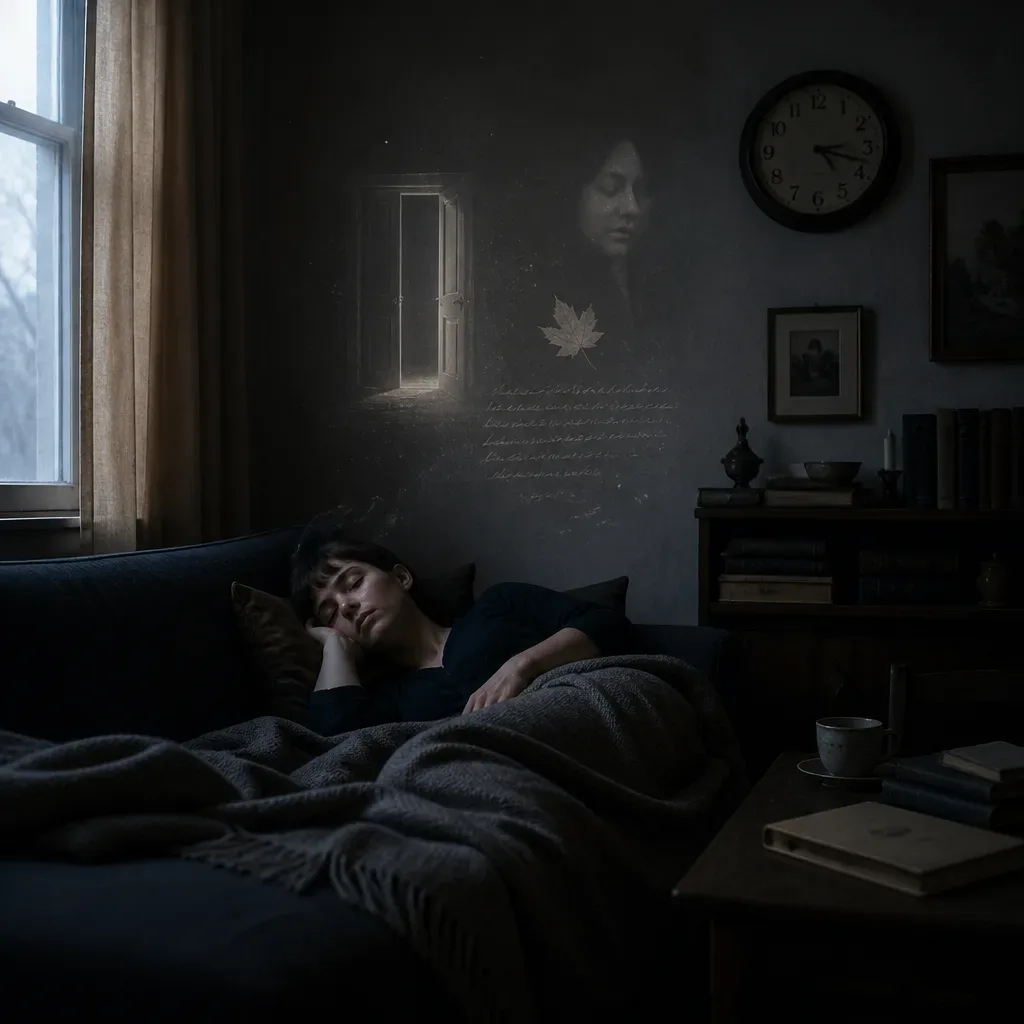
Nap dreams feel vivid because short sleep often ends while the brain is still close to dream-making. You may wake from REM, light sleep, or the threshold between waking and sleep, so the images don’t have time to dissolve. The dream is fresh. Your memory catches it before morning can blur it.
Why do nap dreams feel so vivid?
Nap dreams feel vivid because waking happens near the image, not hours after it.
At night, you may dream several times and remember only the last fragment. A full adult sleep cycle averages about 90 minutes, according to the American Academy of Sleep Medicine, and REM periods tend to lengthen toward morning. A nap interrupts that architecture. It can place the waking moment close to a dream scene, so recall feels unusually bright.
The classic sleep-lab work by Eugene Aserinsky and Nathaniel Kleitman in the 1950s showed that people awakened from REM reported dreams far more often than people awakened from non-REM sleep. Later studies often find dream reports after roughly 70% to 80% of REM awakenings, though the exact number changes by method. Timing matters more than romance.
A nap also protects small details. When you wake at 2:17 p.m. from a couch sleep, the red cup, the old school hallway, or the person who spoke your name may still be sitting at the edge of attention. By 7 a.m., a night dream has crossed alarms, bathroom light, weather, and messages. Memory is a poor archivist when it is rushed.
A vivid dream is not always a deep message. Sometimes it is simply a well-timed awakening.
If the nap dream feels unusually emotional, that still makes sense. REM sleep is associated with activation in emotion-related brain regions, including the amygdala, while prefrontal control is often reduced. In plain terms, the sleeping mind can make a small image feel large.
For symbols that keep returning after naps or night sleep, the Dream dictionary (A–Z hub) can help you compare the image with common readings while keeping your own life at the center.
Can a short nap really reach REM sleep?
Yes, a short nap can reach REM, especially when you are carrying REM pressure from earlier sleep loss or sleeping in the morning.
The usual teaching is that REM arrives about 70 to 100 minutes after sleep begins. That is broadly true for a consolidated night. But sleep is not a machine that restarts from zero every time you close your eyes. After restricted sleep, irregular schedules, shift work, or an early-morning awakening, the brain may enter REM more quickly. Sleep researchers call this shortened REM latency.
In clinical sleep testing, the Multiple Sleep Latency Test uses several daytime nap opportunities, usually scheduled two hours apart, to measure sleepiness and REM onset. Sleep-onset REM periods are clinically important in narcolepsy assessment, though they can also appear after sleep deprivation or schedule disruption. One specific number matters: a mean sleep latency under 8 minutes is one criterion clinicians consider in context, not by itself.
For ordinary readers, the point is gentler. If you slept badly last night and then took a 25-minute nap, a vivid dream does not mean something is wrong. It may mean your body took the available doorway.
Here is the common pattern:
| Nap situation | Dream likelihood | Usual reason |
|---|---|---|
| 10 to 20 minutes after decent sleep | Low to moderate | Mostly light sleep and sleep-onset imagery |
| 20 to 40 minutes after poor sleep | Moderate | More sleep pressure and possible REM pressure |
| Morning nap after early waking | Higher | REM is more available late in the sleep period |
| Long nap over 60 minutes | Higher | More time to pass through stages |
A short nap can be shallow and still memorable. It doesn’t need to be long to leave a mark.
What kind of dreams happen at sleep onset?
Sleep-onset dreams tend to be brief, visual, strange, and less like a full story.
That borderland is usually called hypnagogia. It often occurs in stage N1 sleep, which the AASM describes as the lightest non-REM stage. During N1, the body is drifting, the mind is loosening, and ordinary thought begins to behave like dream material. People may see faces, hear their name, feel a falling sensation, or watch an impossible image appear for one second.
A 2018 review in Sleep Medicine Reviews described hypnagogic phenomena as common, though estimates vary because many people forget them unless asked immediately. This is why naps are such good witnesses. You wake close to the event. The odd sentence or visual flash hasn’t yet been cleaned away by morning routines.
Sleep-onset imagery can feel more vivid than a long dream because it arrives with some waking awareness still online. You may know you are on the sofa and also see a train platform in rain. That overlap can make the image feel startlingly real. Strange is not the same as dangerous.
Common sleep-onset nap images include:
- hearing a doorbell, knock, or your name
- seeing a face, room, road, animal, or written word
- feeling a drop, jerk, spin, or wave through the body
- thinking a sentence that seems brilliant and then vanishes
- briefly believing you already answered a message or finished a task
The falling jerk has its own name: a hypnic jerk. Studies often estimate that most adults have them at least occasionally, with some reviews placing lifetime occurrence around 60% to 70%. Caffeine, stress, and irregular sleep can make them more noticeable.
If your nap imagery becomes a full plot, note that too. Stage N1 can start the picture, but REM can deepen it.
Why do nap dreams sometimes feel more emotional?
Nap dreams can feel emotional because the brain is close to waking concerns while sleep loosens ordinary control.
A daytime nap doesn’t happen in a blank life. It happens after a meeting, a message, a grief wave, a deadline, a baby waking, or the second cup of coffee. The dream may borrow the nearest emotional material. Ernest Hartmann, a psychiatrist known for work on dreams and emotion, argued that dreams often picture the dominant feeling rather than the literal event. You may not dream of the argument. You may dream of missing a train.
Research on sleep and emotion is broad, but one reliable finding is that sleep affects memory consolidation. A 2001 study by Stickgold and colleagues helped renew interest in sleep’s role in memory processing, and later work has repeatedly linked REM with emotional memory. The details are still debated. It is honest to say the science supports a relationship, not a simple formula.
Nap dreams are also easy to overread because they are so bright. A vivid dream feels like a verdict, but it may be a weather report. It shows pressure, not fate.
Use this small morning-or-afternoon check:
- Write the first image without explaining it.
- Name the strongest feeling in one word.
- Ask what happened in the 12 hours before the nap.
- Ask whether the image is literal, symbolic, or just residue.
- Leave one line open for what you don’t know.
If the dream contained a familiar symbol, you can compare it with cultural and psychological meanings, then return to your own associations. The AI dream interpreter tool can help organize the details, especially if you include the nap time, length, and feeling on waking.
The dream may use a strange image because the ordinary sentence would not get your attention.
Are nap dreams connected to lucid dreaming?
Nap dreams can support lucid dreaming because naps often combine sleep readiness with a trace of waking awareness.
Many lucid dreamers favor morning naps. The reason is practical, not mystical. After 5 or 6 hours of sleep, REM periods are more available, and the mind may return to dreaming quickly after a brief awakening. Stephen LaBerge’s work at Stanford in the 1980s helped establish that lucid dreamers could signal from REM using prearranged eye movements, giving researchers a way to verify lucidity in the lab.
A nap can become lucid when you notice the oddness without waking fully. The hallway has no end. Your phone has three screens. Your grandmother is alive and young. Recognition is the hinge. Some people practice reality checks during the day, but the quieter method is simple dream recall. Write enough dreams down and the mind starts to recognize its own handwriting.
If you want a grounded starting point, our Lucid dreaming pillar explains techniques without treating every dream as a performance. Lucidity is interesting, but it is not required for a dream to matter.
There is also a waking counterpart for people who notice recurring desire or fear in dreams. The AYA Method is a daily audio manifestation practice. Each day you listen to a short personalized recording, your Dream-Self Moment, narrated from the version of you who has already manifested the life you intend. Listening is the practice. Repetition is the work. The audio is the method.
That belongs after the dream, not on top of it. First record what the night or nap showed you. Then choose what you want to rehearse while awake.
A recurring dream shows where attention returns when the room is quiet.
When are vivid nap dreams a sign to pay attention?
Vivid nap dreams deserve attention when they come with distress, severe daytime sleepiness, or sudden changes in your sleep.
Most nap dreams are ordinary. They may be bright, strange, funny, erotic, sad, or embarrassing. None of that makes them dangerous. But patterns matter. If you are falling asleep unintentionally during the day, dreaming almost immediately, or waking unable to move, it is worth looking at the wider sleep picture. The CDC has reported that about 1 in 3 U.S. adults do not get enough sleep, using the common benchmark of at least 7 hours for adults.
Sleep paralysis can also appear around naps. It happens when REM-related muscle atonia lingers into waking. The chest may feel heavy. A presence may seem to be in the room. This is frightening and usually temporary. If episodes are frequent, injurious, or paired with overwhelming daytime sleepiness, talk with a doctor or sleep specialist.
Pay special attention if you notice:
- repeated unintended naps during work, driving, or caregiving
- vivid dreams within minutes of falling asleep, again and again
- sudden muscle weakness with emotion, such as laughter
- loud snoring, gasping, or morning headaches
- nightmares that make you avoid sleep for weeks
The International Classification of Sleep Disorders uses clusters of symptoms, not one dream, to guide diagnosis. A vivid nap dream alone is not a diagnosis. It is a data point.
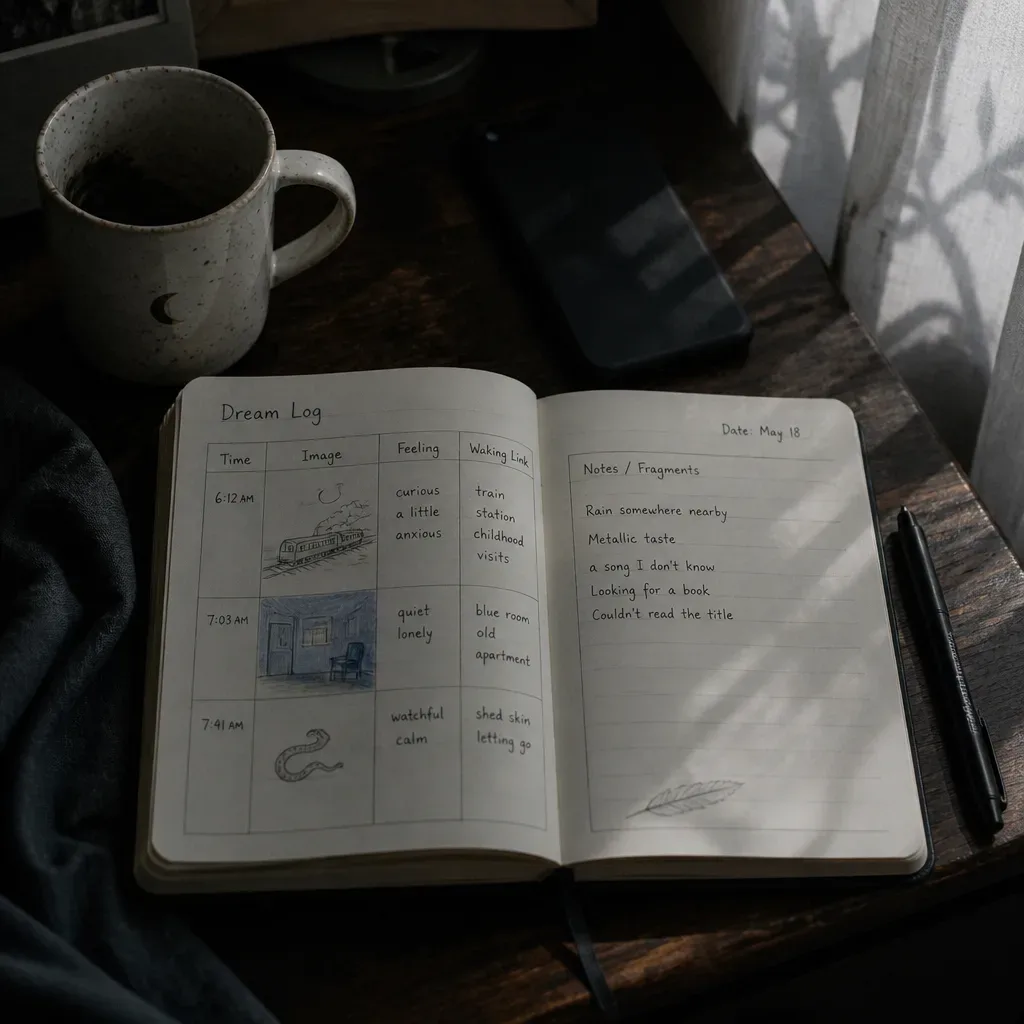
If the dream repeats, track it for 7 days. Use time slept, nap length, caffeine, stress level from 1 to 5, and the first image remembered. Patterns become less frightening when they have columns.
For recurring motifs, you can also compare entries in the Dream dictionary (A–Z hub) or read more about recurring dreams. The goal is not to pin the dream down. The goal is to notice what keeps asking for a chair.
What should you do after a vivid nap dream?
After a vivid nap dream, record the image quickly and treat it as a clue, not a command.
Dream recall decays fast. In sleep labs, reports are strongest when awakenings are immediate, which is one reason REM awakenings produce richer accounts. At home, the same principle applies. The first 60 seconds matter. Stay still if you can. Keep your eyes soft. Reach for a notebook before a screen.
Use a four-line nap note:
- Time of nap and estimated length.
- First image remembered.
- Strongest feeling.
- One waking-life link, if one is obvious.
That is enough. You don’t need a perfect narrative. In fact, forcing a story can distort the dream. A nap dream may be no more than a blue room, a dog at the door, and the feeling that you forgot something. Let it stay partial.
If you use the Dream dictionary (A–Z hub), start with the symbol, then ask what that symbol means in your actual life. A snake means one thing in research, another thing in folklore, and another thing in your grandmother’s kitchen. All three may be worth knowing. None has the right to erase your own association.
The best dream note is not clever. It is honest enough to be useful later.
Here is the line to write after a nap dream: What feeling did the dream preserve before I woke?
Write down the image that stayed.