Dream About Weddings Meaning: Marriage, Change, Pressure
A wedding dream usually means commitment, transition, or pressure around a choice, relationship, role, or public change.
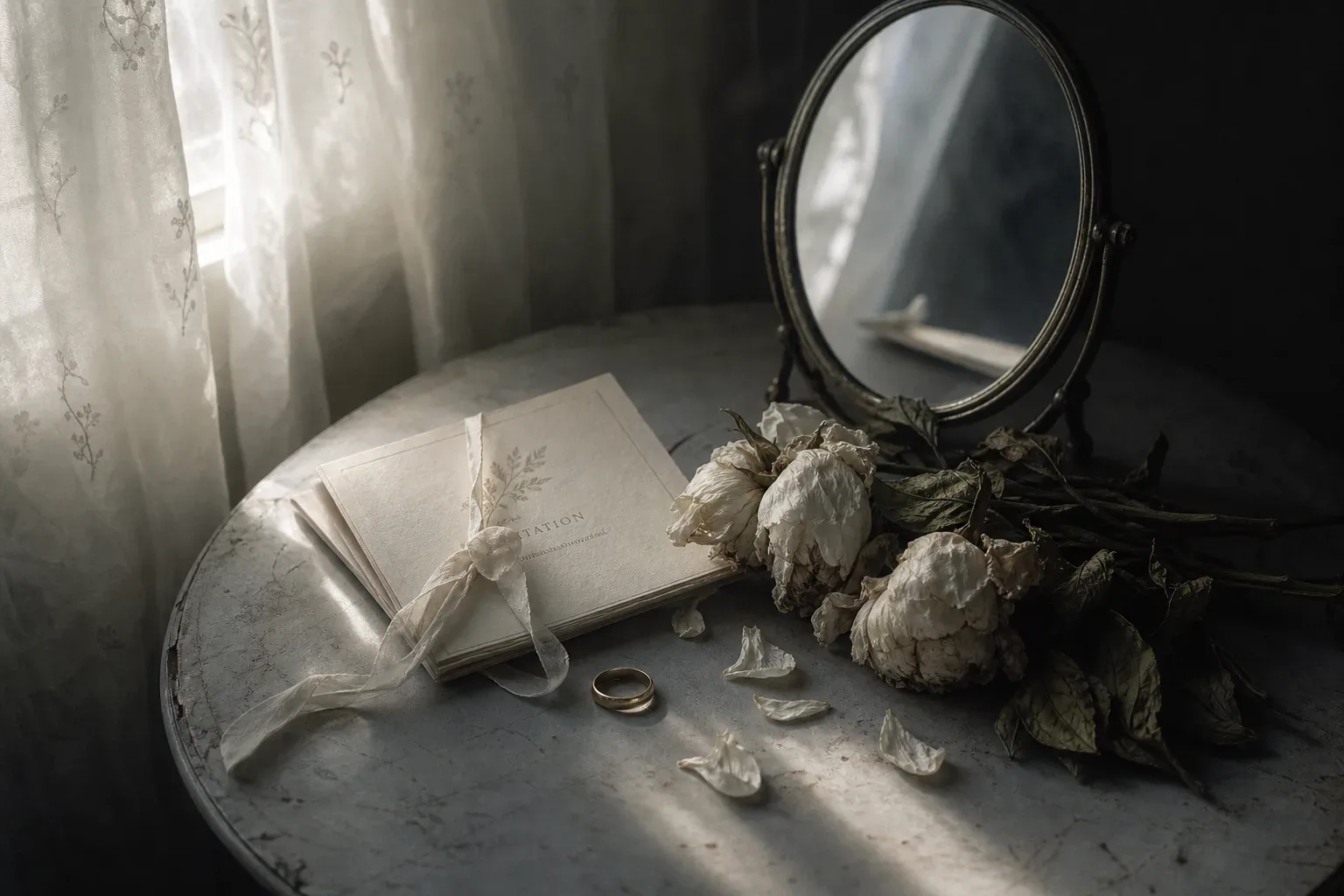
A wedding dream usually points to commitment, transition, or the pressure of being seen by other people. It may be about love, but it often belongs to work, family, identity, or a choice you’re trying to make official. The feeling matters more than the dress, ring, or guest list.
what the psychology says
Psychologically, wedding dreams tend to gather two ordinary human themes: union and public commitment. A wedding is not only romance. It’s a ceremony where private feeling becomes a social fact. So the dream may ask, quietly, what are you joining yourself to, and who knows about it?
In clinical tradition, Carl Jung often treated marriage images as symbols of inner union: the joining of different parts of the psyche, such as conscious and unconscious, masculine and feminine, old self and new self. That doesn’t mean every wedding dream is mystical or grand. It can be as simple as trying to live with two truths at once: you want closeness and you want freedom; you want change and you fear the cost.
Modern dream research is more cautious. The continuity hypothesis, associated with researchers such as Calvin Hall and later G. William Domhoff, suggests that dreams often continue waking concerns: relationships, social stress, work, grief, conflict, and plans. From that view, a wedding dream may reflect whatever commitment is active in your life. It might be a partner. It might be a contract, a move, a pregnancy, a new job, a family expectation, or the decision to stop being who others thought you were.
Threat-simulation theory, proposed by Antti Revonsuo, argues that dreams can rehearse dangers and social threats. A wedding dream where everything goes wrong may fit that pattern. You’re late. The guests stare. The ring is missing. The wrong person waits at the altar. The dream is not predicting disaster. It may be rehearsing embarrassment, rejection, exposure, or the fear that you’ll make the wrong promise in front of witnesses.
There’s also a social side to dreaming. Wedding dreams often include crowds, relatives, old friends, and people you haven’t thought about in years. Dream researchers have long noticed that dreams are full of social interactions. The evidence doesn’t let us say weddings have one fixed meaning, but it does support the simpler point: dreams use familiar social settings to process attachment, status, fear, desire, and unresolved feeling.
If you’re actually planning a wedding, the meaning may be very literal. Your brain is sorting details, costs, family dynamics, and the strange fact that one day is asked to carry so much meaning. If you’re not planning one, the dream may still be about a threshold. Something wants a formal answer.
For more nearby symbols, the wider dream-dictionary can help you notice whether the dream is really about marriage, loss, guilt, reunion, or public exposure.
what tradition and folklore say
In European folk tradition, wedding dreams were sometimes treated with suspicion. Some traditions said dreaming of a wedding could mean a funeral was near. This is folklore, not evidence. But the association makes symbolic sense: both weddings and funerals are ceremonies of passage. Both gather the community. Both mark the end of one social identity and the beginning of another.
In parts of South Asian tradition, wedding dreams may be read as signs of change, duty, family negotiations, or a coming shift in household life. Again, there’s no good evidence that a wedding dream predicts marriage. The older reading is more communal than predictive: a wedding is not just two people, but two families, expectations, ancestry, money, and public belonging.
In some Christian folk readings, a wedding in a dream can symbolize covenant, spiritual union, or a soul’s relationship with God. In other readings, especially when the wedding feels dark or forced, it may warn against a false promise. This is tradition, not proof. It does remind us that weddings carry moral weight in many cultures. They ask who you’re loyal to, what you’ve vowed, and whether the vow is freely chosen.
In Jewish and Middle Eastern folk settings, wedding dreams can be read as signs of blessing, obligation, or communal joy, depending on the mood of the dream. The music, food, and guests matter. A joyful wedding may be read as increase or harmony; a troubled one as anxiety around family order. Folklore speaks in patterns, not guarantees.
The honest middle path is this: wedding dreams have a long symbolic history because weddings change names, households, duties, and futures. Your dream may borrow that history even when no actual marriage is on your mind.
what does it mean to dream of your own wedding?
Dreaming of your own wedding usually points to a personal commitment. It may be about your relationship, especially if marriage is being discussed, avoided, hoped for, or feared. But it can also be about committing to a role: becoming a parent, leaving a job, starting a business, going public with an identity, or choosing one life over another.
Notice the emotional weather. Were you happy, calm, trapped, numb, embarrassed, rushed? A peaceful wedding often suggests readiness or acceptance. A panicked wedding may suggest you feel pushed toward a choice before you’ve had time to consent inwardly.
If you couldn’t find your clothes, forgot your vows, or arrived late, the dream may be less about marriage and more about performance. You may feel unprepared for a public responsibility. The wedding is the stage your mind chose because weddings are where private promises become visible.
If there was no partner at all, or the partner kept changing, the dream may be asking what you’re really marrying. A plan. A family role. A version of yourself. A future you haven’t fully examined.
Ask: in waking life, where am I expected to say yes?
what if you dream of someone else’s wedding?
A dream of someone else’s wedding often reflects your feelings about their change, your place in their life, or your own comparison to them. You may be happy for them. You may feel left behind. You may be noticing that a relationship, friendship, or family structure is becoming different.
If the wedding belongs to a sibling or close friend, the dream may be about shifting closeness. Their new commitment changes the map. Even when you support it, the psyche may still grieve the old arrangement.
If the wedding belongs to a stranger, the dream may be more symbolic. A stranger’s wedding can show a part of you joining with another part. It can also suggest that a commitment is happening around you rather than through you. You’re watching a change you haven’t claimed.
If you’re a guest and feel awkward, underdressed, or unwanted, notice waking situations where you feel outside the circle. If you’re serving, organizing, or cleaning up, the dream may point to emotional labor: you’re helping other people’s milestones happen while delaying your own.
A wedding guest dream asks a quiet question: am I witnessing my own life, or only arranging the chairs for someone else’s?
what if you’re marrying an ex, a stranger, or the wrong person?
Dreaming of marrying an ex-partner usually doesn’t mean you should go back. More often, it means something from that relationship still has symbolic weight. You may be reworking an old pattern: how you attach, how you leave, how you forgive, how you repeat what once hurt you.
If the dream feels tender, it may hold memory, grief, or unfinished kindness. If it feels frightening or suffocating, it may show fear of returning to an old self. The ex can stand for a whole season of life, not just the person.
Marrying a stranger often points to the unknown future. You’re joining yourself to something not yet fully named. This can happen before a big move, new job, creative project, or identity shift. The stranger may be strange because you haven’t met that version of yourself yet.
Marrying the wrong person is a common anxiety dream. It often appears when you’re afraid of making a binding choice under pressure. The wrong person may represent the wrong job, wrong city, wrong promise, wrong mask, or wrong compromise.
If the dream includes secrecy, guilt, or another partner, it may overlap with dreams about cheating. In that case, look less for literal confession and more for divided loyalty. Where are you saying yes to one thing while emotionally pulled toward another?
what if the wedding goes wrong?
A wedding going wrong in a dream is usually about anxiety around exposure, timing, and irreversible choice. The cake collapses. The dress tears. The guests vanish. The officiant can’t speak. The ring is lost. These details often point to the fear that something important won’t hold when others are watching.
A missing ring may suggest doubt about the promise itself, or fear that the symbol of commitment isn’t secure. Lost shoes or clothes may suggest vulnerability: you don’t feel ready to stand in the role. A ruined dress or suit may involve shame, body image, money pressure, or the fear of being judged.
If no one attends the wedding, the dream may be about loneliness around a major decision. You may feel unsupported, unseen, or unsure whether others will bless the change you’re making. If too many people attend, it may be about intrusion. Everyone has an opinion. The dream makes the crowd visible.
If you run away from the wedding, the dream may be protecting your no. It doesn’t mean you must reject a real partner or plan. It means some part of you needs more room before a vow is made.
If wedding nightmares repeat and seriously disturb your sleep or daytime functioning, talk to a doctor or qualified mental health professional in one plain step.
the morning after
Ask yourself: what am I being asked to commit to, and did I choose it freely?
Write this line down: In the dream, the wedding felt like ___, and in my waking life that feeling belongs to ___.
Then add three details: who was there, what went wrong or right, and what you wanted to do next. The details matter because wedding dreams are rarely only about weddings. They’re about promises, witnesses, endings, beginnings, and the public shape of a private yes.
If the dream keeps returning, notice that a recurring dream shows what your attention returns to at night; the waking counterpart can be a Dream-Self Moment through the AYA Method, where you speak in your own voice about who you’re becoming.