Dream About an Intruder in the House
An intruder in the house usually means a felt boundary has been crossed: privacy, safety, control, or an unwanted truth.
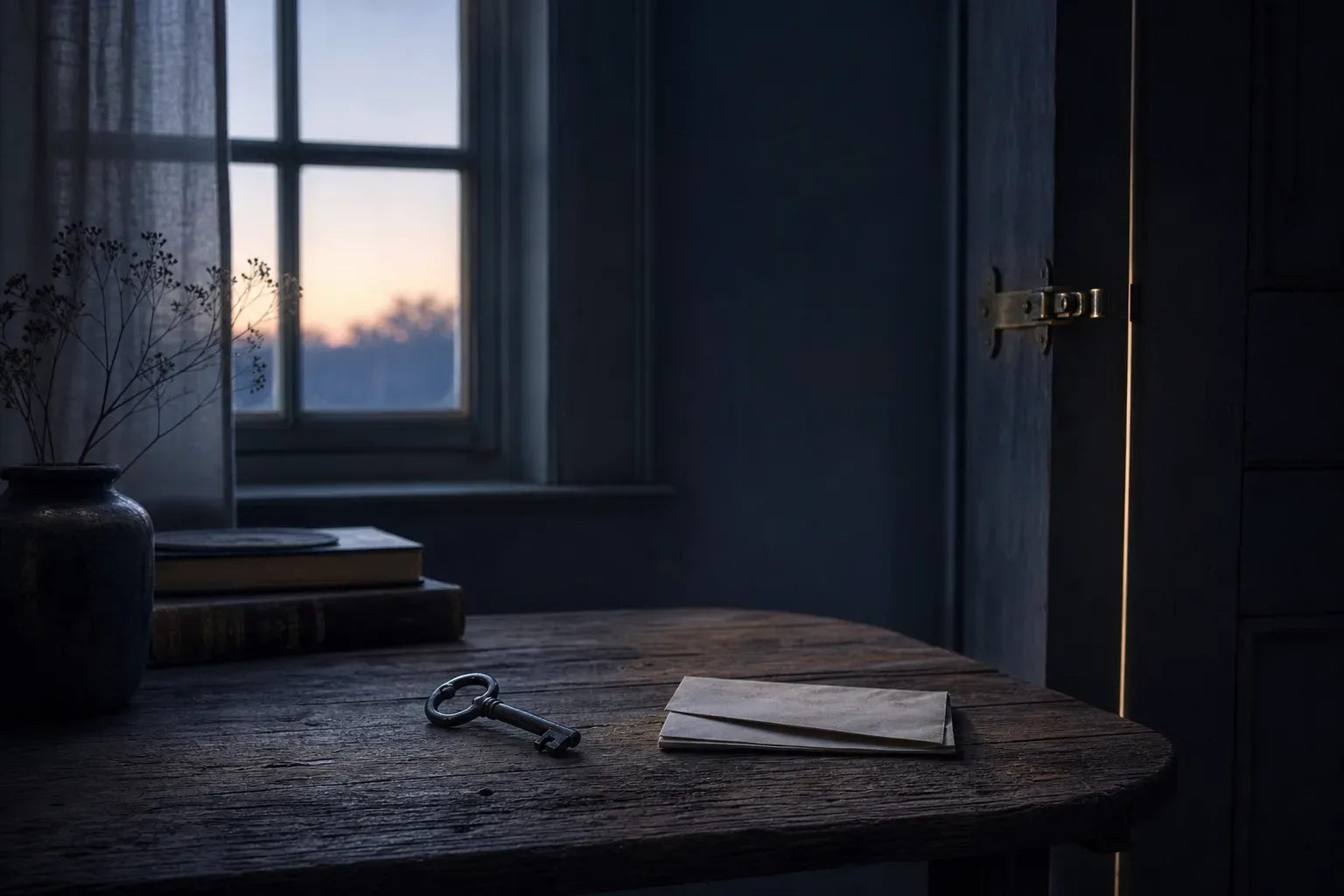
An intruder in the house dream usually means a felt boundary has been crossed. Something private feels exposed: a worry, a person’s demands, a memory, or a part of you that won’t stay outside anymore. The house is often the self. The intruder is what you don’t yet feel ready to admit.
what the psychology says
In dream psychology, a house is one of the commonest images for a person’s inner life. Not in a mechanical way. Not every room means a fixed organ or secret. But the house tends to hold what is personal: your habits, your body, your family stories, your private rules, your sense of safety. If someone breaks into it at night, the dream is usually about intrusion.
That intrusion may be literal. You may be dealing with a person who asks too much, watches too closely, or ignores your no. It may also be emotional. A new fear has entered the room. A grief you kept outside has found a window. An old conflict has come back without knocking.
The continuity hypothesis of dreaming, associated with Calvin Hall and later developed by researchers such as G. William Domhoff, says that dreams often continue waking concerns rather than inventing them from nowhere. By this reading, an intruder in the house is not a random villain. It’s a night version of a waking pressure. The pressure may be ordinary: work emails in bed, family demands, a noisy neighbor, money stress, a relationship where you can’t fully rest.
Antti Revonsuo’s threat-simulation theory offers another honest angle. He argued that dreaming can simulate dangers so the mind rehearses perception and response. An intruder is a clear threat image. The dream may be practicing vigilance: Where is the door? Who is nearby? Can I hide? Can I speak? Can I run? This does not mean you’re in danger. It means the sleeping mind is using one of its oldest story forms: something enters the shelter.
Clinical tradition, especially Jung-adjacent work, adds a quieter layer. Carl Jung often treated houses, rooms, strangers, and shadowy figures as images of the psyche. An unknown intruder may represent a disowned part of the self: anger you don’t allow, desire you judge, grief you’ve postponed, strength you’re afraid to use. The intruder feels hostile because the conscious self has not yet made room for it.
There’s no good evidence that an intruder dream has one universal meaning. Dream dictionaries often pretend otherwise. Research supports broader patterns: dreams reflect waking emotion, social conflict, fear, memory, and personal concern. The specific symbol is yours. If you recently watched a break-in scene, heard a noise at night, or worried about security, the dream may be close to the surface. If nothing obvious happened, look for the subtler boundary.
Notice the feeling more than the plot. Were you terrified, angry, frozen, protective, strangely calm? Did you know the intruder? Did the house feel like your real home, a childhood home, or a strange place that was somehow yours? Those details matter. A dream about houses often points to the structure of the self. A dream about hiding often points to what you’re trying not to face. If the intruder steals something, the meaning may sit close to theft: loss, violation, or the fear that someone is taking more than they should.
If the dream repeats often, wakes you in panic, or is tied to trauma, it’s worth being gentle with yourself. Nightmares are common. If nightmares regularly disrupt your sleep or daytime life, talk to a doctor or a qualified mental health professional.
what tradition and folklore say
Folklore has always taken the house seriously. A home is not only walls. It’s a threshold, a fire, a table, a place where the outside world is meant to stop.
In much European folklore, doors and windows are spiritually charged places. Horseshoes, rowan branches, iron objects, salt, and spoken blessings were used to keep harmful forces from crossing the threshold. In that tradition, an intruder at the door can be read as a warning to guard the household: not a prediction, but a symbolic reminder to protect what is private and beloved.
In Slavic and some Northern European traditions, house spirits such as the domovoi were thought to guard the home, though they could become restless if neglected. Folklore like this doesn’t say your dream is a message from a spirit. It does suggest an old human concern: the home has a moral climate. When something unwelcome enters it, the household may need attention, repair, or respect.
In Islamic dream tradition, as recorded in medieval manuals attributed to interpreters such as Ibn Sirin, a thief or unknown intruder in the house could be read in several ways depending on the details: illness, loss, a visitor, or a hidden danger. This is folklore and religious tradition, not scientific evidence. Its value is in how carefully it asks about context. Who entered? What did they take? Was anyone harmed? Was the house known?
In Chinese folk belief and feng shui-influenced thinking, the home is often treated as a container of family order and fortune. A breach in the home, especially through a door or window, may be read as disorder entering the family system. Again, this is tradition, not proof. But it keeps the useful question: Where does your life feel unsealed?
The old readings are rarely subtle about boundaries. They say: mend the latch, sweep the threshold, bless the room, speak to the household. Modern language might say: change the password, have the conversation, close the laptop, name the fear, rest.
For more symbols beside this one, the dream-dictionary can help you compare related images without forcing one rigid meaning.
what does it mean if the intruder is trying to break in?
If the intruder is outside and trying to get in, the dream often points to anticipation. The boundary has not fully failed yet, but you’re bracing for it. This can appear during periods of pressure: a difficult conversation is coming, a bill is due, a family visit is near, or someone keeps pushing at your limits.
The door matters. A locked door suggests you still have some defense. A broken lock may suggest doubt about your ability to say no. A window entry often feels sneakier, as if the concern is bypassing your usual defenses. If the intruder is pounding, calling your name, or trying different entrances, ask where in waking life you feel pursued by something unresolved.
Sometimes the dream is not about a person at all. It may be about an emotion waiting outside. Anger, desire, shame, or grief may become the figure at the door because the mind needs an image for what feels hard to welcome.
what does it mean if the intruder is already inside?
When the intruder is already inside, the dream usually feels more intimate. The threat has crossed into the private rooms. This may reflect a problem that no longer feels theoretical. It’s in your schedule, your relationship, your body, your sleep.
Ask where you found them. An intruder in the bedroom may point to intimacy, rest, sexuality, or vulnerability. An intruder in the kitchen may point to nourishment, family, money, or daily care. An intruder in the basement may carry older material: memory, fear, the past. An intruder upstairs may connect with thought, planning, and watchfulness.
If you move through many rooms trying to find the person, the dream may be showing a search inside yourself. You know something is wrong, but you don’t yet know where it lives. If other people in the house don’t believe you, the dream may echo a waking frustration: you feel alone in noticing the problem.
It’s also worth asking if the intruder seems familiar. A stranger with the feeling of someone you know may be the mind’s way of softening a hard truth. You may not want to accuse the real person, so the dream gives them a mask.
what does it mean if you hide from the intruder?
Hiding in an intruder dream usually points to avoidance, self-protection, or both. It’s not weakness. Hiding is an intelligent response when the body believes it cannot fight or flee safely. In dreams, it can show where you’re trying to stay unseen until danger passes.
If you hide under a bed, in a closet, behind a door, or in a small room, notice the size of the hiding place. Small spaces often carry childhood feeling. You may feel young in the dream, even if you are your adult age. That can happen when a current pressure touches an old memory of powerlessness.
If you’re trying to keep children, pets, a partner, or family members quiet, the dream may be about protection. Some part of you is trying to protect what is tender. This can occur during caregiving stress, conflict at home, or any season when you feel responsible for everyone’s safety.
If you want to shout but can’t, or call emergency services but the phone won’t work, the dream may be about blocked expression. You know you need help or a boundary, but something stops the voice. The morning question is not only what scared me. It’s what am I not saying?
what does it mean if you confront or catch the intruder?
Confronting the intruder often suggests a shift. You may be ready to name the problem, protect your space, or meet a feared part of yourself more directly. The dream can still be frightening, but the posture is different. You are not only being pursued. You are responding.
If you yell, lock the intruder out, call for help, or force them to leave, the dream may reflect a waking need for firmer boundaries. This can be practical: ending a conversation, asking for privacy, changing a routine, refusing a demand. It may also be internal: refusing to let a thought pattern take over the whole house.
If the intruder turns into someone harmless, a child, an animal, or even a version of you, the dream becomes more psychological. The feared thing may be carrying a need. Anger may carry self-respect. Sadness may carry love. Desire may carry life you’ve postponed. This doesn’t mean every intruder should be welcomed. It means the symbol may change when you look at it.
If you injure or kill the intruder in the dream, don’t rush to judge yourself. Violent dream images are common under stress and do not mean you want to harm anyone. They often dramatize a wish to end fear quickly. Still, if violent dreams disturb you repeatedly or connect with waking urges to harm yourself or someone else, seek professional help promptly.
the morning after
Ask yourself one quiet question: Where in my life do I feel that something has crossed a line?
Then write one line down before the day explains the dream away: Last night, the intruder entered through ___, and I felt ___ because ___.
If the dream keeps returning, notice that recurrence. A recurring dream shows what your attention keeps returning to at night; the waking counterpart is the Dream-Self Moment in the AYA Method, where you practice naming, in your own voice, who you’re becoming before the dream has to shout it.