Dream of Hiding From Someone: Meaning
Hiding from someone usually means you’re avoiding pressure, conflict, exposure, or a truth that feels hard to face in waking life.
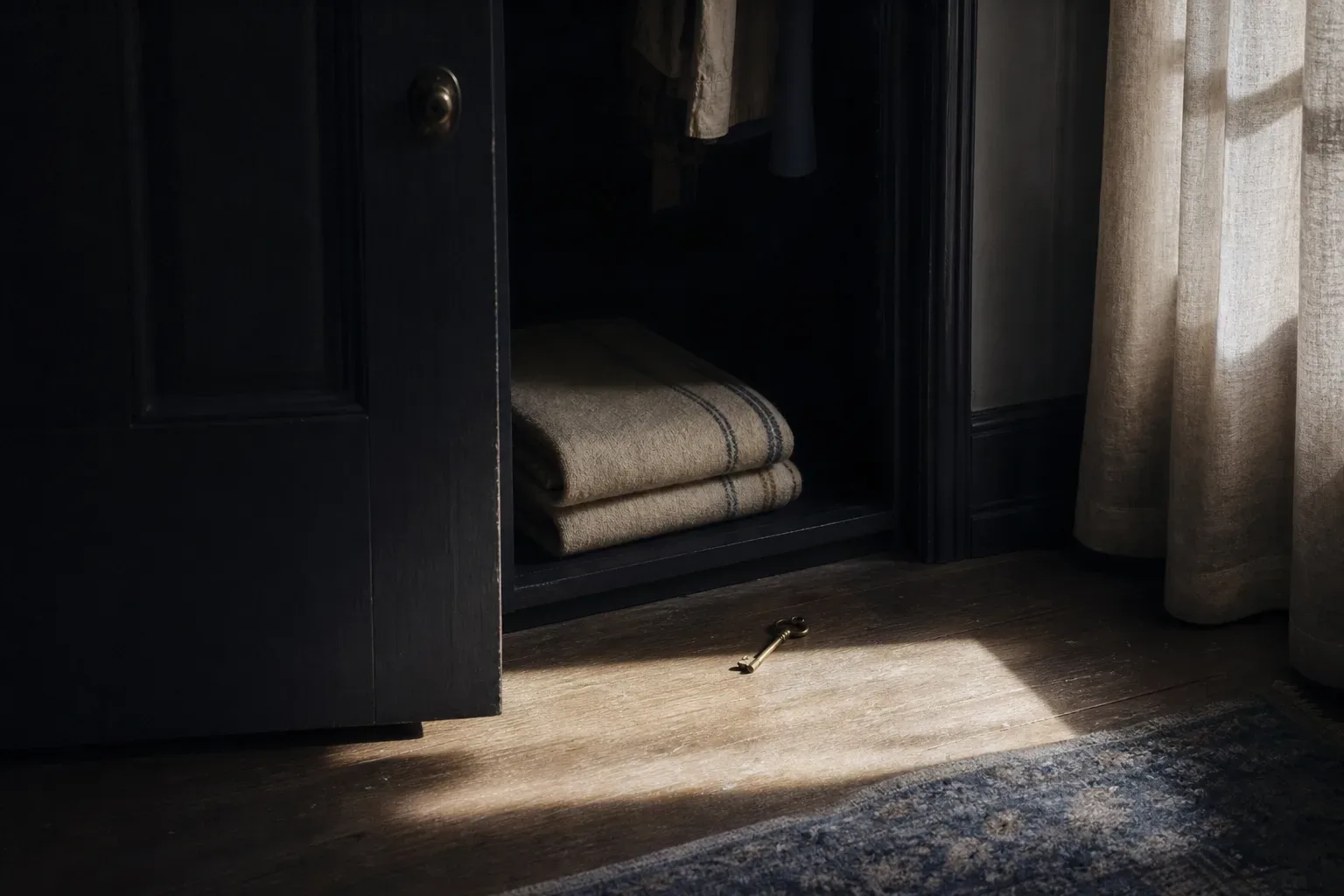
Hiding from someone in a dream usually means you’re avoiding a pressure, truth, conflict, or part of yourself that feels too exposed to meet directly. The “someone” may be a real person, but often the dream is about concealment: what you’re protecting, postponing, or afraid will be seen.
what the psychology says
Dreams of hiding tend to belong to the same family as dreams of being chased, being watched, being trapped, or trying to escape. The body feels danger before the story is clear. You crouch behind a door, slip under a bed, hold your breath in a closet, or hide in a house that is and isn’t yours. The dream asks a quiet question: what feels unsafe to face?
In clinical tradition, hiding often points to avoidance. That doesn’t mean cowardice. Avoidance can be a sensible short-term strategy. We hide when something feels too much, too soon, too public, or too charged. A dream may use hiding to show a waking pattern: not answering a message, not naming anger, not telling someone the truth, not looking at a bill, not saying what you want.
Carl Jung would likely ask who the pursuer is and what part of the self has been left outside the room. In Jungian terms, the hidden figure may carry “shadow” material: feelings, desires, memories, or strengths that the waking ego doesn’t easily claim. If you’re hiding from someone frightening, the dream may be staging fear. If you’re hiding from someone ordinary, the dream may be asking why that ordinary person has become so charged in your inner life.
Modern dream research gives a plainer frame. The continuity hypothesis, associated with researchers such as Calvin Hall and later G. William Domhoff, suggests that dreams often continue waking concerns: relationships, stress, conflicts, habits of thought. From that view, hiding from someone is not random theater. It may be yesterday’s worry, last month’s conflict, or a long-standing pattern wearing a night mask.
Antti Revonsuo’s threat-simulation theory is also relevant. It proposes that dreaming can simulate danger and rehearse responses to it. A hiding dream fits this well. The dream brain places you in a threat scene and tests a strategy: keep still, stay quiet, don’t be found. This doesn’t mean the danger is literal. The dream may be rehearsing social danger, emotional danger, financial danger, or the fear of being judged.
There is good research on nightmares, threat dreams, and waking concerns. There is much less research on “hiding dreams” as a separate category. So it’s honest to say this: the symbol is common, the pattern is clinically meaningful, but no good evidence says one exact meaning applies to everyone.
The feeling matters most. If hiding felt clever, the dream may be about privacy and self-protection. If it felt panicked, it may be about fear or pressure. If it felt shameful, the dream may be about being seen. If it felt calm, the dream may be showing your need for retreat, not danger.
Notice the body detail. Were you holding your breath? Were you small? Were you silent? Did you want help but couldn’t call out? Dreams often speak through ordinary body states. Hiding is not just a plot. It’s a posture.
If dreams like this are frequent, frightening, or tied to trauma, it can help to talk with a therapist; if nightmares are disrupting sleep often, talk to a doctor or mental health professional.
what tradition and folklore say
In older European dream books, hiding was often read as a sign of secrecy, shame, or trouble with authority. This is folklore, not science. The idea was simple: if you hide in sleep, something is hidden in waking life. A secret love, a debt, a fear of punishment, or an unspoken guilt might be named. These readings can sound severe now, but they preserve a useful question: what are you keeping out of sight?
In Islamic dream interpretation traditions, including material often associated with Ibn Sirin, hiding and seeking refuge can be read through the themes of fear, protection, repentance, or safety after danger. Again, this is tradition, not prediction. The spiritual emphasis is less on being hunted and more on seeking shelter. The dreamer is not only afraid; they’re looking for cover, mercy, or a protected place.
In Christian-influenced symbolism, hiding often recalls the old story of Adam and Eve hiding after becoming aware of their nakedness. In that tradition, hiding can symbolize shame, conscience, or the wish to avoid being known completely. But it can also suggest the tender human need to be covered, forgiven, and met gently.
Some folk readings treat hiding well as lucky: if you escape notice, you avoid harm. Others say being found means a secret will come out. These are not reliable forecasts. Dreams reflect; they don’t foretell. Still, folklore keeps one truth intact: being hidden and being seen are both emotionally loaded states.
If you’re comparing symbols, the wider dream-dictionary can help you notice neighboring images: doors, closets, strangers, police, houses, or running.
what does it mean if you’re hiding from a stranger?
Hiding from a stranger usually points to an unnamed pressure. The stranger may represent something not yet fully recognized: a new responsibility, a social fear, a mood you don’t understand, or a change you haven’t accepted.
A faceless pursuer is common in anxious dreams. The mind gives fear a body before it gives it a name. If the stranger never speaks, never shows their face, or moves through the house looking for you, the dream may be less about a person and more about being exposed.
This variation often appears during periods of uncertainty. A new job. A breakup. Family tension. Money worry. A decision you keep postponing. The stranger carries the charge of “something is coming,” even when waking life has no single villain.
If the stranger is inside your home, the dream moves closer to the symbol of an intruder. The question becomes: what has crossed a boundary? It may be someone else’s demand, but it may also be a thought you can’t keep outside anymore.
Ask yourself what you knew in the dream without being told. Dreams often contain this kind of knowledge. You may not know who the stranger is, but you may know what they want. That detail matters.
what if you’re hiding from someone you know?
If you’re hiding from someone you know, begin with the actual relationship. Not because the dream is always literal, but because familiar people bring familiar emotional weather.
Hiding from a parent may suggest fear of judgment, old rules, or the child-self that still wants approval. Hiding from a partner may point to withheld feelings, conflict avoidance, or the fear of being fully known. Hiding from a friend may involve comparison, guilt, envy, or worry that the friendship has changed. Hiding from a boss, teacher, or police officer often points toward authority, performance, or accountability.
The dream may also use a known person as a symbol. Your strict aunt may stand for criticism. Your ex may stand for old attachment. A former friend may stand for a past version of you. A child may stand for vulnerability or responsibility. The person matters, but the feeling around them matters more.
If you’re hiding from someone who has harmed you, take the dream gently. It may be the nervous system remembering danger, not a message that you should engage with that person. Dreams can repeat old threat patterns long after waking life has changed. Safety comes first, in the ordinary daylight sense.
A useful test: when you remember the person, finish this sentence quickly: “They might see that I…” The ending often names the dream’s concern. “I’m angry.” “I failed.” “I still care.” “I’m not who they think I am.” “I need help.”
what if you’re hiding and they find you?
Being found usually intensifies the theme of exposure. Something hidden becomes visible. The dream may bring a rush of dread, shame, relief, or even calm. That reaction tells you a lot.
If being found is terrifying, the dream may show fear of consequences. You may worry that a mistake, desire, lie, need, or private feeling will be discovered. This is especially likely if the scene includes authority figures, locked doors, searching footsteps, or the sense that you’ve done something wrong.
If being found brings relief, the dream may be less about danger and more about wanting to stop hiding. Some people wake from this dream surprised by the feeling: “I didn’t want them to find me, but when they did, I was glad.” That can suggest a wish to be known, helped, confronted, or released from secrecy.
If you’re found but can’t move, the dream touches the territory of being trapped. You may be dealing with a situation where avoidance no longer works, but action still feels impossible. The dream holds you in the middle: no longer hidden, not yet free.
Notice what happens after discovery. Are you attacked, scolded, hugged, ignored, arrested, laughed at, rescued? Many dreamers remember the hiding but not the ending. The ending is often where the meaning softens or sharpens.
what if you’re hiding in a closet, bathroom, attic, or under a bed?
The hiding place changes the reading.
A closet can suggest secrets, identity, privacy, or parts of yourself that have been stored away. It may also be very literal: the closet is where things are kept out of view.
A bathroom often points to vulnerability and privacy. It’s where the body is exposed and ordinary defenses are down. Hiding there may suggest embarrassment, the need to cleanse, or the wish for a private moment where no one asks anything of you.
An attic tends to carry memory. Old boxes, old rooms, old dust. Hiding in an attic can point toward family history, childhood fears, or thoughts you’ve “put upstairs” and tried not to visit.
A basement tends to feel deeper and less conscious. Hiding there can suggest older fear, grief, or instinct. It may also be the place where the dream stores what waking life doesn’t want to handle directly.
Under a bed is a childlike hiding place. It can return you to early fear: monsters, footsteps, adults arguing, being too small to control what happens. If you wake feeling young, the dream may be touching an old emotional age rather than your current one.
None of these places has one fixed meaning. The best clue is whether the hiding place felt safe, dirty, cramped, familiar, forbidden, or strangely comforting.
the morning after
Ask yourself: what am I trying not to be seen feeling, needing, wanting, or knowing?
Write this line down: “In the dream, I hid from ___ because ___.”
Then write one more line if you can: “In waking life, this reminds me of ___.” Keep it ordinary. A dream doesn’t need a grand meaning to be useful. It may be pointing to one conversation, one bill, one boundary, one grief, one truth you already half-know.
If the dream recurs, notice what changes: the hiding place, the person, the distance, whether you’re found. A recurring dream shows what your attention keeps returning to at night; the waking counterpart can be the Dream-Self Moment in the AYA Method, where you name, in your own voice, who you’re practicing becoming.
For today, don’t force a confrontation just because a dream had one. Do one small honest thing. Answer the message. Name the fear. Close the door. Open the window. Tell the truth to a page first.