Phone Won’t Work Dream Meaning
A phone that won’t work usually means blocked communication: someone feels unreachable, or you’re struggling to ask, answer, or be heard.
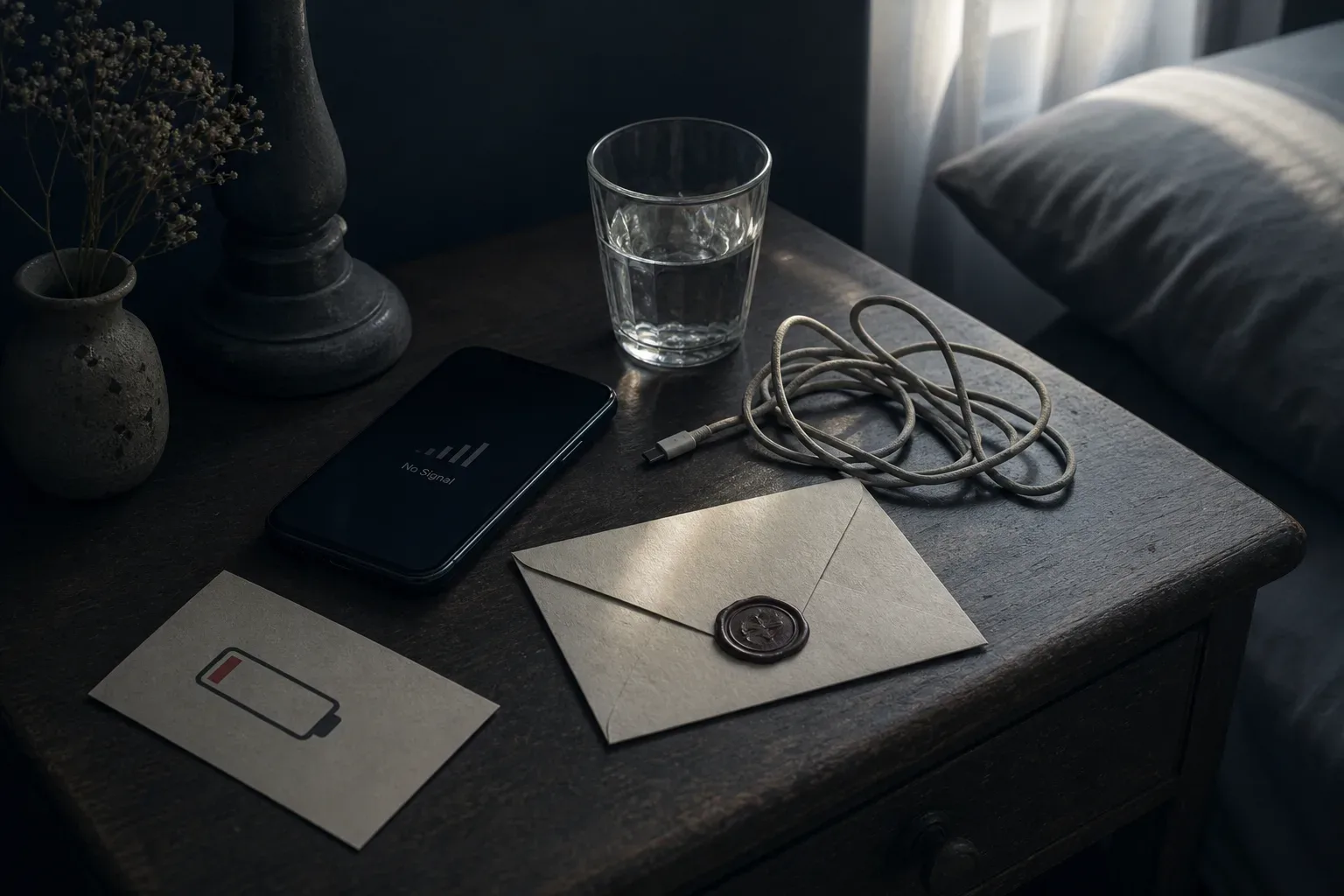
A phone that won’t work in a dream most often points to blocked communication. You may be trying to reach someone, ask for help, explain yourself, or hear an answer, and the ordinary tool of contact fails. The dream usually asks: where do I feel cut off, unheard, or unable to respond?
what the psychology says
A broken or useless phone is a modern dream image, so the research is not as old as the symbol feels. There’s no good evidence that dreaming of a phone that won’t work predicts a missed message, a coming argument, or a real call. The better reading is simpler and more human: dreams tend to use the day’s tools to stage the day’s pressures.
This fits the continuity hypothesis of dreaming, associated with Calvin Hall and later G. William Domhoff. In this view, dreams often continue waking concerns: relationships, worries, tasks, social roles, and unfinished feelings. If your waking life contains unanswered texts, family silence, workplace tension, or the need to say something cleanly, the sleeping mind may turn that into a phone with no signal, a dead battery, wrong numbers, frozen screens, or a call that drops at the worst moment.
Clinical tradition gives the image another layer. A phone is not just a device. It is a bridge. It carries the voice across distance. When it fails in a dream, the feeling matters: panic, irritation, shame, loneliness, urgency, or strange calm. A Jung-adjacent reading would ask what part of you is trying to make contact. Is it another person, a younger self, a grief, a decision, or a truth you keep postponing? Jung treated dream images as symbolic, not as one-size-fits-all signs. The phone may be the symbol, but the real subject is contact.
Threat-simulation theory, proposed by Antti Revonsuo, is also useful here. Some dreams rehearse danger or difficulty. A phone that won’t work when you need help is a clean little nightmare: you know what to do, but the tool fails. That kind of dream can appear during stress, when you feel underprepared, unsupported, or responsible for something with too little backup. It may sit near dreams of screaming without sound, where expression is urgent but blocked.
Researchers who study dream content, including Hall, Domhoff, and later sleep researchers such as Michael Schredl, have repeatedly found that dreams are full of social interactions and ordinary concerns. The phone is an ordinary social object. Its failure can dramatize a common waking bind: I need to reach someone, but I don’t know how.
Notice the exact failure. A dead battery is not the same as a wrong number. No signal is not the same as a cracked screen. A phone that works for everyone except you is not the same as a phone that rings and rings while you refuse to pick it up. The dream’s mechanics are often its grammar.
If this dream is frequent and comes with panic, insomnia, or daytime dread, it’s worth talking to a doctor or therapist in plain, practical terms.
what tradition and folklore say
Because phones are new, older folklore does not have ancient phone symbolism. It has messengers, bells, letters, birds, doors, and voices from far away. A phone dream belongs to that older family: contact across distance.
In European and North American folk readings, a failed message often means anxiety about news. The letter never arrives. The bell is heard but the door won’t open. The messenger gets lost. Read affectionately, a phone that won’t work is a modern version of the same worry: something important wants to be said, but the path is blocked. This is folklore, not proof.
In modern popular dream books in Chinese-language and Western traditions, telephones are commonly treated as symbols of interpersonal connection, gossip, business, or news. A broken phone is often read as relationship strain or social misunderstanding. Again, this is tradition rather than research. It may still be useful if it helps you ask a better question: who did I expect to hear from, and why?
In Spiritualist and grief traditions from the nineteenth century onward, voices from the dead in dreams were sometimes treated as visitations. A dream phone call from someone who has died can feel especially tender or startling. If the phone won’t work in that kind of dream, folklore may call it a thin or interrupted line between worlds. A psychological reading would be gentler and more grounded: grief often includes wanting one more conversation, and the dream gives that wanting a shape.
Religious traditions also vary. Some people treat dream messages as spiritually meaningful. Others treat them as ordinary mental images. Both approaches can be held with care. The honest line is this: a dream phone is not reliable evidence of an outside message, but it can still tell you what your heart is trying to reach.
For related images, you can browse the dream-dictionary, especially dreams about being unable to speak, being lost, or being late.
what does it mean if you can’t dial the number?
If you can’t dial, misdial, forget the number, or keep pressing the wrong buttons, the dream often points to uncertainty about how to make contact. You may know that a conversation is needed, but not the form it should take.
This can happen before apologies, job decisions, medical calls, family boundaries, or romantic honesty. The number is precise. The dream withholds precision. That contrast matters.
Ask whether there’s someone you want to reach but don’t know how to approach. Do you need to be direct, gentle, brief, formal, or quiet for now? The dream may not be telling you to call. It may be showing the strain of not knowing the right channel.
If the number changes each time, the issue may be less about one person and more about confusion. You’re trying one approach after another. None seems to connect. This variation often appears near dreams of being lost, where the problem is direction rather than courage.
If you dial an emergency number and it won’t go through, the dream is more urgent. It can reflect feeling unsupported in waking life. You may be carrying too much alone. The morning question is not, what disaster is coming? It’s, where do I need actual help?
what if the phone has no signal or no battery?
No signal dreams usually belong to distance. You may feel emotionally far from someone, outside the group, or unable to get through the noise. The phone is intact. The world around it won’t carry the message.
This is common when you’re in a place where you feel socially out of range: a new job, a changed friendship, a family system that doesn’t hear you, or a relationship where you keep repeating yourself. The dream says: the message exists, but the connection is poor.
A dead battery is more personal. It often points to depletion. You may want to answer everyone, help everyone, reply well, and stay available, but you’re tired. The dream phone dies because the waking person is running low.
In that case, don’t only ask who am I failing to reach? Ask who has too much access to me? A phone can symbolize connection, but also demand. Work messages, family texts, news alerts, and social obligations can make the mind feel permanently reachable. A dead battery may be the psyche’s quiet refusal.
If the charger is missing, the question becomes: what restores me, and why am I not using it? If the phone charges but never turns on, the dream may be about rest that doesn’t feel restorative. That’s worth noticing, especially if your mornings are heavy.
what if someone calls but you can’t answer?
A ringing phone you can’t answer often points to pressure, avoidance, or timing. Something is asking for your response. You hear it. You can’t quite pick up.
The identity of the caller matters. If it’s a parent, the dream may involve duty, old roles, or unfinished family language. If it’s an ex, it may be about memory rather than the person. If it’s your boss, it may point to obligation or fear of being judged. If the caller is unknown, the dream may be staging the feeling of being summoned without knowing what is wanted.
Sometimes the phone is ringing in another room, at the bottom of a bag, underwater, or just out of reach. That often means the message is sensed but not accessible. You may know something needs attention, but it has not yet become clear enough to name.
If you’re trying to answer and your hands won’t work, or your voice won’t come when you finally connect, the dream belongs with blocked expression. It may be close to screaming without sound. The body is present. The reply is missing.
If you deliberately ignore the call, the dream is more about refusal. That can be healthy or avoidant. Some calls should not be answered. Some conversations are overdue. The dream won’t decide that for you, but it will show the feeling around the decision.
what if the phone breaks, glitches, or shows the wrong person?
A broken screen can suggest distorted contact. You can still see, but not clearly. You can still respond, but the surface is fractured. This variation often appears when a relationship is technically intact but emotionally strained.
A glitching phone may point to mixed signals. The text changes. The caller’s name flickers. The app opens to the wrong place. You may be dealing with ambiguity: someone’s words don’t match their behavior, or your own feelings keep shifting.
If the phone shows the wrong person’s name, the dream may be joining two emotional stories. For example, your friend calls, but your father’s name appears. Or your partner’s voice comes through a stranger’s phone. Dreams often compress people. They place one feeling in another face, one conflict in another room. Don’t rush to read this literally. Ask what the two people have in common in your emotional life.
If the phone breaks because you drop it, throw it, or step on it, the dream may include guilt or anger about communication. Did you end contact too abruptly? Did someone else? Is there relief in the break? Relief is important. Not every broken phone is a tragedy. Sometimes the dream shows a needed pause.
If the broken phone makes you late, unable to find directions, or unable to confirm a plan, the dream may connect communication with competence. You’re trying to function, but one small failure spreads. That version often sits near being late, a common dream of pressure and falling behind.
the morning after
Ask yourself one quiet question: who or what was I trying to reach in the dream, and where does that feeling live in my waking life?
Write down this line: The phone wouldn’t work, and the message I needed to send or receive was ______.
Then add the detail that feels most charged: dead battery, no signal, wrong number, cracked screen, missed call, unknown caller. The detail keeps the dream honest.
If the dream repeats, it may be showing what your attention keeps returning to at night. The waking counterpart can be a small spoken practice: the Dream-Self Moment, a short personalized recording of your future self, through the AYA Method. Not to force an answer. Just to speak, in your own voice, toward the person you’re becoming.