Moving House Dream Meaning
Moving house in a dream usually means you're adjusting to change: identity, security, relationships, or the life you're trying to enter.
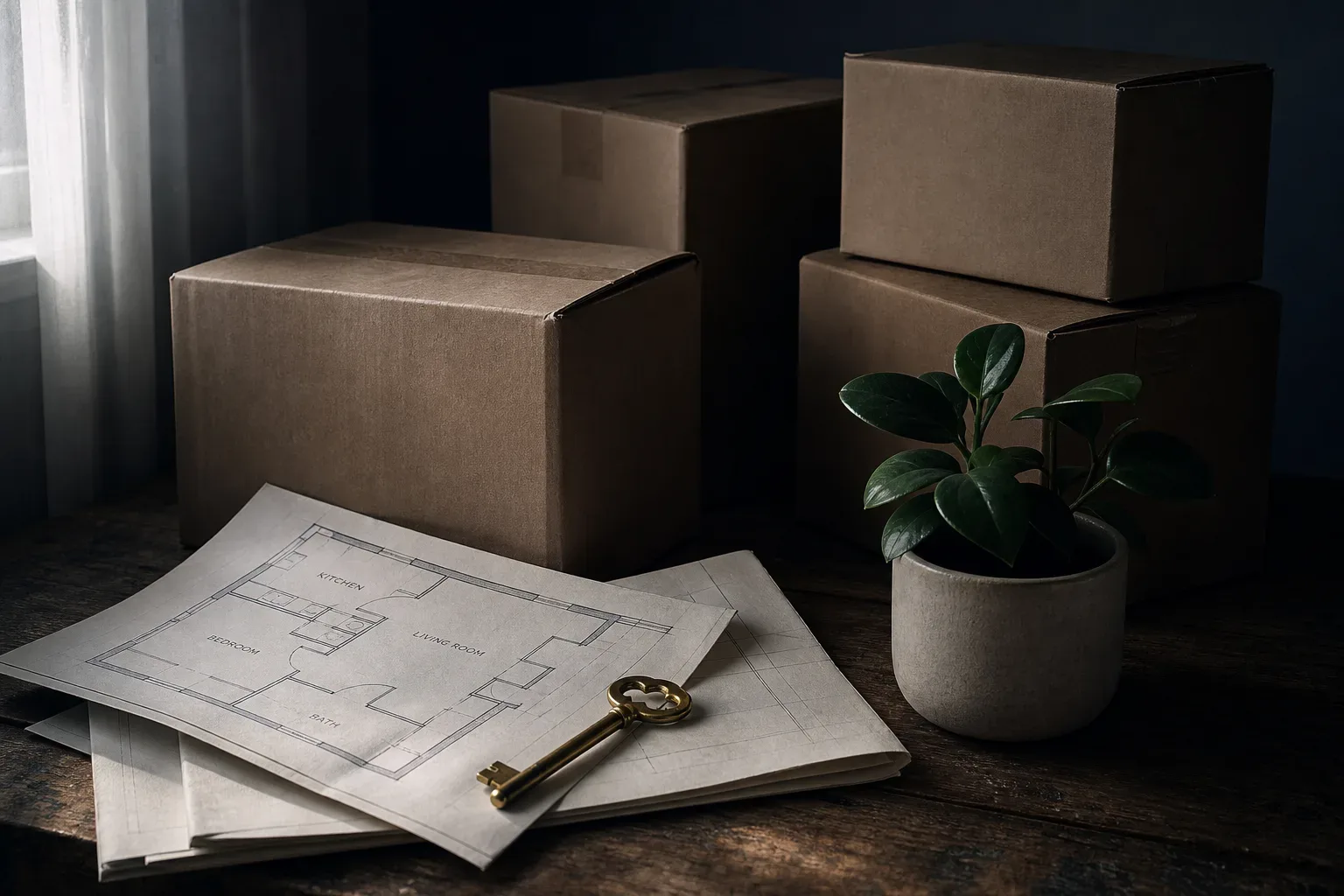
Dreaming of moving house usually means you’re in a period of change. The dream is less about real estate than about identity, security, and belonging. Something in your life may be ending, beginning, or being reorganized. Notice whether the move felt hopeful, forced, chaotic, or overdue.
What the psychology says
In psychological terms, a house in a dream tends to stand for the self: the life you live inside, the rooms you show people, the rooms you avoid, the old wallpaper you still carry. A dream about moving house usually adds motion to that symbol. The self is not only being seen. It is being relocated.
Clinical tradition has long read houses as images of the psyche. Carl Jung often treated dream buildings as representations of psychic structure: upper rooms, cellars, hidden spaces, old foundations. In his account in Memories, Dreams, Reflections, a dream of a many-leveled house helped him think about layers of personal and collective history. That doesn’t mean your dream must be Jungian. It means the house is a very old and useful image for the ordinary question: where do I live inside myself now?
Modern dream research is more cautious. There isn’t strong research showing that a moving-house dream has one fixed meaning. The evidence for specific dream dictionaries is thin. What research does support is the continuity hypothesis: dreams often carry over waking concerns, emotions, and social situations into night imagery. This idea is associated with researchers such as Calvin Hall, G. William Domhoff, and Michael Schredl. In that frame, a moving-house dream may reflect a real transition, even if no literal move is planned.
That transition might be obvious. A new job. A breakup. Marriage. A child leaving home. Retirement. Immigration. Starting therapy. A friendship changing shape. It might also be quiet: realizing you don’t want the same things, becoming less available to old demands, or noticing that your life no longer fits the person you’ve become.
The emotional weather of the dream matters. If the move feels clean and possible, the dream may show readiness. If you’re lost among boxes, it may show overwhelm. If you’re being moved against your will, the dream may point to pressure, displacement, or a choice that doesn’t feel like yours. If you wake sad, the old house may be carrying grief. If you wake relieved, the old house may have become too small.
Threat-simulation theory, proposed by Antti Revonsuo, suggests that some dreams rehearse danger or difficult situations. A stressful moving dream can fit this pattern: forgotten boxes, missing keys, no transport, the wrong address, strangers in the new rooms. The dream may be practicing uncertainty, not predicting disaster. It is the sleeping mind saying, in its strange practical way, I need to prepare for change.
There is also an emotional memory angle. Rosalind Cartwright and other sleep researchers have written about dreaming as part of emotional processing, especially around mood and loss. Again, this doesn’t prove a single meaning. It does make sense of why moving-house dreams are common around life changes. The dream gathers the feeling of leaving one arrangement and trying to inhabit another.
You can read this dream alongside other symbols in the dream-dictionary, but keep the order honest: first the feeling, then the symbol, then the story of your waking life.
What tradition and folklore say
In many traditions, the house is not just shelter. It is the family, the body, the name, and the fate of the household. Moving house, then, becomes a folk image of change in station, duty, or protection. These readings are folklore, not prediction. They are worth hearing because they show how long people have used houses to think about the soul.
In Islamic dream interpretation traditions, including works attributed to Ibn Sirin and later manuals in that lineage, a house can represent the dreamer’s body, household, spouse, or condition in life. Entering a new house may be read as a change in worldly state, marriage, recovery, or a new phase. The details matter: a bright, sound house is read differently from a dark or ruined one. This is tradition, not medical or financial certainty.
In Chinese folk dream books, especially the broad tradition associated with the Zhougong Jie Meng, changing houses or entering a different dwelling can be linked with changes in family fortune, work, or social position. Some readings are favorable, especially if the new place is clean, spacious, and light. Others warn of disturbance if the move is chaotic. Again, this is folklore. It reflects a cultural sense that the home and the family’s luck are woven together.
European folk dream books, including Victorian popular manuals, often treated moving house as a sign of alteration in affairs. Sometimes it was read as restlessness, sometimes as marriage, sometimes as trouble in domestic life. The old manuals liked certainty more than dreams deserve. Still, they caught something true: to move house in a dream is usually to feel that life is not staying put.
There is also a plain ancestral reading. For people whose families have known migration, eviction, war, boarding school, exile, or repeated moves, a dream of moving may carry inherited and personal memory. It may not be symbolic in a neat way. It may be the nervous system remembering that home can change without warning. Treat that dream gently.
What does it mean to move into a beautiful new house?
Moving into a beautiful new house often suggests permission, growth, or a new identity that feels more spacious. You may be ready for a wider life. The house might have larger rooms, better light, a garden, a clean kitchen, or a view. These details matter because dreams tend to speak through physical arrangements.
A bright house can suggest confidence: I can live here. I can become this person. You might have recently made a decision that fits you better than expected. You might be entering a relationship, job, creative project, or stage of life that gives you room.
But beauty in dreams can also be uneasy. If the new house is too perfect, too expensive, or strangely empty, the question may be about belonging. Do you feel allowed to have this life? Are you afraid you won’t be able to maintain it? Is the dream showing aspiration, or is it showing pressure to perform a more polished self?
Notice whether you unpacked. Unpacking means you are beginning to claim the new situation. Standing in the doorway means the change is still partial. Wandering room to room can mean you are exploring what this new identity contains.
If the new house has hidden rooms, that often points to undiscovered parts of yourself. Not supernatural, just unknown. You may be finding capacities, wishes, or fears that were not available in the old arrangement.
What if you’re packing, but never finish?
A dream of endless packing is one of the most common moving-house variations. You know you must go, but the drawers refill. The boxes tear. You can’t find tape. The movers are waiting. The old house grows more rooms the longer you look.
This dream often appears when you’re trying to make a transition but can’t quite complete the emotional sorting. Packing is decision-making. What comes with me? What do I leave? What still belongs to someone else? What am I carrying out of habit?
If the dream is full of small objects, the issue may be mental clutter: obligations, messages, details, unfinished errands. If the dream is full of sentimental objects, the issue may be grief. If the boxes are heavy, notice what in waking life feels heavy before you even lift it.
Not finishing the packing doesn’t mean failure. It usually means the move is complicated. Some parts of life can be changed quickly. Other parts need a slower farewell. The dream may be asking for one honest list: what are you still trying to take with you that no longer fits?
If someone else is packing your things, the dream may point to loss of control. A parent, partner, employer, landlord, or institution may be shaping your next step. If you are packing someone else’s things, you may be carrying responsibility for a change that isn’t fully yours.
What if you move back to your childhood home?
Moving back to a childhood home in a dream often means the present has touched an early pattern. It doesn’t always mean you want to go back. More often, the old house is a stage set where the younger self can be seen.
You might dream of moving into your childhood bedroom after a breakup, illness, job loss, new parenthood, or family conflict. The dream may be asking: what old role have I stepped into again? The good child. The invisible child. The peacekeeper. The rebel. The one who had to be fine.
If the childhood home feels warm, the dream may be offering comfort. You may need rest, familiarity, or a simpler sense of being held. If it feels small or suffocating, the dream may show regression: a return to old limits, old rules, or old fears.
Pay attention to what has changed. Is your old room now an office? Are strangers living there? Is the furniture from your adult life mixed with the past? These details often show how memory and present life are overlapping.
If the childhood home is being sold or emptied, the dream may carry mourning. Even when change is right, the mind may grieve the version of life that housed you once. Write down the rooms you visited. They are often more telling than the plot.
What if the house is wrong, empty, or impossible to find?
Sometimes the moving dream goes wrong. You arrive at the address and the house isn’t yours. The rooms are bare. The doors won’t open. The new place is dark, damp, tiny, or already occupied. You may spend the whole dream searching for the house you were meant to move into.
This variation usually points to uncertainty about the future. You may know that something has to change, but you don’t yet know what the next life looks like. The wrong house can mean a wrong fit: a role, relationship, or plan that looks acceptable from the outside but doesn’t feel inhabitable.
An empty house can be peaceful or frightening. If it feels peaceful, it may suggest a clean beginning. If it feels bleak, it may suggest loneliness, depletion, or fear that the next phase will lack warmth. Ask what the emptiness felt like: freedom or absence.
A house you can’t find often appears when waking life lacks a clear address. You may be between decisions. You may be waiting for someone else to choose. You may be trying to imagine a self that doesn’t yet have furniture.
If the dream is a nightmare and repeats often, especially with panic, poor sleep, or daytime distress, talk to a doctor or mental health professional in one plain step. Dreams can be ordinary and still deserve care.
The morning after
Ask yourself: what part of my life no longer feels like home, and what part is trying to become one?
Write this line down: I am moving from ___ toward ___, and the box I most need to open is ___.
Then add three details from the dream: the old house, the new house, and the feeling in your body when you crossed the threshold. Don’t interpret too quickly. Notice first.
If this dream keeps returning, it may be showing what your attention returns to at night; the waking counterpart can be the Dream-Self Moment, a short personalized recording of your future self, through the AYA Method.