dream symbolism
Phone Dream Meaning: Connection, Control, or Identity?
Phone dream meaning often points to communication, boundaries, social pressure, or identity. Learn common variations and what to write down.
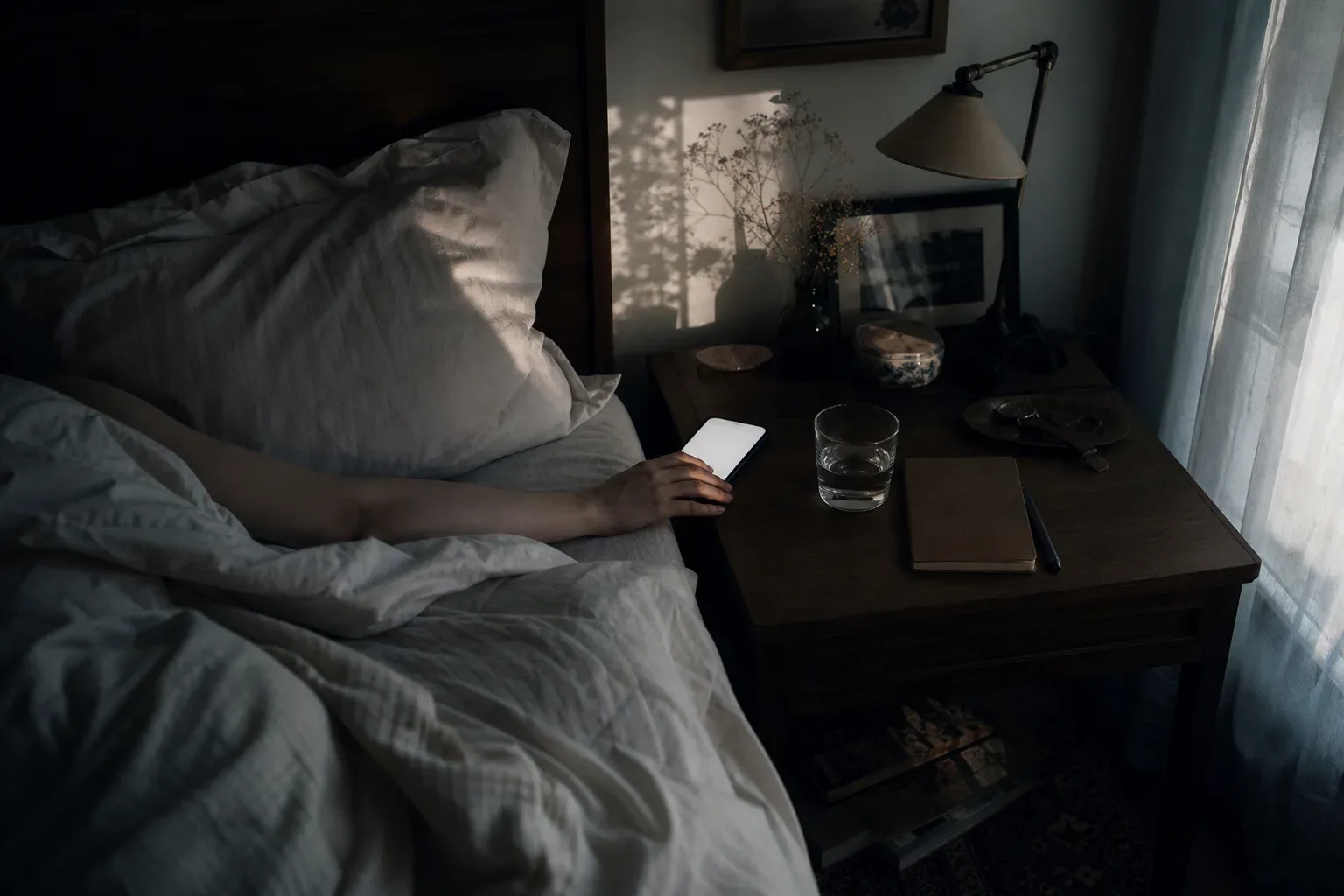
A phone dream usually means connection under strain: someone is trying to reach you, you can’t reach them, or your own attention feels claimed. The phone may also stand for control, privacy, social identity, or the fear of being unavailable in a life where everyone assumes you can answer.
What does a phone usually mean in a dream?
A phone in a dream usually means access: who can reach you, who can’t, and what part of you feels reachable at all.
That sounds ordinary because it is. Dream symbols often begin with daily use, not ancient mystery. Pew Research Center reported in 2024 that 97% of U.S. adults owned a cellphone and 91% owned a smartphone. A modern phone isn’t one object. It’s a house key, a diary, a bank card, a camera, a workplace, a map, and a small tribunal of other people’s expectations.
So the phone dream meaning depends less on the device and more on the situation. Were you calling, hiding, scrolling, dropping it, charging it, or watching it ring? Each action changes the symbol. A ringing phone says, “Respond.” A dead phone says, “You don’t have what you need.” A locked phone says, “There is a boundary here.”
Clinical dream research tends to treat dreams as emotionally continuous with waking life. The continuity hypothesis, discussed by researchers such as Michael Schredl, suggests that common concerns often reappear in dream form. In plain words: if a person spends 4 hours a day negotiating messages, apps, calls, and silence, the dreaming mind has plenty of material.
A phone in a dream is rarely only a phone; it is the shape attention takes when it wants an answer.
If you want a wider map of symbols, the Dream dictionary (A–Z hub) is useful for comparing modern objects with older dream images. A phone can behave like a letter, a door, a mirror, or a bell. The object is new. The human problem is old.
Is the dream about connection, control, or identity?
It may be about all three, but one of them is usually louder than the others.
Connection is the simplest reading. You want to speak, hear, explain, apologize, be remembered, or be left alone less completely. A dream of calling someone who doesn’t answer often appears after distance, conflict, or uncertainty. In one often-cited line of sleep research, people report more emotionally intense dreams after interpersonal stress; the exact rate varies by study, but the pattern is consistent enough to be clinically familiar.
Control enters when the phone won’t obey you. The screen freezes. The numbers blur. The battery dies at 1%. You know what to do, but the tool fails. This is the dream logic of blocked agency. It resembles the common dream of trying to run but moving slowly. The will is present. The result is not.
Identity appears because a phone now carries proof of the self. Photos, contacts, saved messages, biometric locks, calendar alerts, and accounts all say, “This is me in the world.” Losing that object in a dream can feel like losing a face. As of 2023, GSMA estimated more than 5.4 billion people subscribed to mobile services worldwide. No older dream dictionary could have predicted this level of intimacy with a tool.
| Dream emphasis | Common image | Morning question |
|---|---|---|
| Connection | Calling, texting, waiting for a reply | Who am I trying to reach? |
| Control | Frozen screen, wrong numbers, dead battery | Where do I feel unable to act? |
| Identity | Lost phone, hacked phone, exposed photos | What part of me feels unprotected? |
The cleanest interpretation is the one that makes your body say yes quietly. Not the dramatic one. The accurate one.
What if you can’t call, text, or unlock the phone?
When the phone won’t work, the dream usually points to blocked expression or a failed route to help.
This is one of the most common forms of the dream: you need to call someone, often urgently, but the numbers change, the screen cracks, or your fingers won’t press the right place. Older dream traditions had similar images with letters that couldn’t be sent or doors that wouldn’t open. The phone is the current costume for a much older anxiety.
The details matter. A wrong number may suggest miscommunication. A forgotten passcode may suggest distance from your own knowledge. A screen that won’t respond can echo the particular frustration of speaking clearly and not being heard. In waking research, communication strain is not minor. The American Psychological Association’s 2023 Stress in America report noted that adults often name money, health, family responsibilities, and the future as major stressors; many of those pressures now arrive through a screen.
Here is a simple way to sort the dream the morning after:
- Write the exact failure: dead battery, wrong number, locked screen, no signal, cracked glass.
- Name the person or place you were trying to reach.
- Note the feeling in 1 word: panic, shame, irritation, grief, relief.
- Ask what waking situation has the same shape, even if the content is different.
- Write one sentence you didn’t get to say in the dream.
A dream phone that won’t work is often a sentence with its mouth covered.
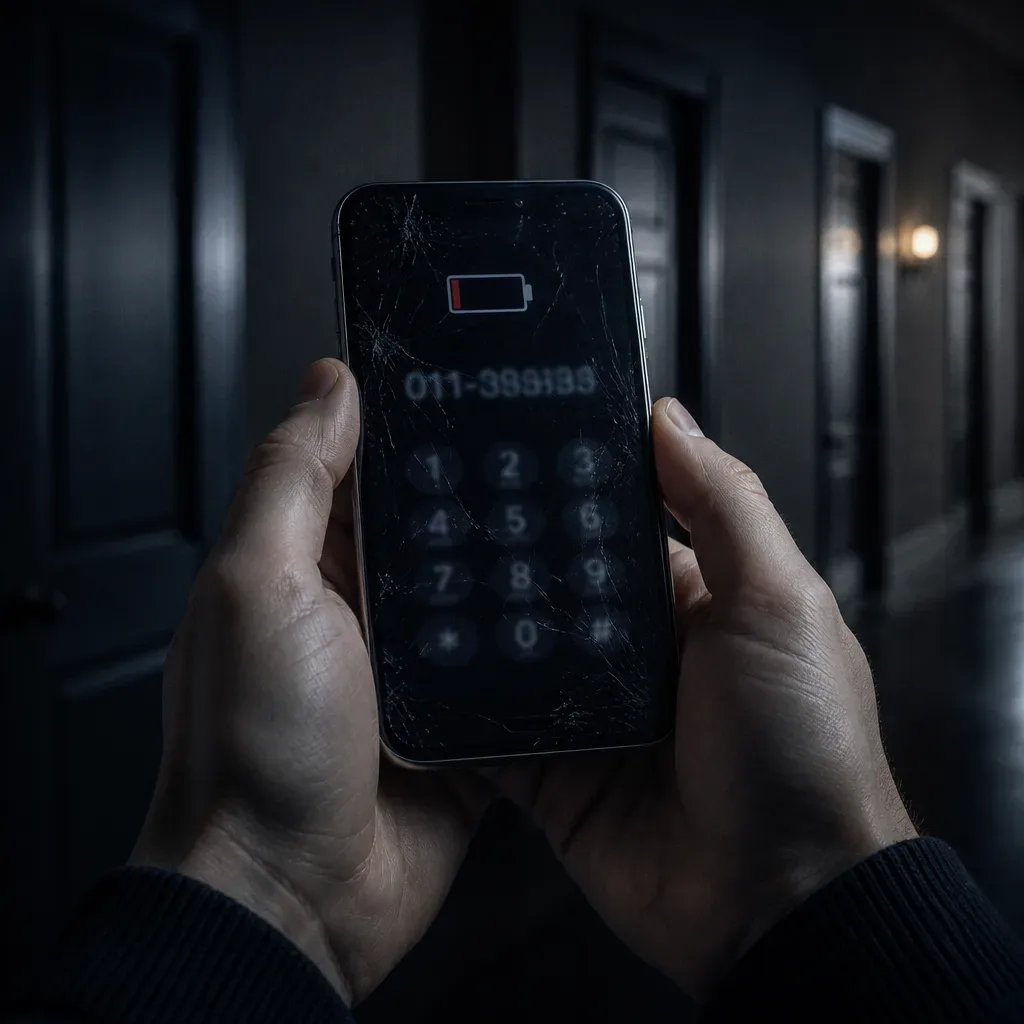
If the dream repeats, compare it with other anxiety dreams in the AI dream interpreter tool, not because a tool knows your life better than you do, but because patterns are easier to see when they’re placed side by side. Three phone dreams in 2 weeks may be more useful than one dramatic dream in isolation.
What does it mean to lose, break, or have your phone stolen?
Losing or breaking a phone in a dream usually means a break in access, confidence, memory, or privacy.
A lost phone dream can feel strangely severe. You may wake with the same cold search-feeling as if it happened in waking life. That reaction makes sense. A 2022 DataReportal overview estimated that the average internet user spent nearly 7 hours online each day, much of it through mobile devices. The phone is no longer an accessory. It is part of how many people move through the day.
A broken phone often means a trusted channel no longer feels reliable. Maybe you can’t say what you mean to a partner. Maybe your job has trained you to answer faster than you can think. Maybe your own inner signal is weak because you’re tired. The CDC advises adults to get at least 7 hours of sleep per night; when sleep falls short, emotional regulation and attention both suffer. A dead-battery dream after a week of poor rest may be literal in the kindest way.
A stolen phone adds another layer: violation. Someone has your records, your images, your private exchanges. Even if nothing like this has happened, the dream may be speaking in the language of exposure. Who knows too much? Who has access you didn’t mean to grant? What part of your life feels copied, watched, or handled by someone else’s hands?
Folklore changes the tone. In some European household traditions, losing an everyday object in a dream was read as a warning to “mind your affairs,” a phrase that could mean money, gossip, courtship, or travel depending on the village. There is no good evidence that the dream predicts loss. But the old reading preserves something true: the dream asks you to check what has been left unattended.
Who is calling or texting you in the dream?
The caller usually represents the emotional claim being made on you, not a guaranteed message from that person.
An ex calling in a dream often means unfinished language. That doesn’t always mean unfinished love. It may mean anger, apology, embarrassment, desire, or the old version of yourself who lived inside that relationship. A parent calling may bring duty. A child calling may bring protection. A boss calling may bring surveillance. An unknown number may bring suspense, intuition, or dread.
Grief dreams deserve particular care. Many people dream of receiving calls or messages from the dead. Research on bereavement dreams, including work discussed in journals such as Dreaming, suggests that dreams of deceased loved ones are common and can be comforting, distressing, or both. One study of bereaved individuals found a high proportion reported dreams of the deceased, though samples are often small and self-selected. The honest thing to say is this: the dream may be meaningful without being proof of a literal call.
Culture matters here. In Polish and Danish family lore, a dream contact from the dead could be treated as a request for remembrance: light a candle, say a prayer, visit the grave, speak the name. In many contemporary secular homes, the same dream becomes a memory asking for room. Neither reading needs to mock the other.
If the phone dream becomes lucid, you may notice the symbol while still asleep. Our lucid dreaming pillar explains how dream awareness can change the next moment of the dream. Some people choose to answer the call. Others choose to put the phone down. Both choices can reveal something.
The person on the dream phone may be less important than the part of you that still waits for a reply.
Can a phone dream be spiritual or folkloric?
Yes, but spiritual and folkloric readings should be held as traditions of meaning, not as proof of prediction.
Old dream books didn’t have smartphones, so they used the nearest symbols: bells, letters, messengers, knocks at the door, mirrors, and voices from another room. A ringing phone inherits some of that older sound. It interrupts. It summons. It asks whether you will answer. In nineteenth-century printed dream books, letters often meant news; in some household traditions, a bell could mean a visitor, church duty, danger, or death, depending on local custom.
The phone also behaves like a mirror. It shows your face, stores your photographs, and reflects your social self back in fragments. In Jung-adjacent language, it may serve as a threshold object between persona and private self. Jung wrote about the persona as the social mask, though not about phones, of course. A cracked screen in that frame may suggest a cracked presentation: the self you show is no longer holding cleanly.

Different cultures will read the same phone dream through different inheritance. A call from a grandmother may be understood as ancestral nearness in one family and memory consolidation in another. A phone falling into water may be read as emotional overwhelm by a therapist, bad news in a folk system that mistrusts water dreams, or simply the mind replaying last week’s panic near a sink. The Dream dictionary (A–Z hub) can help you compare these layers without forcing one to defeat the others.
No dream symbol has only one country.
If a recurring phone dream keeps returning to the same wish or fear, waking practice can meet it gently. The AYA Method is a daily audio manifestation practice: each day you listen to a short personalized recording, your Dream-Self Moment, narrated from the version of you who has already manifested the life you intend. Listening is the practice. Repetition is the work. The audio is the method. Used lightly, it can be the daytime answer to the nighttime pattern: not another demand to reply, but a chosen voice to hear.
What should you do the morning after a phone dream?
Write down the phone action, the person involved, and the feeling before checking your real phone.
That order matters. The first 90 seconds after waking can hold details that vanish once notifications begin. Dream recall varies widely, but sleep researchers often note that immediate recording improves memory. Keep it plain. You don’t need a long entry. You need the exact hinge of the dream.
Use these prompts:
- What was the phone doing: ringing, breaking, charging, recording, hiding, exposing?
- Who had access to me?
- Who did I want access to?
- Did I feel relief when the phone failed?
- What waking conversation am I postponing?
- What boundary would make me breathe easier today?
If the dream was frightening, check the ordinary things first: sleep, stress, screens, and safety. Dr. Andrew Huberman has often discussed the role of light exposure and timing in circadian regulation; the broader sleep literature agrees that bright light and stimulating content close to bedtime can affect sleep quality for some people. Try one night with the phone outside arm’s reach. One night is a small experiment, not a moral reform.
For interpretation, you can compare the symbol with other entries or test a short account in the AI dream interpreter tool. If your dream included awareness that you were dreaming, read the lucid dreaming pillar next. If you simply need a wider index, return to the Dream dictionary (A–Z hub).
Talk to a doctor or qualified mental health professional if nightmares are frequent, tied to trauma, or causing you to avoid sleep. That sentence is not meant to alarm you. It is meant to keep the dream in the right-sized room.
Morning line to write down: “The phone was about access, and the person or feeling asking for access was ____.”
Leave the phone quiet for one more breath.